
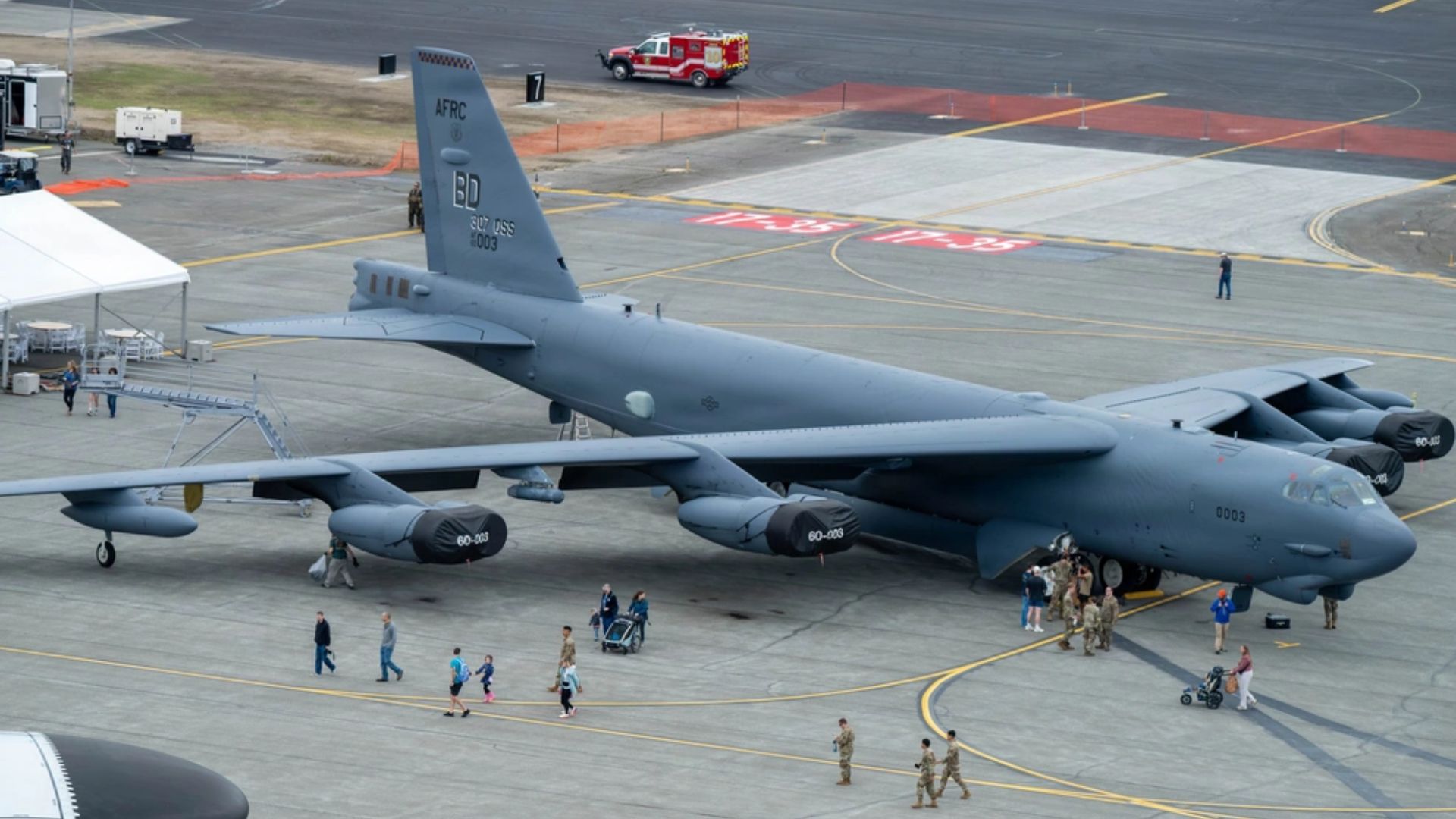
The US Air Force has awarded contracts worth up to a combined $766 million to modernize the B-52 Stratofortress, including production of its new AN/APQ-188 radar and upgrades to its weapons-carrying hardware. The latest funding is another major investment in keeping an aircraft that first entered service in the 1950s relevant for decades to come. But the radar program it supports has also faced significant cost growth and schedule delays. The larger of the two awards is a $603 million indefinite-delivery/indefinite-quantity contract issued to Raytheon, an RTX business, for production and sustainment of the new AN/APQ-188 radar. Boeing received a separate contract worth nearly $163 million for bomb rack modernization kits connected to the broader effort. Together, the awards bring fresh momentum to the B-52 Radar Modernization Program, which is replacing the bomber’s aging AN/APQ-166 radar across the Air Force’s fleet of 76 active B-52s. A modern radar for a 70-year-old bomber The AN/APQ-188 is an active electronically scanned array, or AESA, radar designed to provide improved functionality and reliability over the legacy system. According to the Government Accountability Office (GAO), the upgrade is intended to support mission-essential navigation and weather avoidance while improving the aircraft’s capabilities for both conventional and nuclear missions. The radar is particularly important because the B-52 is expected to remain operational through at least 2050. The Air Force is pursuing 13 separate modernization programs, including new engines, communications systems, software and weapons upgrades, with the overall effort currently projected to cost about $21 billion. But getting a modern AESA radar onto an aircraft whose first examples entered service in 1955 has not been straightforward. Costs have risen as the schedule slips A GAO report released in July found that the Radar Modernization Program’s estimated acquisition cost had increased by more than 30 percent to over $2.9 billion by 2025. Planned production was delayed by more than two years, while initial operational capability has slipped by roughly three and a half years to the third quarter of fiscal year 2030. The watchdog also found that the Air Force reduced the program’s original requirements from 25 to 20 as officials sought to control costs and establish what they considered a minimum viable capability. According to the GAO, the program’s challenges stem from factors including design changes, contractor performance issues and the complexity of installing the new equipment. The Air Force is also pursuing production while developmental testing continues, an approach the GAO says exposes the program to further cost and schedule risk. The program suffered another setback in June when one of the flight-test aircraft involved in the radar modernization effort crashed shortly after takeoff from Edwards Air Force Base. Eight people were killed. The impact of the accident on the overall test schedule remains unclear. Why the Air Force is still investing Despite the program’s difficulties, the logic behind the investment is straightforward. The B-52 remains one of the Air Force’s most important long-range strike platforms, capable of carrying large payloads and launching stand-off weapons far from hostile air defenses. The latest contracts therefore represent more than a routine avionics upgrade. They are part of a much larger effort to ensure that an aircraft designed during the Cold War can continue operating in an increasingly contested, electronically complex battlespace. The B-52 was originally expected to serve for around two decades. If current modernization plans succeed, some of the bombers could still be flying nearly a century after the aircraft first entered service. Get the latest in engineering, tech, space & science - delivered daily to your inbox.Kaif Shaikh is a journalist and writer passionate about turning complex information into clear, impactful stories. His writing covers technology, sustainability, geopolitics, and occasionally fiction. A graduate in Journalism and Mass Communication, his work has appeared in the Times of India and beyond. After a near-fatal experience, Kaif began seeing both stories and silences differently. Outside work, he juggles far too many projects and passions, but always makes time to read, reflect, and hold onto the thread of wonder.
US nuclear capable B-52 gets AESA radar upgrade, keeps bomber flying into 2050s
Full Article
Original Source
Read the full article at Interestingengineering →KhanList aggregates and links to publicly available news content. We do not host full articles from third-party sources. Always verify important information with original sources.