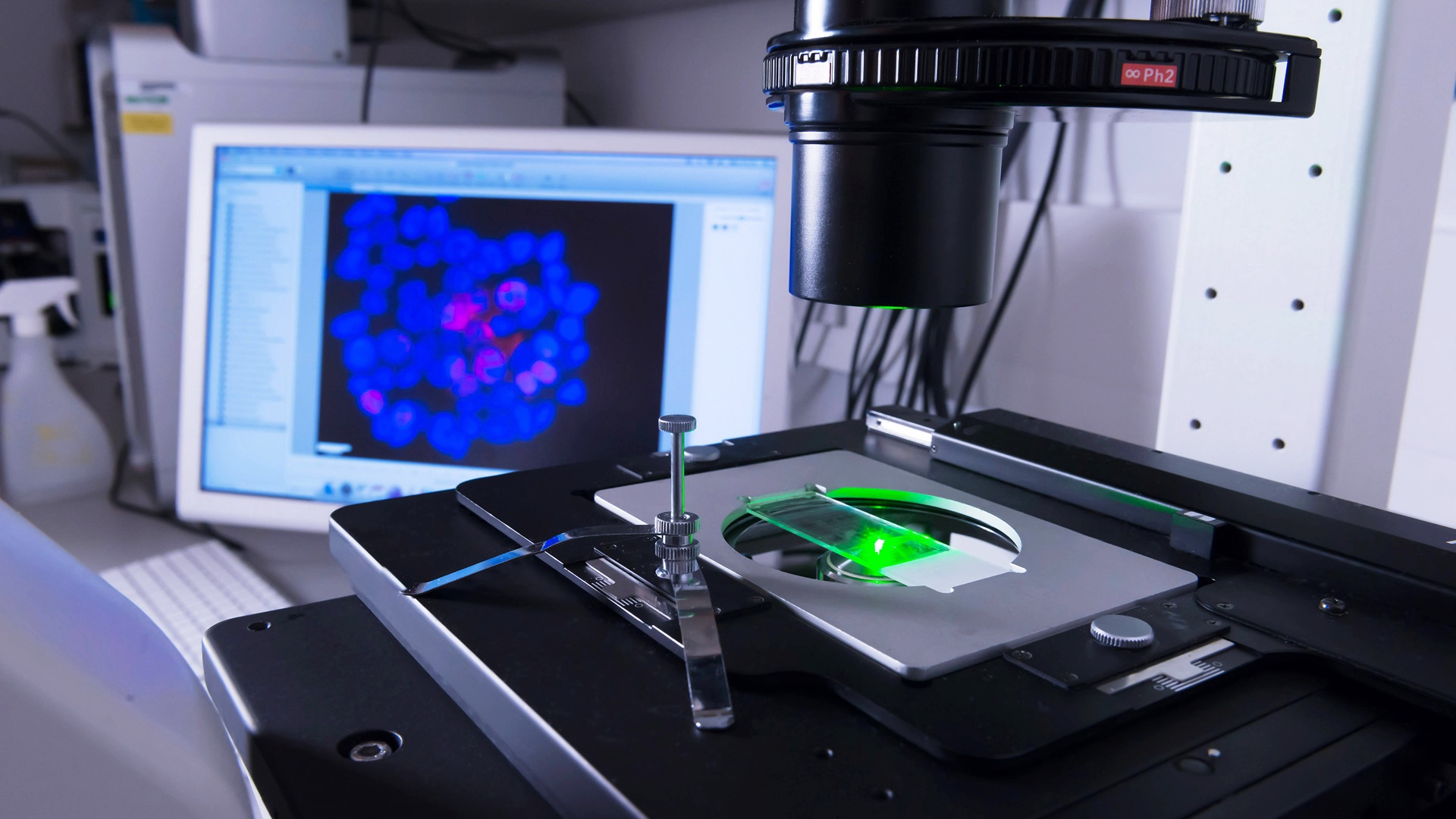
The US has installed a custom-made electron microscope that has the potential to transform future research into battery technology, semiconductors, quantum computing and advanced materials. The new revolutionary scanning transmission electron microscope was installed at the Center for Functional Nanomaterials (CFN) at the US Department of Energy’s Brookhaven National Laboratory (BNL). Its filtering system is so unique that it hits an energy resolution that’s 200 times better than current microscopes. The instrument was purpose-built for the facility. It will allow the team to analyze a material’s atomic structure, chemical composition and electronic behavior with unprecedented detail. It can moreover evaluate all three simultaneously. According to the scientists, the microscope bridges a long-standing gap between electron microscopy and powerful synchrotron X-ray facilities. “We have really pushed the current microscope instrumentation limit,” Yimei Zhu, PhD, a senior physicist and leader of the BNL’s advanced electron microscopy and nanoscale structure and structural defects group, said. Atomic insights BNL revealed that the instrument introduces four major technological advances. One of these standout features is a pair of secondary electron detectors that can simultaneously image the top and bottom surfaces of a sample in atomic detail. This capability is especially valuable for catalyst research. Catalysts drive chemical reactions used in energy conversion and storage. That’s why, understanding how their surfaces change during operation could help design more efficient batteries, fuel cells and other clean-energy technologies. Judith Yang, Yimei Zhu and Sooyeon Hwang stand with an electron microscope at Brookhaven Lab’s Center for Functional Nanomaterials.Credit: Kevin Coughlin / Brookhaven National Laboratory “With this equipment, we can examine both sides of a catalyst before and after a reaction to gain a more complete understanding of how its structure changes and how those changes influence its chemical performance,” Judith Yang, PhD, leader of the electron microscopy group at CFN, said. Moreover, the microscope enhances electron energy-loss spectroscopy (EELS), a method that measures how electrons lose energy as they pass through a material. The microscope also has a redesigned optical system, that extends its measurable energy range by more than five times. Scientists can use these measurements to analyze oxidation states and chemical bonding, like how battery materials change as they charge and discharge. The microscope’s energy filtering system is another massive breakthrough, as it can deliver an energy resolution 200 times that is sharper than current electron microscopes. The improvement enables momentum-resolved EELS. It means that the team can evaluate quasiparticles such as phonons, magnons, plasmons, and other electronic excitations that govern how materials conduct heat, respond to magnetic fields, and interact with electricity and light. The instrument also runs at voltages as low as 20 kiloelectron-volts (keV), which is below the 100 to 300 keV range typical of most electron microscopes. It reduces damage to extremely delicate materials and maintains atomic-level imaging. This makes the system particularly well-suited for studying 2D quantum materials that are only one or a few atoms thick. Zhu stressed the value of the microscope. “Lower-voltage electrons not only have higher scattering power but also can minimize damage to sensitive materials,” the researcher noted in a press release. The system’s Python-based software supports remote operation. It could lead to autonomous, machine-learning-assisted microscopy and make experiments more efficient. It will soon be joined by a second new electron microscope. “This instrument opens the door to entirely new experiments,” Sooyeon Hwang, PhD, an associate professor at Dongguk University in South Korea, who helped acquire the microscope, said. “It will enable CFN to tackle scientific questions that were previously beyond reach, and we’re excited to see what users will discover.” Recommended ArticlesGet the latest in engineering, tech, space & science - delivered daily to your inbox.Based in Skopje, North Macedonia. Her work has appeared in Daily Mail, Mirror, Daily Star, Yahoo, NationalWorld, Newsweek, Press Gazette and others. She covers stories on batteries, wind energy, sustainable shipping and new discoveries. When she's not chasing the next big science story, she's traveling, exploring new cultures, or enjoying good food with even better wine.
US’ new 200x sharper electron microscope could transform batteries and chips
Full Article
Original Source
Read the full article at Interestingengineering →KhanList aggregates and links to publicly available news content. We do not host full articles from third-party sources. Always verify important information with original sources.