
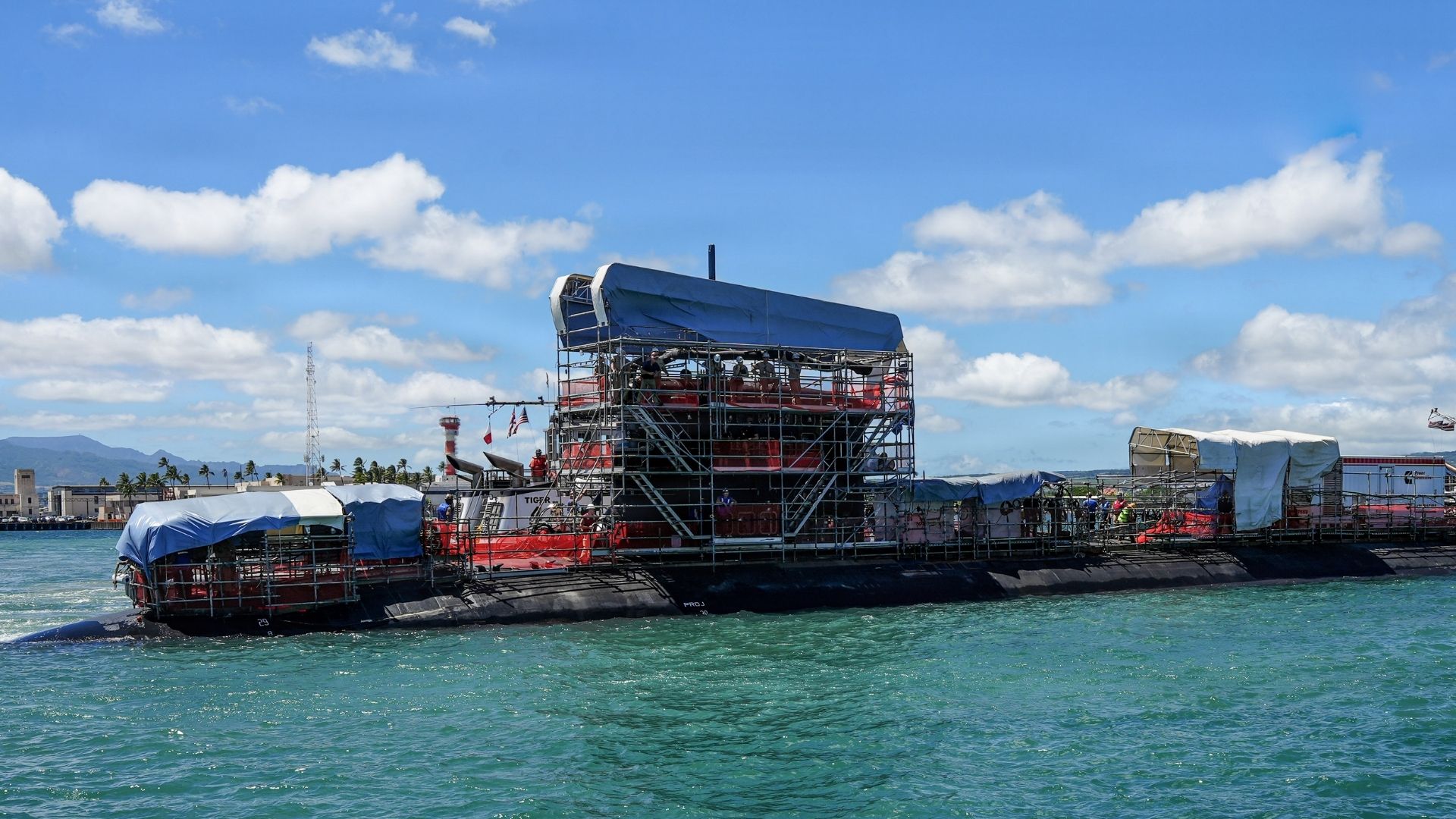
The U.S. Navy has spent an estimated $3.4 billion over the past decade keeping attack submarines that could not operate at sea, according to a Government Accountability Office (GAO) report published on August 27. The watchdog warned that shipyard delays are expected to keep more submarines idle through 2030, creating additional costs and reducing the fleet’s operational capacity. The public report follows a classified version issued in July. GAO found that maintenance backlogs between fiscal years 2016 and 2025 contributed to about 15,000 lost operational days for attack submarines. Submarines stuck waiting for maintenance The Navy’s idle submarine problem includes boats that are still considered active but cannot deploy because they are waiting for maintenance. GAO said these submarines remain pier-side after losing certification for normal operations. This “active idle time” has become increasingly expensive. Los Angeles-class submarines cost almost $220,000 per day during such periods, while Virginia-class boats cost more than $237,000 per day. GAO said the Navy has made “significant progress” in reducing active idle time. However, delays remain a major challenge as shipyards struggle with capacity, materials, and experienced workers. USS Pasadena highlights the problem The situation is especially difficult for submarines that are waiting to be decommissioned. GAO found that inactive idle time cost the Navy $722 million between 2016 and 2025. The USS Pasadena entered inactive status on January 1, 2025, ahead of its eventual decommissioning. However, shipyard constraints mean the Los Angeles-class submarine is not expected to enter Norfolk Naval Shipyard until November 15, 2028. “During this time, the attack submarine is unable to be operational since its dive certification is expired, but is still fully crewed with sailors,” GAO wrote. The Navy plans to use Pasadena as a training platform during the wait. GAO estimates that keeping the submarine in this inactive state will cost more than $300 million over nearly four years. More idle days expected for submarines by 2030 GAO expects the problem to worsen as more Los Angeles-class vessels reach the end of their service lives. “Without mitigation, 15 attack submarines will enter inactive idle time from fiscal year 2026 through fiscal year 2030 — during which time the Navy could incur more than 14,000 days of inactive idle time and $3.1 billion in costs to operate and support these inactive submarines,” the GAO wrote. The Navy is also producing Virginia-class submarines at about one per year, compared with its target of two annually. GAO attributed the slower pace to late supplier deliveries and limited access to experienced workers. GAO calls for alternative solutions Nuclear submarine maintenance is handled mainly at four public shipyards: Portsmouth, Norfolk, Puget Sound, and Pearl Harbor. Private facilities operated by General Dynamics Electric Boat and Huntington Ingalls Industries Newport News Shipbuilding also perform certain work. GAO said the Navy has considered options such as defueling reactors while the boats remain pier-side and using floating dry docks. The service has also examined transferring crews from inactive submarines to operational boats. “However, officials were unable to provide documentation of detailed analyses conducted on the feasibility and cost-effectiveness of this option,” the report noted. GAO recommended a broader submarine inactivation plan to reduce idle time for both crews and boats. Navy officials did not respond to the recommendations in writing but “verbally concurred.”Get the latest in engineering, tech, space & science - delivered daily to your inbox.A versatile writer, Sujita has worked with Mashable Middle East and News Daily 24. When she isn't writing, you can find her glued to the latest web series and movies.
US Navy’s powerful submarines facing ‘idle time’, maintenance delays: Report
Full Article
Original Source
Read the full article at Interestingengineering →KhanList aggregates and links to publicly available news content. We do not host full articles from third-party sources. Always verify important information with original sources.