
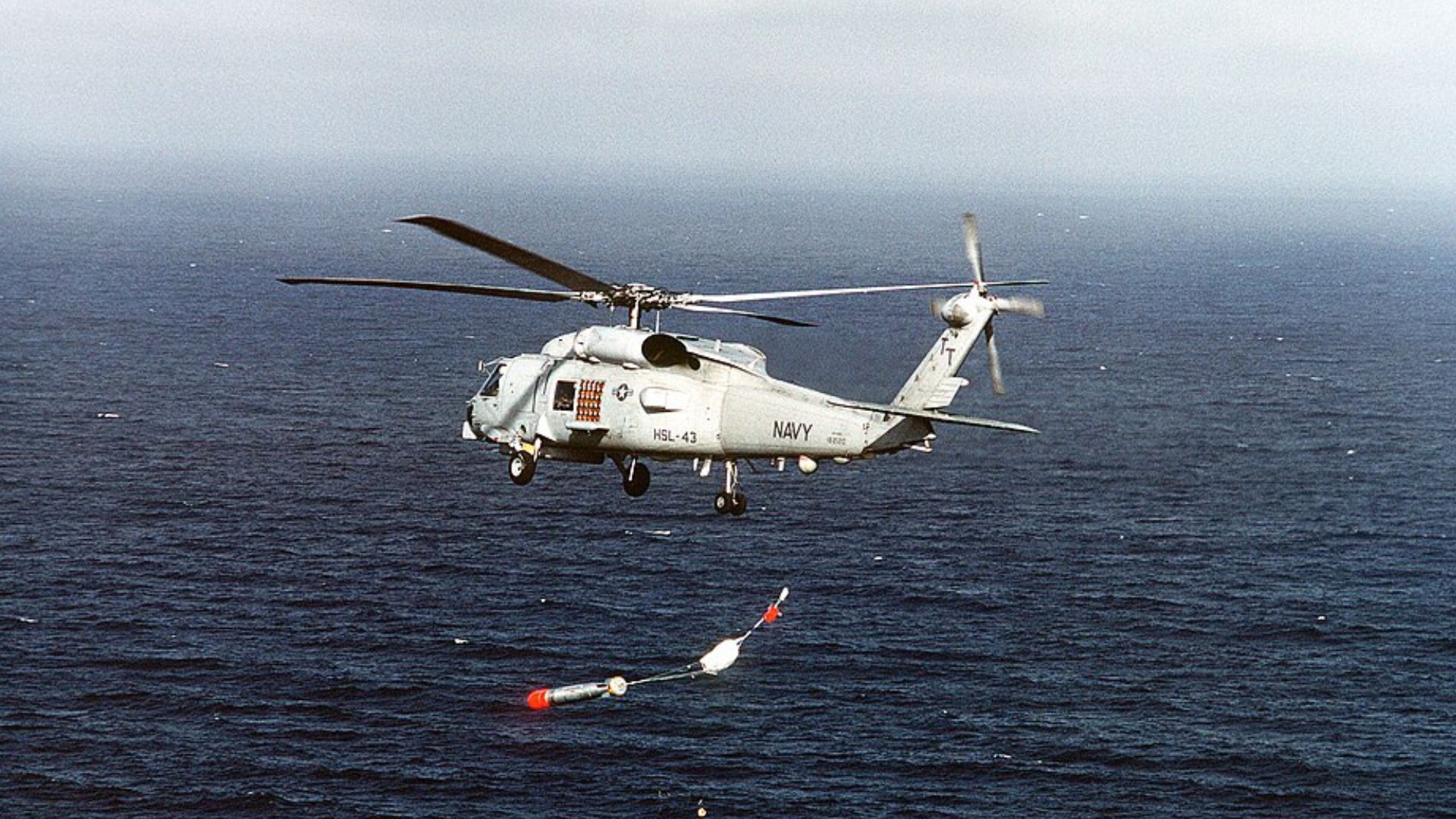
The United States Navy is the most powerful in the world, and it keeps on upgrading itself to ensure naval dominance. In one such move, it is now looking to add a new anti-submarine torpedo, which will be a glide weapon, to its arsenal. The US Navy is currently looking at two options for its Silent Anvil air-launched torpedo, and both of them are for a glide weapon. The Naval Air Systems Command (NAVAIR), operating under the Department of the Navy, has issued a Request for Information (RFI) for the Silent Anvil air-launched torpedo (SAA-LT) standoff delivery solutions. The SAA-LT is being considered a next-generation anti-submarine warfare system that will be used to counter evolving undersea threats. It is being considered that the weapon should be able to launch from both manned and unmanned aircraft platforms operated by the US Navy. Acquisition plans by the US Navy for the glide weapon The US Navy is looking at two design options for the standoff air-launched torpedo. The first is a fully integrated weapon, which can cover the entire process from aircraft separation to underwater target engagement. The second is a wing kit design, an unpropelled glide wing kit, which is designed to carry a government-issued torpedo to the target. The RFI issued mentions that the glide weapon will be captive-carried and released “from both internal and external aircraft weapons stations utilizing standard Department of War (DOW) carriage systems.” The glide wing kit will consist of a wing, a radio and guidance system, while the torpedo would consist of an acoustic sensor, a warhead, and a command center alongside propulsion. Although information is being sought from contractors at this stage, the RFI states that the torpedo must maintain a compact, lightweight form factor similar to the GBU-39 Small Diameter Bomb (SDB). It states that the complete weapon system should weigh not more than 268 pounds. The maximum length should not exceed 70 inches (5 feet 10 inches), with a diameter of 7.5 inches. More requirements for the glide torpedo The launch speed for the glide weapon is considered to be from Mach 0.25 to Mach 0.85 and from an altitude of up to 60,000 feet. It should also be able to mount on a BRU-61/A bomb rack and be compatible with current Navy aircraft mission planning applications. Moreover, it shall maximize aerial flight endurance while minimizing aquatic immersion time, restricting water residence strictly to the minimum duration required for successful mission execution. It intends to find out the maximum range possible for such a weapon from the contractors. The service is looking for an end-to-end prototype capability of the SAA-LT system within eighteen (18) months of agreement award. Further, it wants 180 prototype all-up-rounds (AURs) within the three years of the demonstration. The RFI mentions that vendor responses can be sent by September 29 to NAVAIR. The responses should provide a realistic target date and high-level schedule to perform an end-to-end demonstration of the system. It should also come with the pertinent Technology Readiness Level (TRL) for the overall system and critical subsystems. Get the latest in engineering, tech, space & science - delivered daily to your inbox.Abhishek brings a wealth of experience in covering diverse stories across different beats. Having contributed to renowned wire agencies and Indian media outlets like ANI and NDTV, he is keenly interested in Tech, Business and Defense coverage.
US Navy’s new anti-submarine torpedo could drop from drones and glide towards target
Full Article
Original Source
Read the full article at Interestingengineering →KhanList aggregates and links to publicly available news content. We do not host full articles from third-party sources. Always verify important information with original sources.