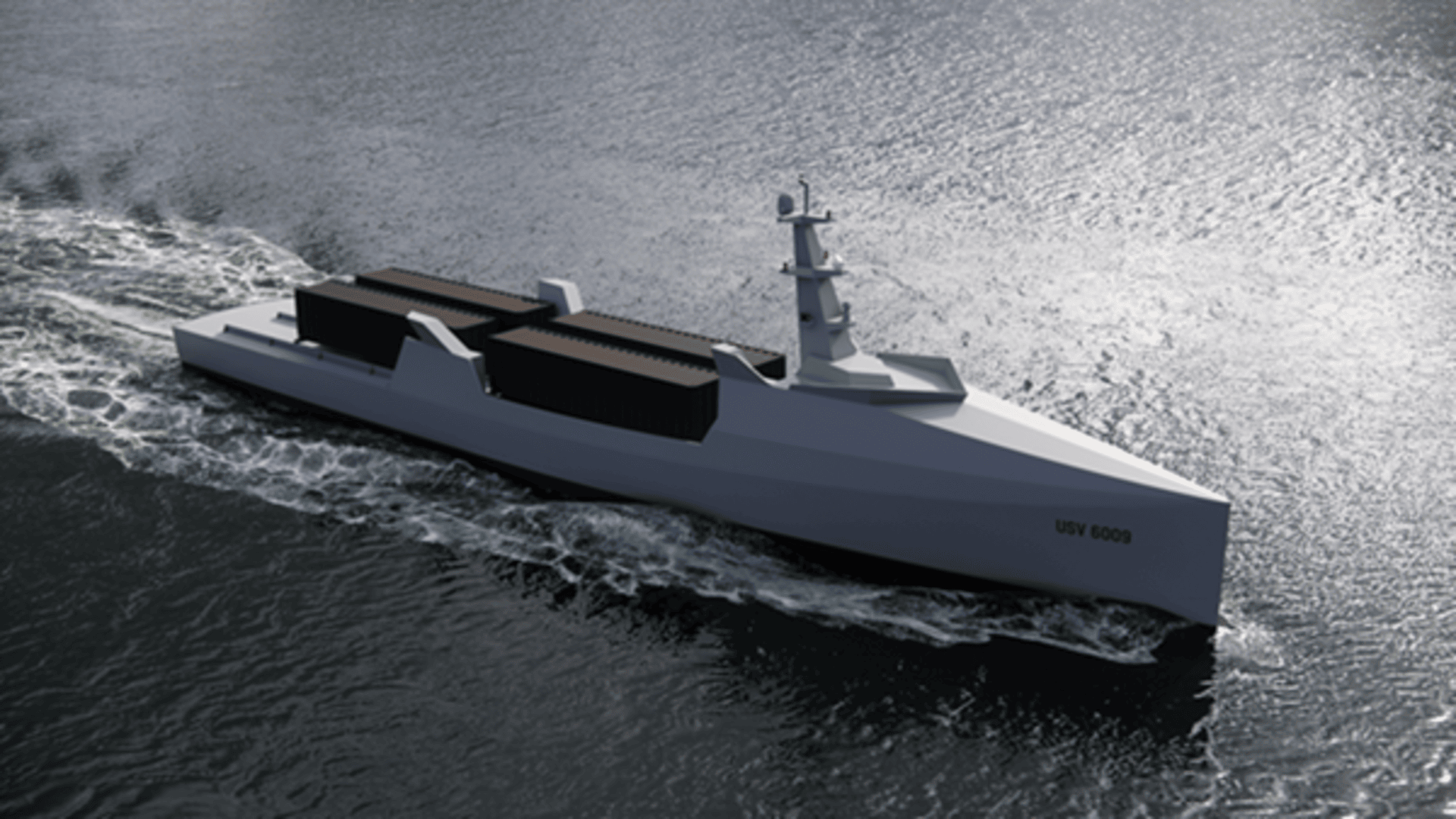
A new era of naval operations is on the horizon, as Blue Water Autonomy’s unmanned ships leverage tightly integrated hardware, software, and AI to map the ocean floor and transform maritime research. Blue Water Autonomy is rapidly turning unmanned ships from a concept into an operational reality. After showcasing its Liberty Class autonomous vessel to the U.S. Navy, the company announced a wave of strategic partnerships tied to the Navy’s Medium Unmanned Surface Vessel (MUSV) program, which includes $6 billion in funding to scale up production. Currently under construction at Conrad Shipyard, these vessels merge traditional shipbuilding expertise with AI-enabled production systems. “Traditional shipbuilding doesn’t scale, and pure software approaches don’t deliver hardware,” said Rylan Hamilton, CEO of Blue Water Autonomy, on the company’s website. “We’re doing both. Integrating proven marine systems with AI-driven manufacturing and operations to fundamentally rethink how ships are built. By distributing and parallelizing work across proven partners, we’re creating a production system that can move at the pace required for a modern maritime industrial base.” The power of many The company is harnessing the power of many to realize the future of shipbuilding. Its manufacturing model incorporates multiple industrial partners responsible for different parts of the impressive ship: Tulip will provide a manufacturing execution system, Caterpillar Defense will supply marine diesel engines, and Valsted will support the automation systems. “Shipbuilding has always required extraordinary coordination, and we’re giving that coordination a software backbone,” explained Erik Mirandette, chief business officer at Tulip. “Tulip connects every step on the factory floor with real-time data and AI-native tools, so Blue Water can orchestrate production at scale, catch issues earlier, and build with the speed and reliability that modern maritime demands.” Building on this initiative, Blue Water Autonomy is quickly expanding its reach. According to a recent news release, its unmanned, AI-powered vessel will now map the ocean floor—a mission the Navy sees as central to the future of military marine research. The Navy’s interest underscores its commitment to using the most advanced systems available for modern maritime operations. Moving fast On August 4, 2026, Blue Water Autonomy won a multiple-award contract with the Naval Oceanographic Office (NAVOCEANO) to provide “high-resolution mapping using long-endurance uncrewed surface vessels” across the Indian and Pacific Oceans. The company added that deep open-ocean surveys are “among the most demanding work at sea,” and the goal extends well beyond mapping, as the Navy must navigate not only the seas, but also underwater acoustics. These conditions “shape how naval forces move and operate far from the shore.” Traditionally, these missions relied on costly crewed vessels—often running tens of thousands of dollars a day and requiring travel far from shore. With uncrewed, AI-powered ships, NAVOCEANO and the Navy aim to reduce costs, minimize risk, and dramatically expand the scope of ocean research. Thanks to AI, these vessels “can operate on the open ocean for months at a time.” The multi-year NAVOCEANO contract comes with a $40 million ceiling, but Blue Water Autonomy will still have to compete for funding alongside other selected companies. “Mapping the open ocean is exactly the kind of long, high-endurance work that autonomous vessels are built for,” said Rylan Hamilton, CEO of Blue Water Autonomy. “This selection puts our autonomy to work across the Indian and Pacific oceans, well beyond the range of a crewed survey ship, and it shows the technology we are building serves many different missions.” As artificial intelligence and automation reshape the naval landscape, the need for large crews is diminishing—and machines may well steer the future of the world’s oceans. Recommended ArticlesGet the latest in engineering, tech, space & science - delivered daily to your inbox.Originally from LA, Maria Mocerino has been published in Business Insider, The Irish Examiner, The Rogue Mag, Chacruna Institute for Psychedelic Plant Medicines, and now Interesting Engineering.
US Navy selects autonomous surface ships for deep-ocean mapping under $40M program
Full Article
Original Source
Read the full article at Interestingengineering →KhanList aggregates and links to publicly available news content. We do not host full articles from third-party sources. Always verify important information with original sources.