
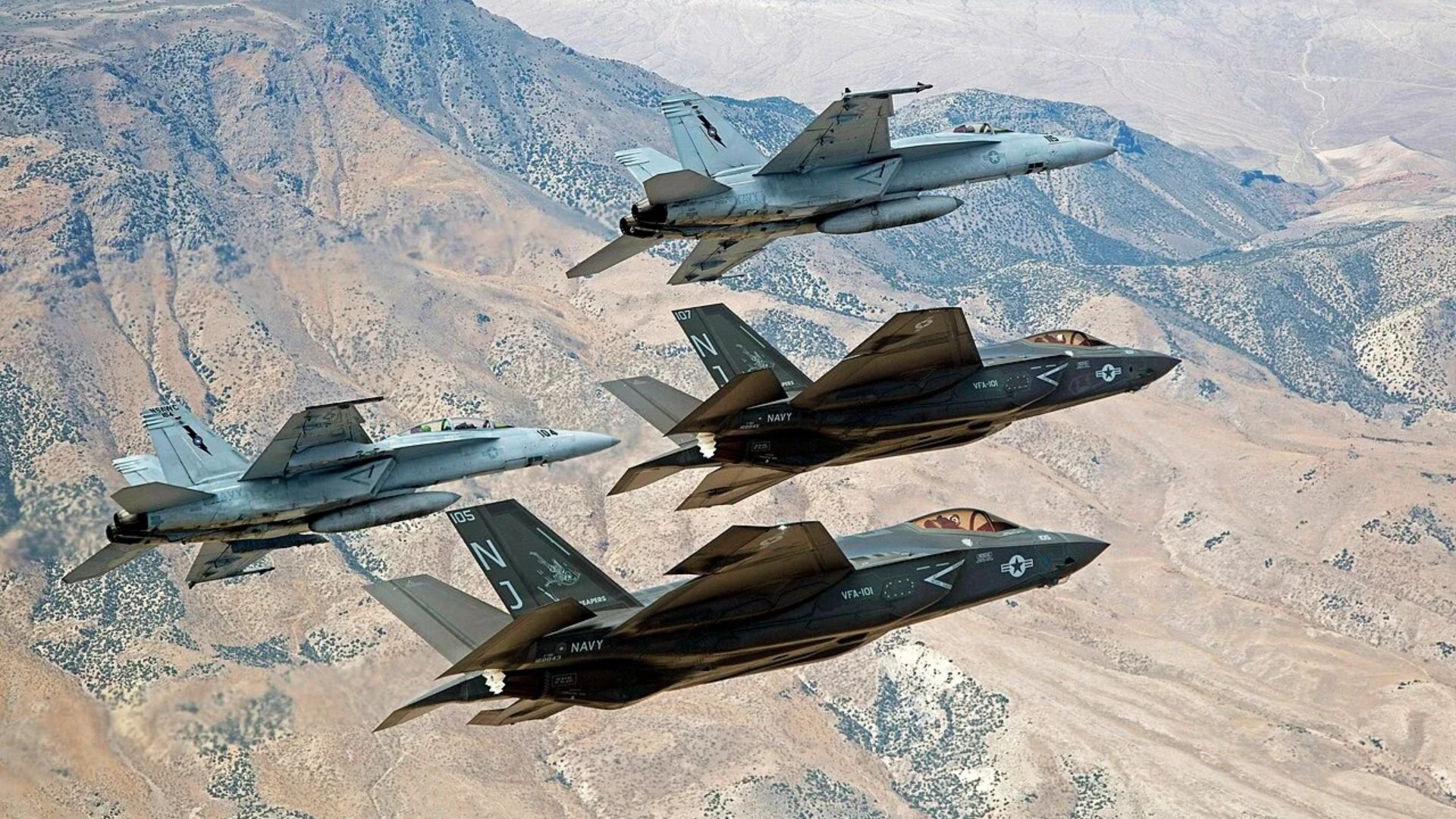
The US Navy has cleared the F-35C Lightning II to operate from all of its aircraft carrier classes after an 11-day trial aboard the future USS John F. Kennedy. Lockheed Martin announced the clearance on November 19 after testing showed the stealth fighter could use the Ford-class carrier’s electromagnetic catapult and new landing system. Two F-35Cs from Naval Air Station Patuxent River in Maryland completed 34 flights during the campaign. The aircraft logged 122 catapult launches and 122 arrested landings. The results open the way for the fighter to join air wings aboard Ford-class carriers, though the lead ship still needs upgrades before it can deploy with an F-35C squadron. How the Kennedy trials tested the F-35C The first arrested landing aboard John F. Kennedy took place on October 13. The at-sea evaluation followed shore tests that ran from January 2024 to May 2025, giving engineers a chance to check how the aircraft and the carrier’s equipment worked together on a ship at sea. The Kennedy uses the Electromagnetic Aircraft Launch System in place of the steam catapults found on Nimitz-class carriers. For landings, it uses Advanced Arresting Gear to slow an aircraft after its tailhook catches a cable stretched across the deck. Engineers monitored the loads on the fighter during launches and landings to help establish the conditions under which it can operate from the carrier. The team also reviewed what maintenance crews would need aboard the carrier to service the fighter during an extended deployment at sea. The software check was limited to an early look at stability aboard the new ship. Full operational validation of the Block 4 upgrade remains a separate step. Why USS Gerald R. Ford still needs upgrades The F-35C already serves aboard some Nimitz-class carriers, but USS Gerald R. Ford has yet to deploy with the fighter. The lead ship’s air wing has relied primarily on F/A-18E/F Super Hornets, alongside EA-18G Growlers that provide electronic warfare support. John F. Kennedy received changes during construction to accommodate the F-35C. Gerald R. Ford still needs modifications to its jet blast deflectors, which shield the flight deck from exhaust during launches, as well as secure spaces to support the aircraft. The Navy plans to make those changes ahead of future F-35C deployments. What the F-35C brings to Ford-class carriers The clearance covers the F-35C, the version built for catapult launches and arrested landings. It has larger wings with folding tips and reinforced landing gear for carrier operations. The Marine Corps primarily flies the F-35B, a short-takeoff and vertical-landing variant, from amphibious assault ships. Adding the F-35C to a Ford-class air wing would bring a stealth aircraft into a mix that already includes Super Hornets and Growlers. The aircraft combines information from its onboard sensors to give pilots a single view of their surroundings. It can also share information with other aircraft equipped to receive it. The tests will inform Navy guidance that specifies when the F-35C can safely launch from and land on Ford-class carriers. Before deploying an F-35C squadron, each ship will still need the facilities, maintenance support, and approved procedures to sustain the aircraft at sea. Get the latest in engineering, tech, space & science - delivered daily to your inbox.Atharva is a full-time content writer with a post-graduate degree in media & amp; entertainment and a graduate degree in electronics & telecommunications. He has written in the sports and technology domains respectively. In his leisure time, Atharva loves learning about digital marketing and watching soccer matches. His main goal behind joining Interesting Engineering is to learn more about how the recent technological advancements are helping human beings on both societal and individual levels in their daily lives.
US Navy opens door to F-35C on Ford-class carriers after 34 flights
Full Article
Original Source
Read the full article at Interestingengineering →KhanList aggregates and links to publicly available news content. We do not host full articles from third-party sources. Always verify important information with original sources.