
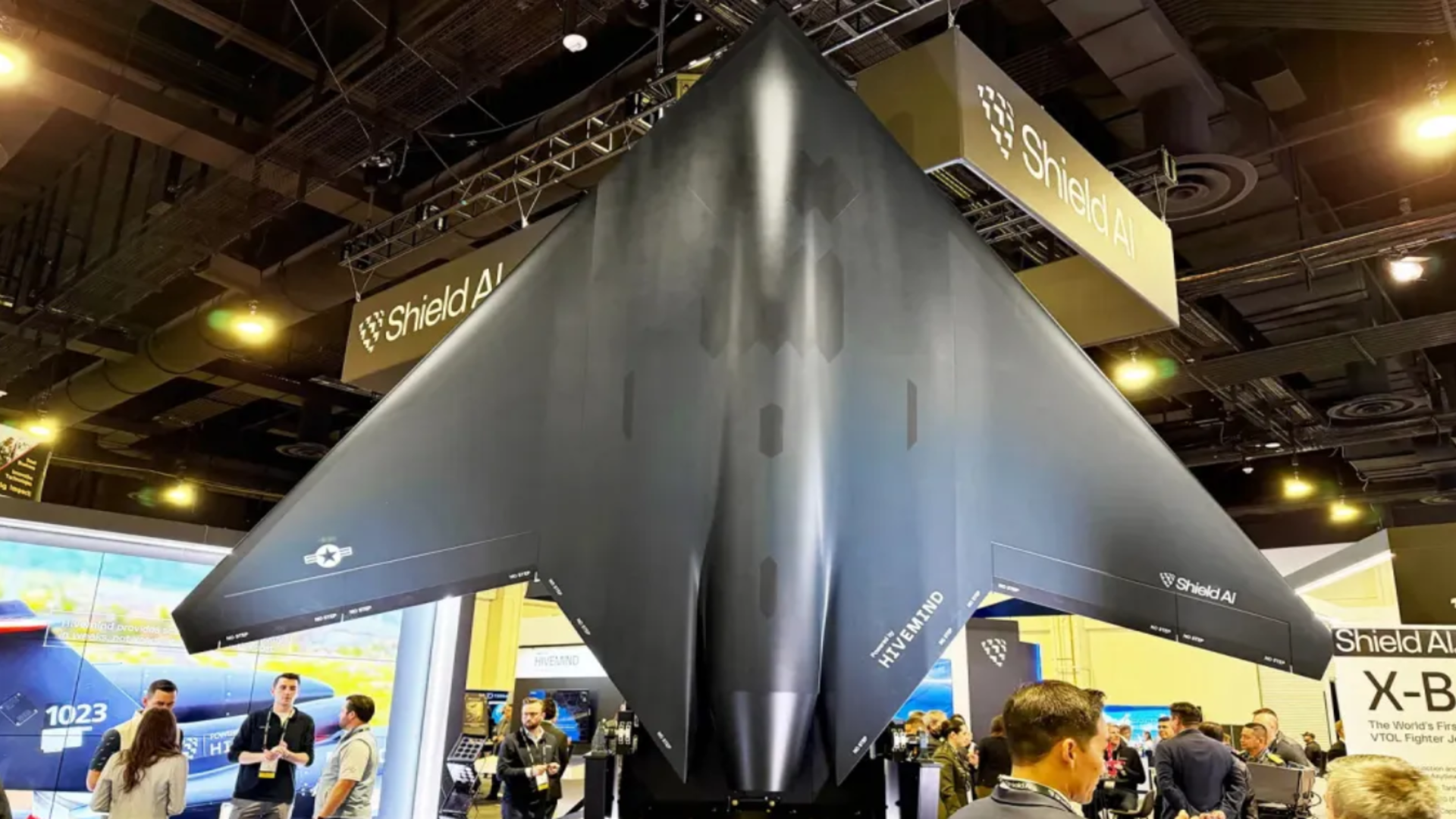
Shield AI expects its first full-scale X-BAT prototype by October's endX-BAT aims to fly 2,000 nautical miles and reach 50,000 feetThe aircraft's projected combat radius ranges from 1,000 to 1,340 nautical milesShield AI expects to unveil its full-scale X-BAT unmanned combat aircraft by the end of October 2026 ahead of planned flight tests later this year.In addition to its initial $50 million investment, the U.S. Navy has committed another $150 million toward X-BAT’s development, bringing the total external funding to $200 million.The aircraft is designed for vertical take-off and landing (VTOL), with a projected range of 2,000 nautical miles and an operating ceiling of 50,000 feet.Funding advances development of runway-independent aircraftThe latest funding comes through a US Navy development agreement that links payments to specific technical milestones, rather than providing the entire sum upfront.Shield AI must match the Navy's $150 million contribution, following an earlier $50 million government investment accompanied by equivalent company funding.According to the company, the first full-scale prototype of the aircraft should be completed within weeks.“We've been building two prototype vehicles—they're full scale. The first one will be done in the next couple of weeks here,” said Armor Harris, Shield AI’s senior vice president of aircraft.Sign up to the TechRadar Pro newsletter to get all the top news, opinion, features and guidance your business needs to succeed!“And then we'll be getting into flight testing at the end of this year…going straight to the vertical takeoff and landing tests as the final de-risk of the [technology].”The company has spent the past year conducting wind tunnel, engine and thermal testing to reduce technical risks before moving toward flight demonstrations.X-BAT uses a tail-sitting design, allowing it to launch and recover vertically without a conventional runway.Its propulsion system combines a General Electric F110 engine with an axisymmetric vectoring exhaust nozzle, which helps control the aircraft during vertical flight.Ambitious performance targets face demanding testsShield AI revealed that the X-BAT comes with a potential combat radius of around 1,340 nautical miles, approximately twice that of the F-35.Its planned weapons capacity includes internal bays comparable in size to those aboard the F-35, alongside two hardpoints beneath the wings.These external stations can accommodate weapons, drop tanks or buddy-refuelling equipment, potentially extending X-BAT's mission options.Its internal weapons bays can carry strike weapons, while its modular architecture is designed to support electronic warfare and air-to-air missions.The company expects to achieve a fully equipped flight-test aircraft in 2028, with early operational capability planned for 2029.Serial production is expected to follow, although the schedule depends on successful testing and the Navy's assessment of development milestones.The programme forms part of the Navy's Runway Independent Maritime Expeditionary Strike initiative, which aims to operate combat aircraft without depending on conventional airfields.Shield AI envisages deploying X-BAT from amphibious warfare ships and dispersed land locations, potentially increasing access to aircraft without using additional carrier deck space.However, the aircraft has not yet demonstrated its defining vertical flight capability, and its projected range, payload and autonomy remain developmental goals.Earlier attempts to develop tail-sitting combat aircraft encountered substantial engineering difficulties, making successful testing essential before the programme's ambitious schedule can be assessed.Via Defense One Follow TechRadar on Google News and add us as a preferred source to get our expert news, reviews, and opinion in your feeds.
US Navy could see first VTOL X-BAT UAV 'by end of this month' as external funding reaches $200 million — Shield AI's fighter-sized drone can fly 2000 nautical miles, reach 50,000 feet
Full Article
Original Source
Read the full article at Techradar →KhanList aggregates and links to publicly available news content. We do not host full articles from third-party sources. Always verify important information with original sources.