
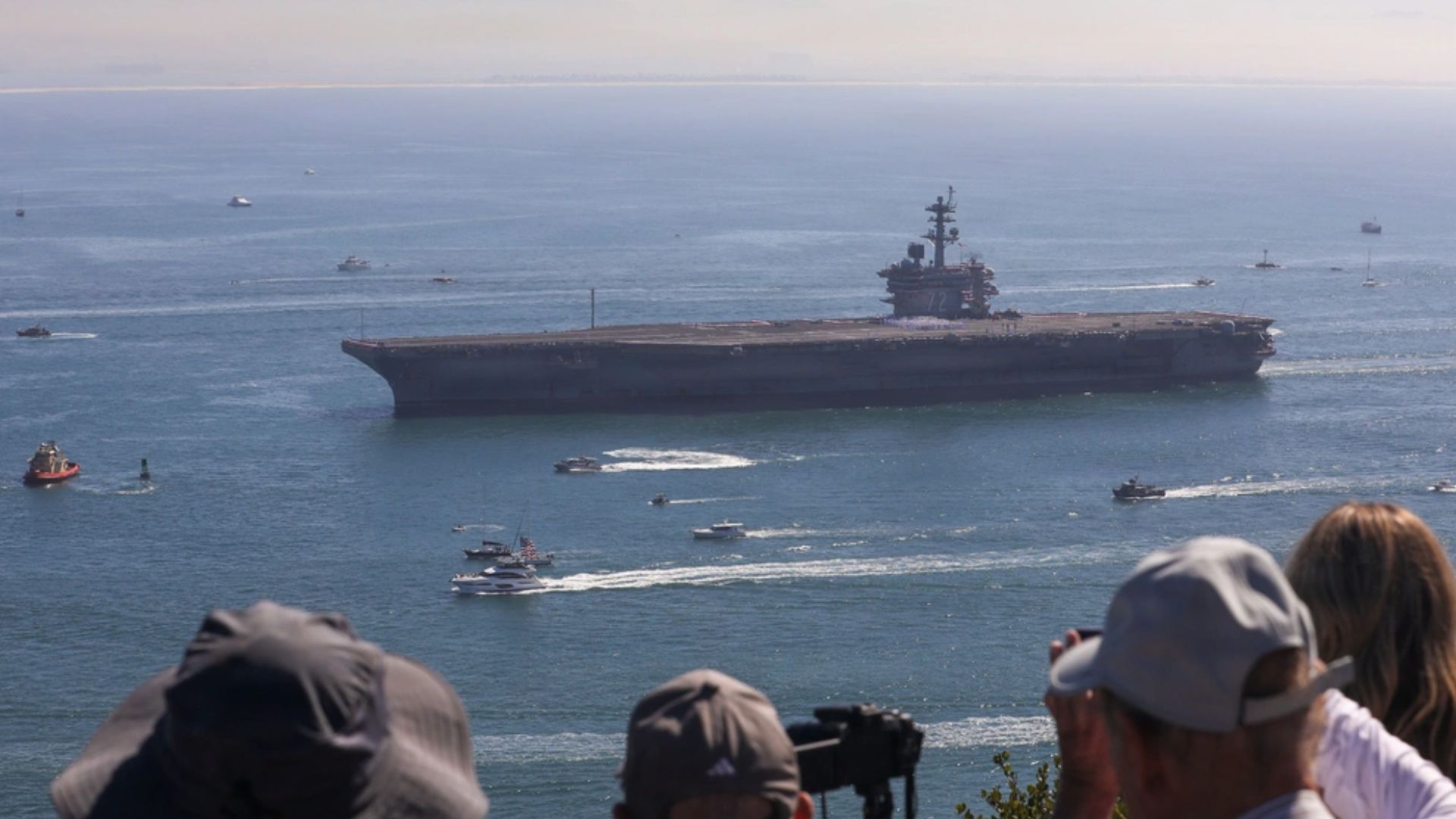
The US Navy is pursuing an ambitious shipbuilding expansion, from new nuclear-powered aircraft carriers and submarines to redesigned surface combatants and a proposed class of battleships. But as the service expands its fleet, construction delays, maintenance backlogs, and limited shipyard capacity continue to complicate its plans. One of the clearest signs of progress came on September 29, when the Navy took preliminary acceptance of the future USS John F. Kennedy (CVN 79), its second Gerald R. Ford-class aircraft carrier. The milestone allows the ship and its crew to conduct further at-sea testing while its builder, Newport News Shipbuilding, completes remaining work. The Navy said the carrier was approximately 99% complete, with formal delivery expected in spring 2027. According to the US Navy’s announcement, testing of four remaining advanced weapons elevators was among the work still to be completed. Preliminary acceptance marks progress toward delivery, but does not mean the carrier is fully operational. Carriers, submarines and destroyers anchor fleet renewal The Ford-class program represents the Navy’s effort to modernize its carrier fleet, while the Virginia-class and Columbia-class submarine programs address different undersea requirements. Virginia-class boats conduct attack-submarine missions, including intelligence gathering and strikes against enemy targets. The Columbia class is being developed to replace the Navy’s aging Ohio-class ballistic missile submarines, which form a central part of the US nuclear deterrent. The Navy is also continuing to build Arleigh Burke-class guided-missile destroyers. The latest Flight III configuration features the AN/SPY-6(V)1 radar, designed to improve air and missile defense capabilities. Together, these programs underpin the fleet’s ability to project power, protect carrier groups, and conduct operations across multiple maritime theaters. However, building new vessels is only part of the challenge. A Government Accountability Office report published in August 2026 found that maintenance delays and idle time for attack submarines cost the Navy more than 15,000 operational days over the previous decade, with an estimated $3.4 billion spent sustaining submarines and crews that provided no operational capability. The findings emphasize a bigger problem. Adding ships to the construction pipeline does not automatically translate into more vessels available for deployment. Frigates and battleships signal a changing approach The Navy is also reconsidering how it builds smaller surface combatants. In November 2025, it announced a major restructuring of the Constellation-class frigate program. Under the revised approach, construction of the first two ships would continue, while the Navy canceled four additional ships in the existing program. The Navy has instead pursued a new FF(X) frigate initiative based on the Coast Guard’s National Security Cutter design. The shift reflects concerns about the original program’s schedule, design complexity, and cost. The Navy’s Constellation-class fact file outlines the revised program status. At the other end of the surface fleet, the administration is proposing a new class of nuclear-powered guided-missile battleships, designated BBGN. The scale of the plan illustrates the competing demands facing the shipbuilding industry. In its assessment of the Navy’s new battleship program, the Congressional Budget Office estimated that building 15 ships between 2028 and 2056 could cost approximately $275 billion in 2026 dollars. The first vessel alone could cost about $23 billion. These are independent estimates of a proposed procurement program, not money already spent or a finalized construction bill. The CBO also warned that the Navy’s plans would substantially increase the tonnage of large surface combatants shipyards must produce, potentially creating a significant industrial challenge. Shipyard capacity could determine the outcome The Navy’s fiscal year 2027 shipbuilding plan requests a major investment in fleet expansion and the maritime industrial base. Released in May, the plan calls for $65.8 billion in shipbuilding investment and emphasizes workforce development, shipyard capacity, and improved delivery performance. The Navy’s announcement describes the administration’s long-term fleet ambitions, but proposed spending and future procurement should not be confused with completed construction. The infrastructure challenge extends beyond shipbuilding yards to facilities responsible for maintaining the existing fleet. A September 2026 GAO report estimated that the Navy’s Shipyard Infrastructure Optimization Program could exceed $200 billion and take more than 50 additional years to complete under current plans. The scale of these requirements explains why expanding the fleet will require more than larger budgets. The Navy must also improve production schedules, modernize shipyards, train workers, and keep existing vessels available for service.The coming years will test whether the United States can turn its shipbuilding ambitions into a larger, more capable fleet. New carriers, submarines, and surface combatants remain central to that effort, but their strategic value will ultimately depend on whether the industrial base can deliver them on time and keep them ready for operations.Get the latest in engineering, tech, space & science - delivered daily to your inbox.Kaif Shaikh is a journalist and writer passionate about turning complex information into clear, impactful stories. His writing covers technology, sustainability, geopolitics, and occasionally fiction. A graduate in Journalism and Mass Communication, his work has appeared in the Times of India and beyond. After a near-fatal experience, Kaif began seeing both stories and silences differently. Outside work, he juggles far too many projects and passions, but always makes time to read, reflect, and hold onto the thread of wonder.
US Navy accelerates next-generation warship drive to strengthen naval superiority
Full Article
Original Source
Read the full article at Interestingengineering →KhanList aggregates and links to publicly available news content. We do not host full articles from third-party sources. Always verify important information with original sources.