
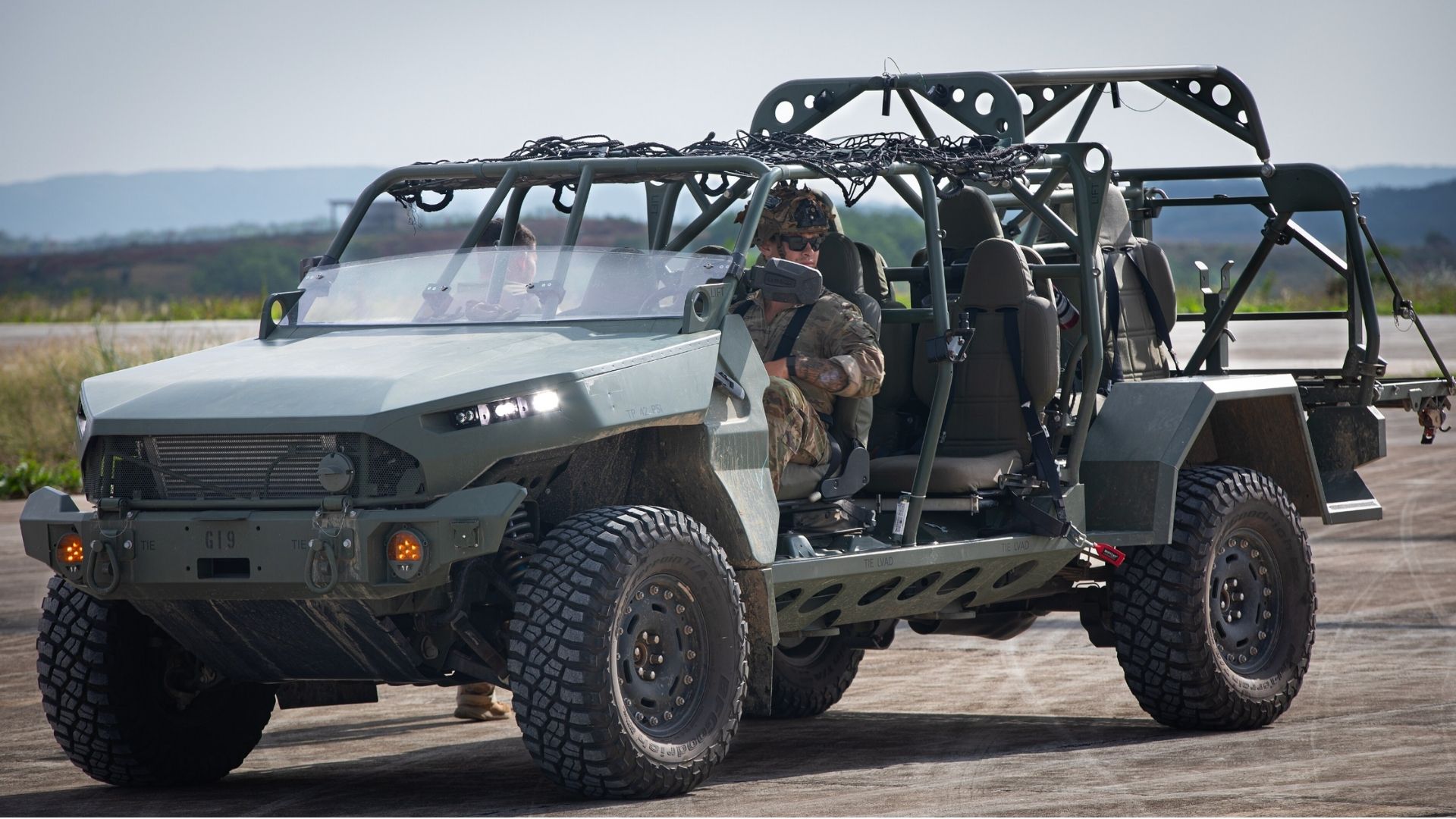
The US Army will deploy an artificial intelligence-based positioning system that enables military vehicles to determine their location without relying on GPS or other radio-frequency signals. AI company TERN announced the deployment under an $11.26 million contract covering its Independently Derived Positioning System (IDPS) and Vehicle Health & Maintenance System (VHMS). The technology is intended to maintain navigation and fleet visibility when satellite signals are jammed, spoofed, degraded, or denied. Its rollout follows TERN’s progression through several Army innovation programs and moves the technology toward operational deployment. Vehicles determine their position without GPS TERN’s IDPS continuously derives and maintains a vehicle’s position independently of GPS and other external RF signals. It supplies positioning and navigation information to both the vehicle operator and associated command-and-control systems. This capability addresses a vulnerability that has become increasingly visible in modern conflicts. Operations in Ukraine and the Middle East have demonstrated how GPS and global navigation satellite system signals can be disrupted through interference, spoofing, denial, and electronic warfare. Such disruption can affect military maneuver, logistics, autonomous platforms, and coordination between commands. By calculating position within the vehicle, TERN’s system reduces dependence on signals travelling between satellites and ground-based platforms. “All of the space between a vehicle and the satellites orbiting Earth represents an opportunity to disrupt or degrade the GPS signal,” said Brett Harrison, president and co-founder of TERN. “TERN fundamentally changes that equation by enabling vehicles to derive their own position from within,” he added. “Rather than relying on an external signal, we are delivering the Army an intelligent positioning process that operates at the edge, fundamentally expanding what the vehicle is capable of doing,” Harrison continued. AI system combines location with vehicle health Alongside navigation data, TERN’s VHMS continuously monitors vehicle condition and operational readiness. It combines that information with location data, giving commanders a unified view of fleet status within existing command environments. The combined capability could also support unmanned ground vehicles, robotic logistics systems, autonomous platforms, and other AI-enabled military operations. These machines need reliable positioning and readiness information as they assume greater responsibility for navigation, maneuver, and mission execution. TERN said continuously understanding both location and vehicle health provides a foundation for the intelligent systems operating above that layer. Army program moves technology into deployment The contract follows TERN’s earlier participation in the Army’s xTechOverWatch program. The company was selected from more than 600 applicants and secured a Direct-to-Phase II Small Business Innovation Research contract after an evaluation involving soldiers. Building on that work, TERN received a Phase III SBIR award through Army FUZE and the Technology Maturation Initiative. According to the company, the process moved its technology from Army innovation programs toward operational deployment in less than a year. “This award demonstrates what is possible when soldiers, acquisition leaders, and emerging technology companies have a clear path from operational experimentation to scaled fielding,” said Shaun Moore, CEO and co-founder of TERN.TERN said the same software-defined vehicle capabilities could also become relevant in commercial markets as autonomous systems continue to advance.Get the latest in engineering, tech, space & science - delivered daily to your inbox.Atharva is a full-time content writer with a post-graduate degree in media & amp; entertainment and a graduate degree in electronics & telecommunications. He has written in the sports and technology domains respectively. In his leisure time, Atharva loves learning about digital marketing and watching soccer matches. His main goal behind joining Interesting Engineering is to learn more about how the recent technological advancements are helping human beings on both societal and individual levels in their daily lives.
US military vehicles could get TERN’s GPS-free positioning tech to support mobility
Full Article
Original Source
Read the full article at Interestingengineering →KhanList aggregates and links to publicly available news content. We do not host full articles from third-party sources. Always verify important information with original sources.