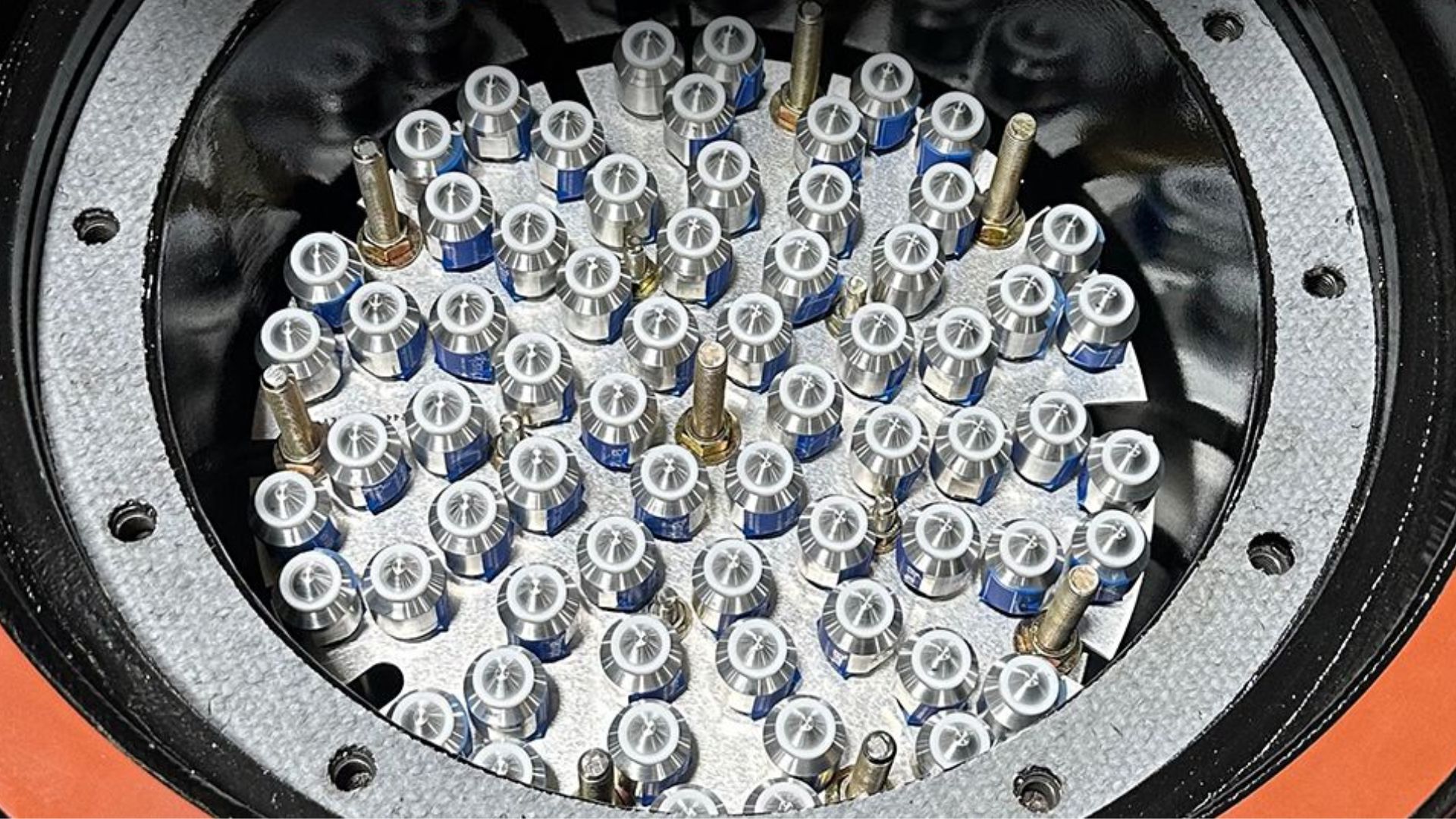
The United States Department of Energy has conditionally selected nuclear technology developer Radiant to receive a second allocation of high-assay low-enriched uranium. “The allocation is intended to fuel Radiant’s microreactor for the Department of the Air Force’s Buckley Space Force Base in Aurora, Colorado, which will be delivered by 2028,” said the company in a press release. Radiant was selected as the only private company in this allocation round alongside NASA, which secured uranium fuel for its SR-1 Freedom mission to Mars. The decision forms part of the federal effort to establish domestic nuclear supply chains and deploy decentralized nuclear systems for critical infrastructure. “This second HALEU allocation moves us a step closer to turning Buckley’s national security requirement for resilient power into an operational reality,” said Dr. Rita Baranwal, Chief Nuclear Officer of Radiant. Local grid independence for continuous power The system selected for the installation is Kaleidos, a portable microreactor designed to output 1 megawatt of electrical power. While traditional light-water reactors require large cooling towers and stationary water sources, Kaleidos uses high-temperature gas cooling. This design eliminates liquid coolant risks such as leaks or boiling-off scenarios and makes the unit self-contained within standard shipping containers for air, sea, or road transport. The reactor core runs on High-Assay Low-Enriched Uranium, or HALEU. Standard commercial reactors use fuel enriched up to five percent uranium-235, while HALEU raises this level to between 5 and 20 percent. The higher concentration keeps the core small. It also helps the fuel burn longer. The system uses special nuclear fuel to trap radioactive waste, and these are tri-structural isotropic particles, called TRISO. The military installation project is a part of the Department of the Air Force and Defense Innovation Unit’s Advanced Nuclear Power for Installations initiative, initiated in April 2026. The technical goal is to provide local grid independence for military bases, isolating critical systems from commercial power outages, cyber threats, or fuel supply disruptions. Grid resilience and testing “America’s most important national security missions need power that remains available when the grid is disrupted, fuel supply lines are strained, or conventional infrastructure is vulnerable,” noted Dr. Baranwal. “DOE is helping put the fuel pathway in place for Radiant to deliver that resilience at Buckley.” Before deploying to Buckley Space Force Base, Radiant is executing a multi-stage validation process at the Idaho National Laboratory. The company recently took delivery of its first custom TRISO fuel shipment at the laboratory facility using an initial DOE fuel allocation. Engineering teams are now preparing for a 150-hour continuous endurance trial of the Kaleidos Demonstration Unit. This test will measure thermal control stability, power generation output, passive heat removal performance, and structural integrity under prolonged load. “The U.S. Department of Energy’s HALEU Availability Program is an important stepping-stone for the nuclear industry as we work to establish a domestic nuclear fuel supply in support of the American nuclear renaissance,” concluded Assistant Secretary for Nuclear Energy Ted Garrish. Recommended ArticlesGet the latest in engineering, tech, space & science - delivered daily to your inbox.An active and versatile journalist and news editor. He has covered regular and breaking news for several leading publications and news media, including The Hindu, Economic Times, Tomorrow Makers, and many more. Aman holds expertise in politics, travel, and tech news, especially in AI, advanced algorithms, and blockchain, with a strong curiosity about all things that fall under science and tech.
US military base to get portable 1MW microreactor with new nuclear fuel allocation
Full Article
Original Source
Read the full article at Interestingengineering →KhanList aggregates and links to publicly available news content. We do not host full articles from third-party sources. Always verify important information with original sources.