
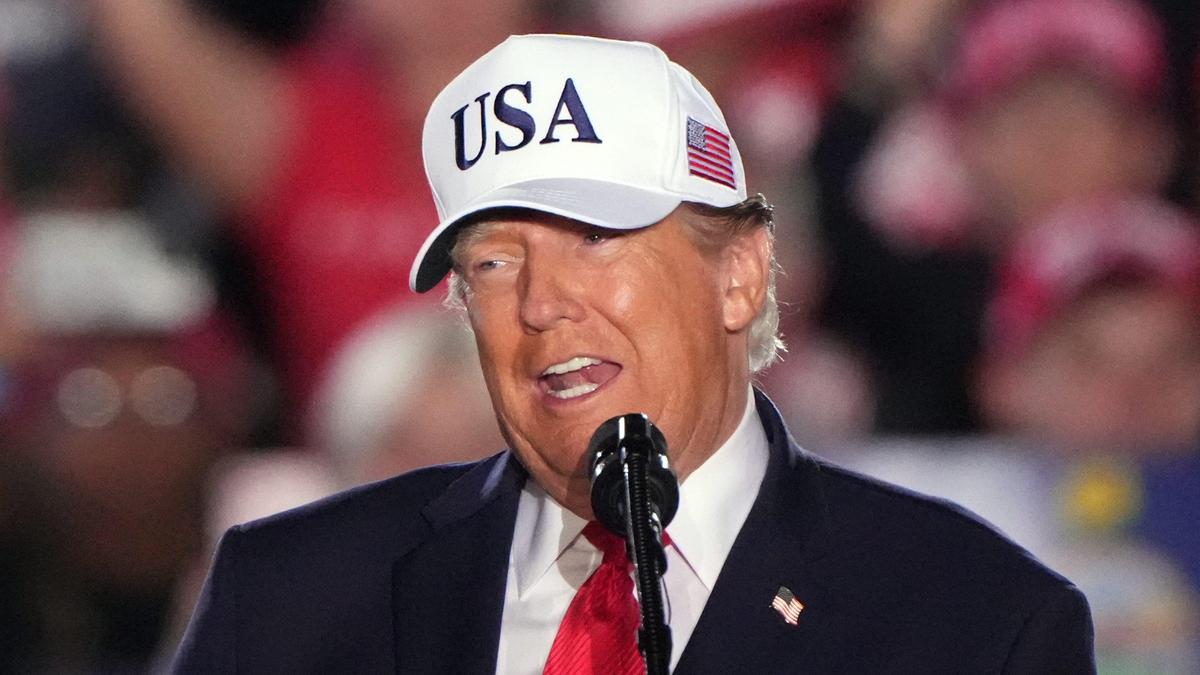
The results of the U.S. midterm elections, which show that the Democrats have gained control of both the Senate and the House of Representatives, will likely speed up talks between India and the U.S. on a trade deal but could also see higher tariffs on India until the deal is closed, according to experts.On the one hand, a desire to now quickly close the trade deal to show strength domestically could induce Mr. Trump to increase his tariff pressure on India, while on the other, Indian negotiators will likely see this election result as an opportunity to push through a favourable deal for India.U.S. midterm elections: Follow LIVE updates from the results on November 4, 2026American pressure to increaseAccording to Ajay Srivastava, founder of the trade think-tank Global Trade Research Initiative, this loss will push U.S. President Donald Trump to increase his exercise of his executive powers to pressure India into accepting a deal.“With foreign policy leverage failing against Russia, China, and Iran, Trump needs a quick win,” Mr. Srivastava said. “Expect heightened pressure on India for a trade deal to prove American clout.”Leaders in the U.S. and India have repeatedly said over the last few months that the deal between the two countries is nearly ready and is awaiting final approvals. India, in particular, has been holding out until it receives an assurance that it will win a clear advantage over its competitors.“Trump will now use his executive powers to pressure India for a quick deal that secures market access for U.S. agricultural and industrial goods, alongside other major concessions for U.S. companies,” Mr. Srivastava said.While the U.S. Supreme Court in February defanged Mr. Trump’s reciprocal tariff policy that had seen tariffs of up to 50% being levied on India, the President has other tools through which he can levy tariffs.Also Read | India, U.S. fine-tuning trade agreement; most discussions over: Piyush GoyalIndia’s interest to pick upAccording to Deep Pal, Director of Geopolitics and Policy at the Koan Advisory Group, the implications of these election results might lead to some difficulty for Mr. Trump in gaining support for his policies.“For this administration, especially after tonight, any decision has to look like a win domestically, to core Republican voters,” Mr. Pal said. “With Congress out of his hands, a lot will depend on how much control Mr. Trump has over the Republican party and if there will be any purchase for his ideas.”However, Mr. Pal pointed out that the Indian government might view this new reality in the U.S. with greater optimism.“Indian negotiators, on the other hand, may think that the new realities will make the Trump administration amenable to a better trade deal for India, breaking the current deadlock, and leading to a flurry of new conversations,” Mr. Pal said.He added, though, that the White House has so far shown it does not believe in stepping back, but rather in doubling down.Explained | Why are Indian and U.S. leaders cooling off on a trade dealTariffs on India could increaseThe U.S. has already implemented several tariffs on India and other nations and has put into place tools that empower it to levy more.The Lindsey O. Graham Sanctioning Russia and Iran Act of 2026, which envisages tariffs of up to 100% on countries such as India that import large quantities of Russian oil and gas, was first co-proposed by a Republican and Democrat senator, and received significant bipartisan support during its passage in both the Senate and the House.Mr. Trump has kept the provisions of the Act in abeyance for now in national interest, but even if he were to decide to implement the tariffs, he will not receive resistance from the Democrat-controlled Congress due to the bipartisan support the Act received.The U.S. is also currently investigating India and other countries under Section 301 of the U.S. Trade Act of 1974 into whether they are using strategic excess manufacturing capacity to hurt the U.S. economy. Mr. Trump can authorise additional tariffs on the basis of the findings of this investigation without the need for Congress approval.He has already imposed a tariff of 10% on India on the basis of a Section 301 investigation into whether U.S. trade partners were doing enough to prevent the import of goods made using forced labour.These Section 301 tariffs will come on top of the 50% tariffs Mr. Trump imposed last year under Section 232 of the Trade Expansion Act of 1962 on the import of all steel and aluminium, including from India.The U.S. Supreme Court, while striking down the legal basis for the reciprocal tariff system, allowed the Section 232 tariffs to remain. Even a Democrat-led Congress will not be able to revoke these tariffs.
U.S. midterm elections impact on India: faster trade deal talks and higher tariffs likely
Full Article
Original Source
Read the full article at Thehindu →KhanList aggregates and links to publicly available news content. We do not host full articles from third-party sources. Always verify important information with original sources.