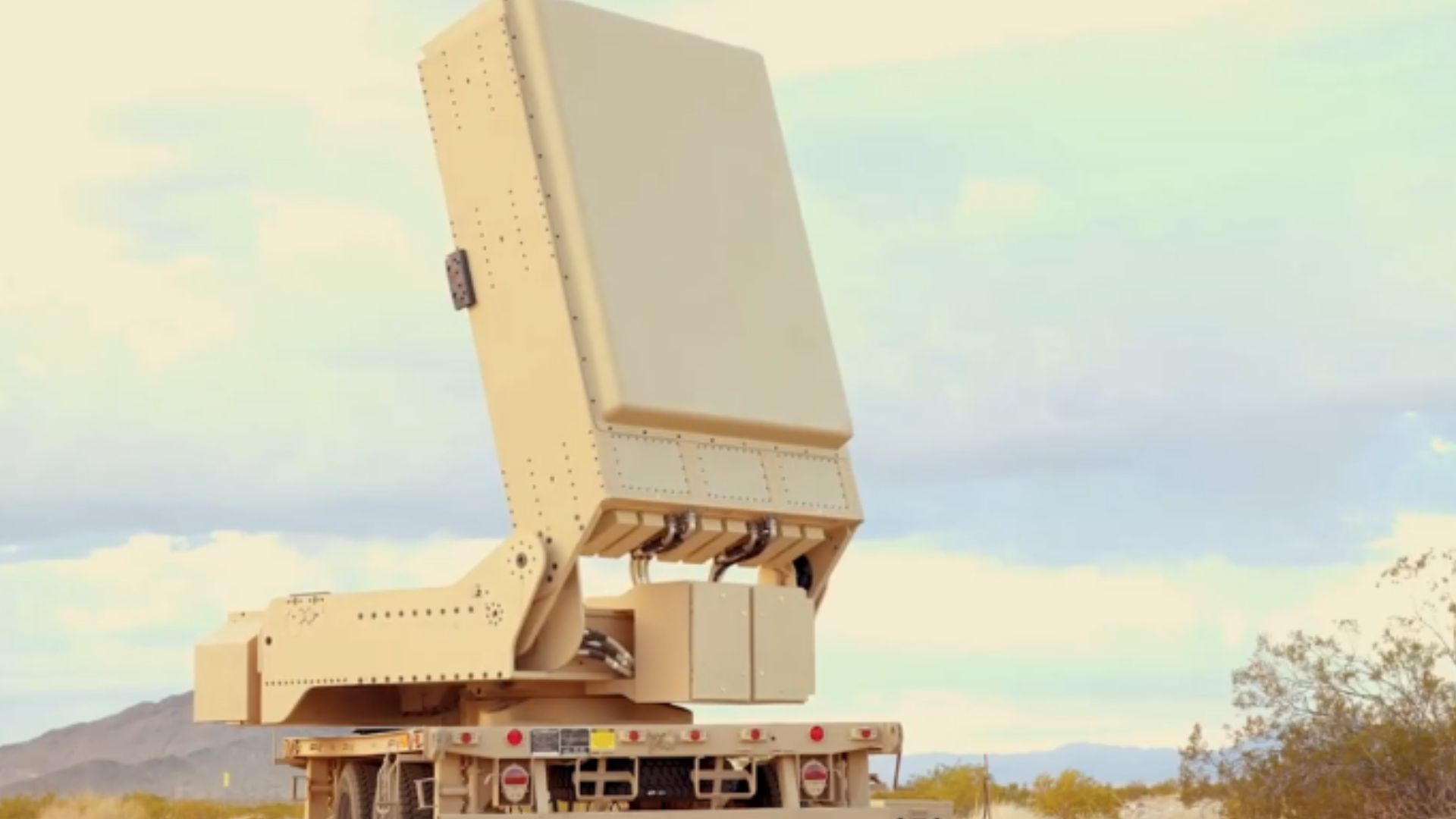
Drone swarms approaching US Marine Corps positions could soon face an invisible wall of electromagnetic energy. The country has awarded tech company Epirus an $11-million contract to deliver HAVOC, a vehicle-mounted high-power microwave system designed to disable multiple drones simultaneously. Derived from the company’s Leonidas weapon, the High-power Microwave Autonomous Vehicle Operational Capability will be integrated across manned and unmanned Marine Corps ground vehicles. The contract includes training, servicing and sustainment support, along with options for another system and related capabilities. Three times the power HAVOC represents the next stage of the Expeditionary Directed Energy Counter-Swarm system, or ExDECS, delivered to the Marine Corps in 2025. While ExDECS introduced a deployable “one-to-many” approach for countering drones, its successor is expected to provide three times the power, greater range and improved ruggedness. The system uses solid-state high-power microwave weapon components and gallium nitride amplifiers to generate and strengthen electromagnetic energy. Instead of launching an interceptor at each target, it can produce electronic effects against multiple unmanned aerial systems within its coverage area. “This award highlights the Marine Corps’ commitment to fielding integrated, software-defined systems optimized for the complex and rapidly evolving drone threat,” Epirus CEO Andy Lowery said. “The HAVOC system will advance the one-to-many solution introduced with ExDECS and strengthen the Marines’ ability to deliver precise, low-collateral protection of high-value points and Marine warfighters,” he added. Its high-power microwave architecture is also designed to support continuous software-driven tuning. This could allow the weapon’s electronic effects to be adjusted as drone technologies and battlefield threats evolve. Microwave weapon goes mobile A universal sled mount will allow HAVOC to be installed on different Marine Corps ground vehicles instead of remaining tied to a single platform. That mobility could help units reposition the weapon with frontline forces or deploy it around vulnerable military infrastructure. HAVOC will also incorporate autonomous capabilities intended to reduce the decision-making burden on operators. This will be particularly important during swarm attacks, where personnel may need to detect, classify and engage numerous targets within seconds. The non-kinetic system can disable hostile drones without relying on conventional missiles or ammunition. Its low-collateral effects could make it useful around friendly troops, sensitive equipment and other locations where explosive interceptors pose additional risks. Protecting frontline assets The Marine Corps plans to use HAVOC alongside its existing low-altitude air-defense systems, including the FIM-92 Stinger, rather than as a replacement for them. The microwave weapon will become another layer within an architecture combining kinetic and non-kinetic defenses. Potential protection areas include refueling points, radars, communications equipment, power systems and other forward-deployed assets. HAVOC could also defend low-altitude air-defense units themselves, helping preserve systems responsible for countering larger aerial threats. The contract signals a broader attempt to move directed-energy counter-drone technology from demonstrations toward operationally relevant, production-ready systems. As inexpensive drones increasingly threaten expensive military equipment, HAVOC offers the Marines a way to engage multiple targets without firing one costly interceptor for every aircraft.Get the latest in engineering, tech, space & science - delivered daily to your inbox.Atharva is a full-time content writer with a post-graduate degree in media & amp; entertainment and a graduate degree in electronics & telecommunications. He has written in the sports and technology domains respectively. In his leisure time, Atharva loves learning about digital marketing and watching soccer matches. His main goal behind joining Interesting Engineering is to learn more about how the recent technological advancements are helping human beings on both societal and individual levels in their daily lives.
US Marines sets sight on Epirus’ microwave weapon to defeat drone swarms
Full Article
Original Source
Read the full article at Interestingengineering →KhanList aggregates and links to publicly available news content. We do not host full articles from third-party sources. Always verify important information with original sources.