
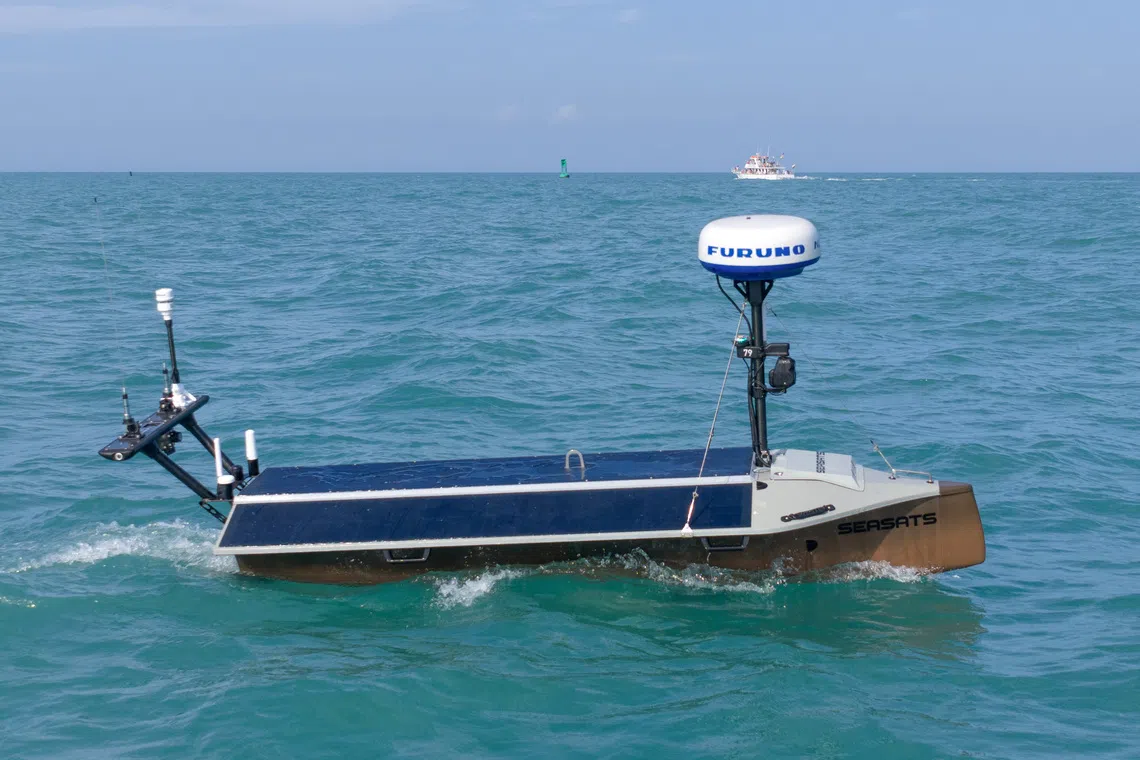
WASHINGTON, Oct 2 - The Pentagon may expand its use of autonomous surveillance boats on the Rio Grande and in the Gulf of Mexico after the canoe-sized vessels helped authorities detect and deter illegal border crossings and narcotics trafficking during a pilot program that began in January, a US official said.The unmanned surface vessels, built by San Diego-based startup Seasats, patrol the river for long periods without crews and are part of a growing push by the military and law enforcement agencies to use relatively inexpensive, autonomous systems for surveillance and security missions.The border mission also highlights how a new generation of venture-backed defense startups is positioned to win business once dominated by traditional contractors, as the Pentagon looks for faster, cheaper ways to deploy emerging technologies that can operate around-the-clock.Defense officials are studying whether the boats, which draw power from solar panels, could be deployed more widely as part of broader efforts to monitor remote stretches of the Rio Grande. Aside from Seasats, companies named Saronic, Saildrone and Splash provide similar marine drones.Defense officials want to increase the robotic fleet from its current test group of 10 vessels by as many as 50 to relieve the strain on Coast Guard cutters and crewed aircraft patrolling the border with Mexico as part of President Donald Trump's crackdown on illegal immigration.Maritime drones are "cost-effective solutions to interdict and put people in these areas that narco traffickers are now moving towards," said M. Roosevelt Ditlevson, assistant secretary of defense for Homeland Defense and Americas Security Affairs.Small drones and other unmanned platforms have proliferated across the US military in recent years after their repeated successes in the war in Ukraine.DRONES CAN OPERATE FOR MONTHSSeasats' 11-foot, 340-pound Lightfish is a low-profile autonomous vessel that costs roughly $240,000 and can be launched from a boat ramp or the back of a pickup truck. The drone can operate for months at a time in rough seas.The vessels carry sensors — including electro-optical, infrared and sonar sensors — that feed real-time tracking data directly into military software networks, including Palantir Technologies' Maven Smart System and Anduril Industries' Fortress platform, alerting Customs and Border Protection and Coast Guard units.The Pentagon said that in an average month, the Lightfish drones have assisted in 452 detections, 350 apprehensions and 100 turnbacks, which refer to when a group of people abort a border crossing attempt after realizing they have been discovered.They "see that the vessel is waiting there for them, and they know that they've basically been found out," Ditlevson said.The drone maker gained international attention in July when Reuters reported that a commercial Lightfish vessel operating inside the Philippines' exclusive economic zone navigated close enough to a Chinese People's Liberation Army Navy guided-missile destroyer to capture detailed close-up video, demonstrating how low-cost autonomous craft can monitor multibillion-dollar military assets.With continued success, Ditlevson said Lightfish orders could rise by 50 boats and potentially also operate in the Gulf of Mexico, forming a radar fence between Texas and Key West. But Ditlevson said use will expand in increments, exploring different technologies."We're agnostic to the vendor. We want the best technology," he told Reuters in an interview.Seasats Chief Executive Mike Flanigan said uncrewed systems provide persistent coverage that traditional, fuel-heavy assets cannot match."A plane or a ship might go really far really fast, but if you say, 'I want to keep that Boeing 737 over a patch of ocean for a day,' it just can't do it," Flanigan said. "The boat doesn't cover nearly as much territory as fast, but it can stay there for months at a time, which is the key differentiator for these security and monitoring applications."As tighter border security and targeted military operations have reduced drug smuggling routes, cartels have increasingly pushed into coastal waterways and near-coastal regions. The expanded drone use in the Gulf of Mexico is a precursor to testing the vessels in the harsher seas of the Pacific Ocean near San Diego. REUTERS
US looks to expand use of canoe-sized drones to deter migrant crossings
Full Article
Original Source
Read the full article at Straitstimes →KhanList aggregates and links to publicly available news content. We do not host full articles from third-party sources. Always verify important information with original sources.