
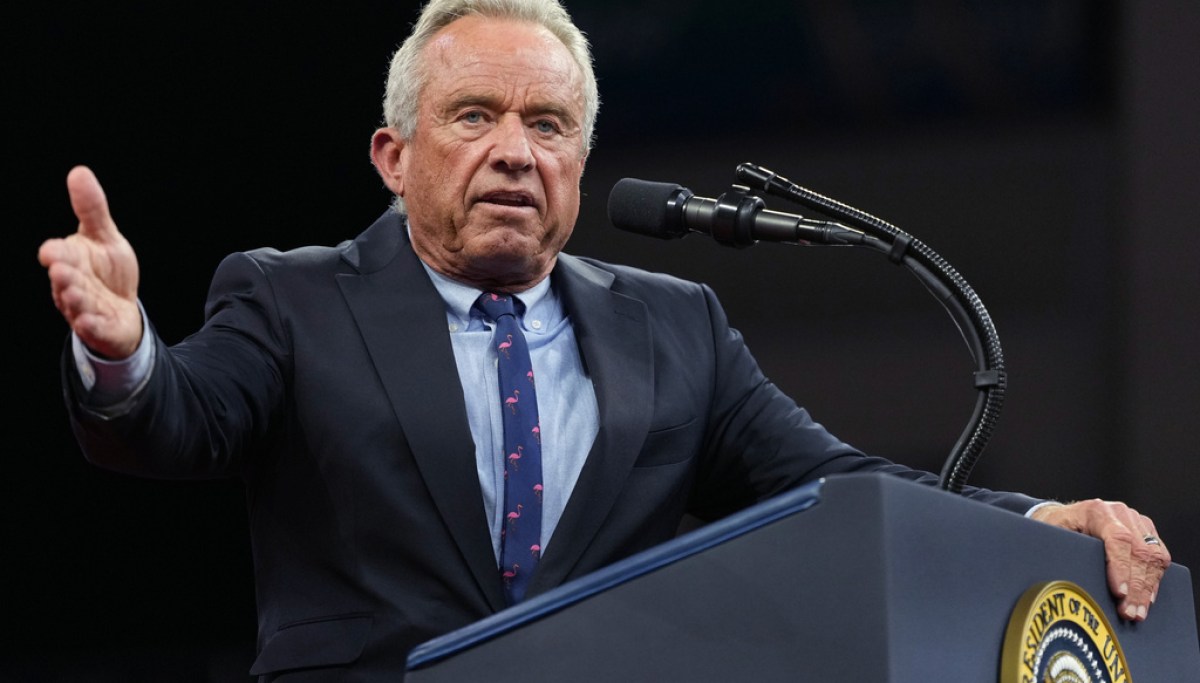
The United States is likely to lose its measles elimination status this week after an international public health body reviews data from nearly two years of outbreaks amounting to more than 7,000 measles cases across the country.The Pan-American Health Organization, part of the public health arm of the United Nations, will meet Tuesday through Thursday to determine whether measles has become endemic, or continuously circulating, in both Mexico and the U.S.Although there is no formal penalty for a country losing its measles elimination status, the decision from the PAHO will be legacy-defining for Health and Human Services Secretary Robert F. Kennedy Jr., whose history of vaccine skepticism has cast a shadow over his public health leadership. At its most basic level, measles elimination is defined by the PAHO as the absence of virus transmission for at least a 12-month period in the presence of high-quality surveillance. When determining elimination status, reviewers consider the size and number of outbreaks, whether measles cases are imported or spread domestically, and measles vaccination rates.The virus was declared eliminated in 2000, but getting there took more than 40 years of a wide-reaching vaccination campaign. The measles, mumps, and rubella, or MMR, vaccine is 97% effective against measles after two doses and provides lifelong immunity for most people.But uptake of the combined measles, mumps, and rubella, or MMR, vaccine has been in steady decline since 2020, with forced vaccinations during the COVID-19 pandemic sparking vaccine hesitancy for other inoculations.So far this year, there have been 5,182 confirmed measles cases according to the Centers for Disease Control and Prevention. In 2025, there were a total of 2,289. That’s still well below the peak of nearly 28,000 measles cases in the U.S. in 1990, but it is the highest it has been since measles was declared eradicated.According to the Children’s Hospital of Philadelphia, roughly 3 in 10 people who contract measles will have at least one complication from the infection, ranging from more easily catching other infections to blood clotting problems. A measles infection during pregnancy can also increase the risk of miscarriage.Apart from the spread of the disease itself, the largest policy consequence of losing measles elimination status will be the cost of combating measles outbreaks, which is likely to have a substantial effect on federal and state budgets for healthcare spending.A Johns Hopkins Bloomberg School of Public Health analysis estimated that testing and medical labor for each new outbreak location costs roughly $245,000, plus an additional $16,000 per individual measles patient. Based on those figures, a singular outbreak of 1,500 patients, like the ongoing outbreak in Pennsylvania, would cost upward of $24 million.Under the leadership of Kennedy and CDC Director Erica Schwartz, the federal government “has mounted an aggressive response to measles outbreaks across the country,” HHS spokesperson Emily Hilliard said in a statement, adding that the government has spent an additional $100 million to states to battle outbreaks.The main question before the PAHO is whether or not the strain of measles from the various outbreaks across the country is genetically similar enough to be considered a continuously transmitted virus. In other words, scientists must determine if the measles virus that infected Mennonite families in Texas in spring 2025 is effectively the same as the measles currently infecting patients in Pennsylvania, New York, and elsewhere.Dr. Jess Steier, a public health specialist on the board of the National Foundation for Infectious Diseases, wrote in an op-ed in June that an analysis of whole-genome sequences of measles samples collected across various states only have slight variations, suggesting that they came from the same source.“For elimination status, it does not matter where the original case came from,” Steier wrote. “What matters is whether the chain ever broke, and a year of nearly identical sequences across multiple states says it did not.”The PAHO meeting was originally set for April 2026, but U.S. health officials requested more time for genomic analysis of the virus strains to determine if infections have indeed been continuous.In defense of the Trump administration’s measles policy, Kennedy has repeatedly noted that other countries are struggling to keep infection rates under control too.HIGH PRESSURE ON DEMOCRATS TO LOWER HEALTHCARE COSTSMexico, which will also be under review by PAHO this week, has had more than 20,000 confirmed measles cases since the start of its outbreak in January 2025, including nearly 14,000 in 2026. There have been 50 measles deaths in Mexico since the start of the initial outbreak.Canada lost its measles elimination status in November 2025, with more than 5,100 confirmed cases during the 12-monthlong outbreak. So far, Canada has had roughly 1,100 measles cases year-to-date as of early November.
US likely to lose its measles elimination status this week
Full Article
Original Source
Read the full article at Washingtonexaminer →KhanList aggregates and links to publicly available news content. We do not host full articles from third-party sources. Always verify important information with original sources.