
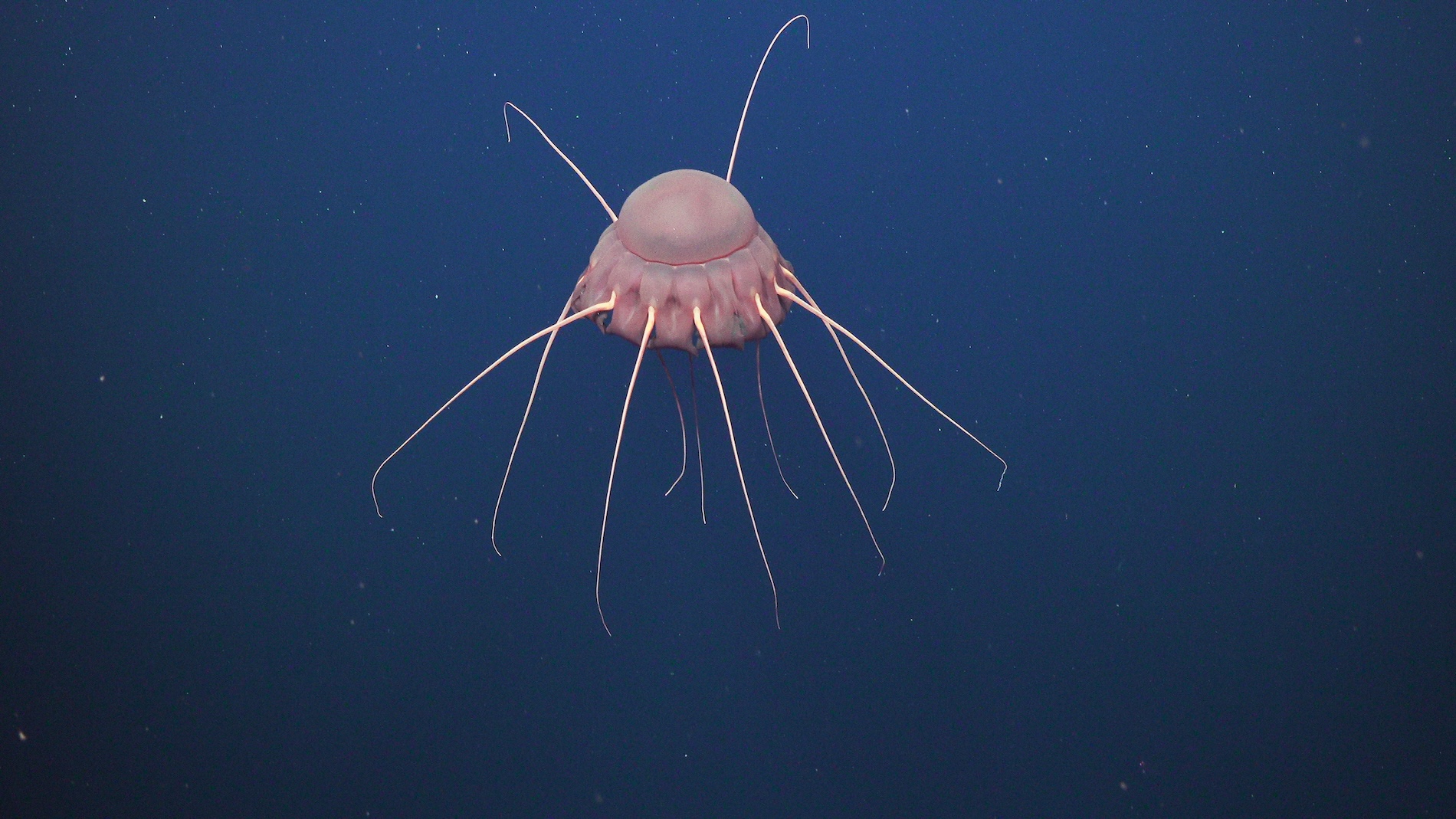
On Nov. 19, the U.S. government auctioned off 12.7 million hectares (31.5 million acres) of American Samoan seabed for $6 million, despite a federal court ruling that found the lease sale to be illegal for not taking into account impacts on endangered species.The lease sale marks the first time a country has completed an auction of seabed mineral leases that grant the right to explore for minerals.Critics warn that seabed mining in the waters of American Samoa could harm the marine environment and threaten the cultural, food security and economic interests of local communities.A pending legal challenge could invalidate the auction and any leases issued. The U.S. government has auctioned off 12.7 million hectares (31.5 million acres) of the American Samoan seabed, despite public opposition and a federal court ruling that found the sale to be illegal. The sale marks the first time a country has completed an auction of seabed mineral leases that grant the right to explore for minerals. The auction, which took place on the morning of Nov. 19 in Thousand Oaks, California, was publicly livestreamed, offering two vast lots of American Samoan seabed: One covering about 15 million acres, and the other about 16 million acres. Mongabay attended the livestream. Just two bidders showed up: A U.S. company called Wetstone U.S. Ventures and the Norwegian company Adepth. However, only Wetstone participated in the bidding process. By the end of the auction, which lasted approximately 20 minutes, Wetstone had secured both leases at the starting price of $3 million each, equivalent to approximately 19 U.S. cents per acre. In 2024, American Samoa, a U.S. territory, imposed a moratorium on deep-sea mining in waters extending up to 3 nautical miles from its coastline. The U.S. government has jurisdiction over the remainder of the exclusive economic zone (EEZ), which extends 200 nautical miles from shore, allowing it to pursue seabed mineral activities in this area without approval from the American Samoan government. Sabrina Suluai-Mahuka, center, and other activists protesting outside the site of the auction in Thousand Oaks, California. Image by Hunter Ries/Greenpeace USA. In a statement released on Nov. 16, a few days before the auction took place, Pulaali’i Nikolao Pula, the governor of American Samoa, called the lease sale an “historic moment” for his nation. “For more than 3,000 years, our Polynesian ancestors explored and navigated the vast Pacific Ocean,” Pula said. “Today, we stand at the threshold of a new era of exploration, one that could unlock scientific knowledge, create economic opportunities, and strengthen American Samoa’s role in America’s strategic future in the Pacific.” Critics say that any mining activities in this area would harm the marine environment, particularly the Rose Atoll Marine National Monument, a 34,964-square kilometer (13,500-square mile) protected reef ecosystem adjacent to the lease areas that supports a range of endangered and threatened species, including sea turtles, sharks and cetaceans. Members of the American Samoan community and their allies also argue that deep-sea mining would disregard the cultural, food security and economic importance of their waters. The Marine Minerals Administration (MMA), a federal agency within the U.S. Department of the Interior (DOI), says it will responsibly pursue deep-sea mining in American Samoan waters, and that this activity is necessary to secure minerals critical for U.S. national security. Proponents of the industry argue that deep-sea minerals are needed for producing fighter jets, weaponry and renewable energy technologies. The U.S. push to begin mining the deep sea follows U.S. President Donald Trump administration’s release in April 2025 of an executive order calling for the accelerated development of the industry. In addition to pursuing deep-sea mining in federal waters, the U.S. is also looking to mine in international waters, including in the Clarion-Clipperton Zone in the Pacific Ocean and the South Pacific Ocean. Forty-five nations have called for a moratorium or precautionary pause on the industry due to a number of concerns, including the potential destruction of the marine environment and a lack of research on the impacts of the fledgling industry. Deep-sea mining has not yet begun on a commercial scale anywhere in the world. Presumed polymetallic nodules on the seafloor off American Samoa. Image courtesy of NOAA. Speaking just before the auction of the American Samoan seabed began, MMA Acting Director Michael Olsen said the lease sale was “another step in securing American self-reliance while honoring our responsibility to care for the waters and resources we’ll pass on to the next generation.” “As we look to America’s next 250 years, we want future generations to inherit a nation that can build and innovate here at home, on the lands and in the waters that we’ve stewarded,” Olsen said. Douglas Boren, who leads the MMA’s Pacific office, emphasized before the auction that the leases would only permit preliminary seabed surveys and data collection, and that any subsequent testing or commercial extraction would require further DOI approval and environmental review. The lease sale proceeded despite a federal court in Hawaiʻi ruling on Nov. 16 in favor of community and conservation groups that had sued the National Marine Fisheries Service, an agency within the U.S. Department of Commerce’s National Oceanic and Atmospheric Administration, for violating the nation’s Endangered Species Act by greenlighting the deep-sea mining lease sale. Chris Eaton, a senior attorney at the U.S. nonprofit environmental law organization Earthjustice, the group that represented the plaintiffs in the lawsuit, called the DOI’s decision to proceed with the lease sale “lawless.” “I thought it was pretty remarkable that in the live auction, they didn’t even acknowledge that ruling,” Eaton told Mongabay. “They’re ignoring that a federal court said what they’re doing is illegal, and they’re proceeding as if everything is just fine.” “I am not sure why they decided to go forward,” he added. “I think it was kind of a shock.” A closeup of a cidaroid urchin in the deep sea of the Northern Mariana Islands. Image by NOAA Okeanos Explorer Program, 2016 Deepwater Exploration of the Marianas, Leg 3 via Flickr (CC BY 2.0). Eaton said Earthjustice has a second motion pending against the MMA that challenges the agency’s legal authority to proceed with the sale. If successful, the motion could invalidate the auction process and any leases issued. Sabrina Suluai-Mahuka, founder of Finafinau Foundation, an environmental organization in American Samoa that opposes deep-sea mining, said she was “filled with frustration.” On Nov. 19, Suluai-Mahuka and other environmental advocates took part in a protest outside the site of the auction in Thousand Oaks. “It’s very mind-boggling to think that they can put a price tag on our home and our waters, as if the impacts are not going to be felt by the real people who live in the ocean,” Suluai-Mahuka told Mongabay. “But this also sets a blueprint for future lease sales like CNMI [Commonwealth of the Northern Mariana Islands] and Guam and Alaska and Virginia.” The next planned lease sale, for 27 million hectares (67 million acres) of seabed in the CNMI, is scheduled for Dec. 16. “While we’re extremely disappointed, we’re actually not surprised with how aggressive this timeline has been in this process,” Suluai-Mahuka said. “But this is not the end of our fight. We are going to continue to fight with every single bit of our being to protect our home and our children’s futures.” Banner image: A helmet jellyfish (Periphylla periphylla) descending to the seafloor. Image by ROV SuBastian/Schmidt Ocean Institute (CC BY-NC-SA 4.0). Elizabeth Claire Alberts is a senior staff writer for Mongabay and was a 2024-2025 fellow with the Pulitzer Center’s Ocean Reporting Network. Find her on Bluesky and LinkedIn. Experts say ‘bare bones’ US laws are unfit to regulate nascent deep-sea mining industry US prepares to auction leases for seabed mining blocks in federal waters Credits Topics
US leases American Samoan seabed for mining in auction deemed illegal by court
Full Article
Original Source
Read the full article at News →KhanList aggregates and links to publicly available news content. We do not host full articles from third-party sources. Always verify important information with original sources.