
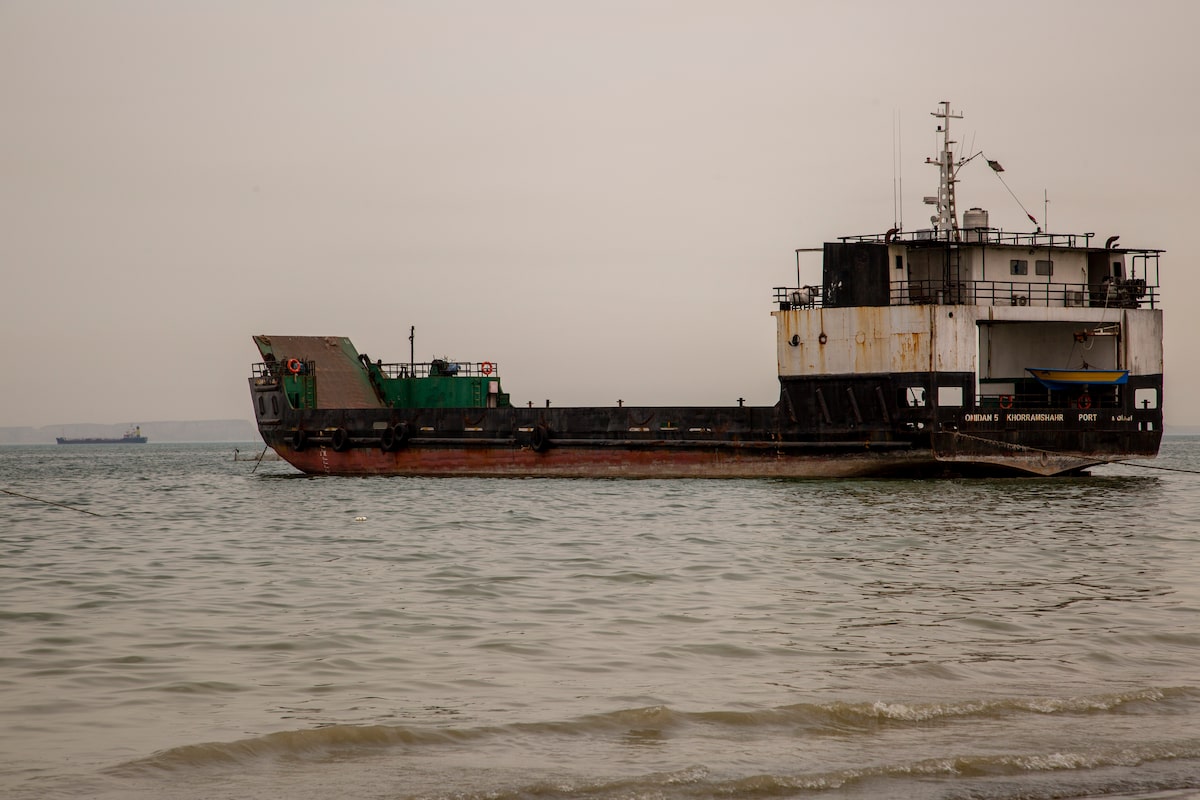
Open this photo in gallery:Ships are anchored near the shoreline in Bandar Abbas, Iran. The renewed attacks come as the U.S. intensifies economic pressure on Iran by enforcing the blockade on Iranian ports in the Persian Gulf and applying tougher sanctions on the country’s technology procurement, digital assets, aviation and the “shadow fleet” of vessels used to secure foreign oil sales.Getty Images/Getty ImagesThe second round of U.S. airstrikes on Iran in three days drove up oil prices and bond yields, triggering more inflation fears and the expectation of tighter interest rates.The strikes marked a return to fighting after more than a month of relative calm in the U.S.-Iran war, which began on Feb. 28. The renewed attacks come as the U.S. intensifies economic pressure on Iran by enforcing the blockade on Iranian ports in the Persian Gulf and applying tougher sanctions on the country’s technology procurement, digital assets, aviation and the “shadow fleet” of vessels used to secure foreign oil sales.U.S. Central Command (Centcom) said the strikes were in response to attempted attacks on shipping in the Strait of Hormuz and U.S. military bases in the Middle East, among them a Marines’ base in Jordan. No casualties were confirmed. Iran vowed to retaliate.On social media early Wednesday, Esmaeil Baqaei, spokesman for the Iranian Ministry of Foreign affairs, said that one of the “savage crimes” was an attack that killed or injured 50 guests at a wedding. Centcom denied the claims of civilian deaths.U.S. President Donald Trump warned Iran on Tuesday that any retaliation would see the country “hit again at a much harder and higher level.”On Wednesday morning in London trading, Brent crude, the international benchmark, was up about 1 per cent after a sharp rise late on Tuesday. That pushed oil to almost US$96 a barrel, up from less than US$90 late last week, taking the 12-month gain to 38 per cent before easing to more moderate gains. Prices for natural gas and diesel fuel also climbed.Rising energy prices put more pressure on bonds, sending global yields to the highest levels since 2008. Yields on 10-year U.S. Treasuries climbed one basis point to 4.81 per cent, their highest level since late 2023. On Tuesday, equivalent Japanese government bonds hit 3 per cent for the first time since 1996, and U.K. 30-year yields reached their highest since 1998. Bond prices and yields move in opposite directions.The rising yields have spooked investors, who are now betting that central banks will raise interest rates to try to tame inflation at the expense of economic growth.“Rising bond yields have emerged as the dominant story in the financial markets this week,” Tim Waterer, chief market analyst at KCM Trade, an international brokerage firm, said in a note. “Higher bond yields do not bode well for economic growth or corporate earnings, making it difficult to envisage a scenario in which risk assets can comfortably rise alongside runaway bond yields.”The threat of higher inflation comes at an awkward time for U.S. Republicans as they head into November’s midterm elections in the Senate and House of Representatives. Many recent polls show that rising cost-of-living prices are the top issue among voters and that the war on Iran is extremely unpopular, partly because it has pushed up energy prices.A new University of Massachusetts Amherst Poll found that more than two-thirds of respondents disapprove of the way President Trump is handling the war; almost as many disapprove of the way he is doing his job overall. Traders now expect greater than 50-per-cent odds for a rate hike among some of the world’s top central banks, including the U.S. Federal Reserve and the European Central Bank. Fed Charman Kevin Warsh has convinced investors that he is serious about tackling inflation. In July, he told a news conference that the Fed “will not waver” in pursuit of 2 per cent inflation. In July, the annual U.S. inflation rate was 3.4 per cent, down marginally from June’s reading.But some central banks may hold off raising rates for a while. In a Wednesday note, ING Economics said it expects the Bank of Canada to keep rates steady today at 2.25 per cent. “We see a very low risk of a surprise hike,” said ING’s foreign exchange strategist Francesco Pesole.He noted that while headline inflation in Canada was 3 per cent in July, core inflation, which leaves out typically volatile food and energy prices, “remains very well anchored” at about 1.9 per cent to 2 per cent.
U.S.-Iran war intensifies after month-long lull, raising energy prices and inflation fears
Full Article
Original Source
Read the full article at Theglobeandmail →KhanList aggregates and links to publicly available news content. We do not host full articles from third-party sources. Always verify important information with original sources.