
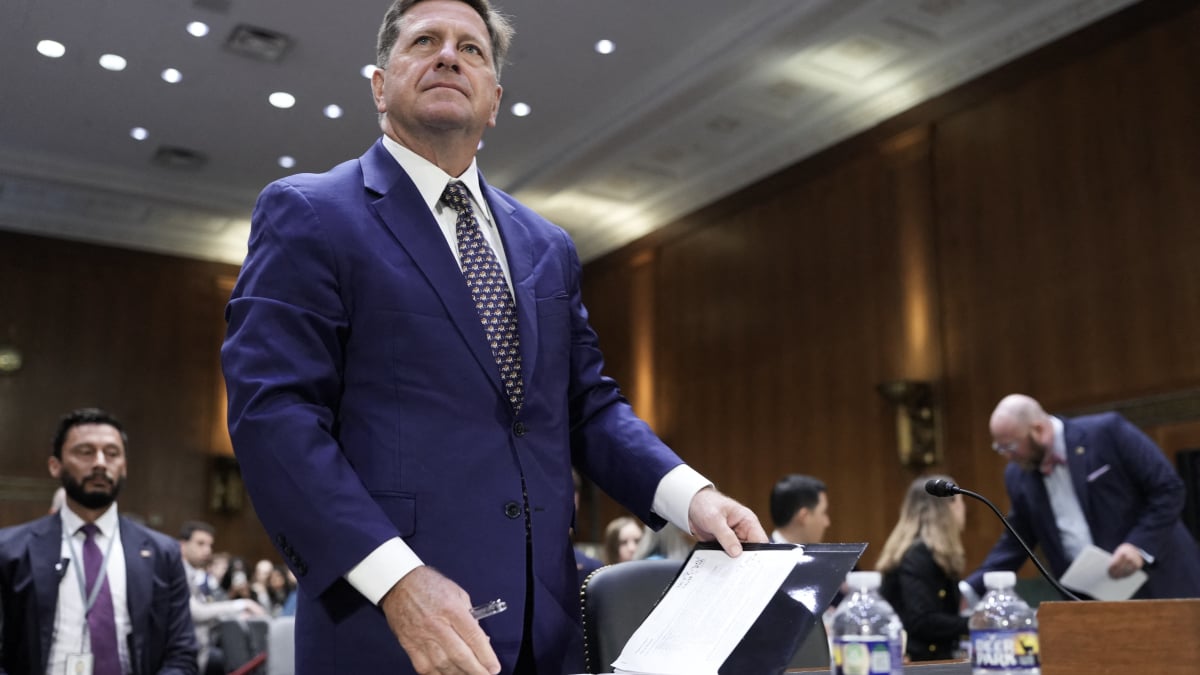
Outlook went down, bank transactions stalled, and flights stopped taking off, and more outages are inevitable — for a very specific reason. By Olivia Tauber Olivia Tauber Deputy Digital Culture Editor Olivia Tauber is the deputy editor of digital culture, covering creators, media, movies, beauty, and more. Based in New York, her work has appeared in The New York Times, Vanity Fair, The Cut, Teen Vogue, Complex, and Interview Magazine. She holds a Master's degree in Journalism from NYU and a Bachelor's from the University of Michigan. She also runs Fan Mail, a weekly pop-culture newsletter. Read Full Bio on November 23, 2026 Share on Facebook Share on Twitter Share on Flipboard Credit: Ken Cedeno /Getty Images Over the past month, tech outages have disrupted work emails, delayed bank transactions, and temporarily grounded departing flights across the United States. Most of the biggest disruptions happened within six days of one another.On Sunday, Director of National Intelligence Jay Clayton said Americans should expect more disruptions like these, but not because of an incoming cyberattack; rather, because companies and government agencies are now in the process of updating aging technology. "We are going to have glitches, gaps, interruptions in service," Clayton told CNN's State of the Union on Sunday, Nov. 24. "That is going to happen." He said much of the country's digital infrastructure was built over three decades or more and needs upgrades to run better and stay secure. (As one example, the FAA is still in the process of phasing out floppy disks, with a target of retiring the '90s-era technology by 2028.) Clayton compared it to weekend maintenance at work: A company might take a system offline on Saturday and plan to have it back by 2 A.M. Sunday. If the team finds another problem during the upgrade, it might be Sunday afternoon before the system is back up. "We are taking more systems down and putting them back up than ever before," he said. It was a lot to keep track of in six days: On Nov. 12, some Microsoft Outlook users couldn't open their inboxes or send email. A day later, the Federal Aviation Administration paused departures nationwide after air traffic control communications problems. Then, on Nov. 16, a software bug delayed Chase transactions, and a separate outage briefly paused United Airlines departures. The following day, several Apple services ran into problems, and the National Security Agency's classified internal network went offline.As Mashable has reported, despite the odd timing, the outages were not related, and Clayton told ABC's This Week that they were neither coordinated nor related to state-sponsored cyberattacks either. He attributed the disruptions to system upgrades he called "absolutely necessary going forward." "And we’re going to see more of that," he said. The best tech deal this week The Apple iPhone 18 Pro is free right now with T-Mobile Products available for purchase through affiliate links. If you buy something through links on our site, Mashable may earn an affiliate commission. Mashable Light Speed He also said, "The need to improve our digital infrastructure is clear." Where does AI fit in?AI is identifying zero-day bugs in software faster than ever, and fixing those flaws safely takes time. Some zero-day bug bounty programs have been forced to shut down entirely, and earlier this year, the Zero Day Initiative reported bug reports had increased 490 percent year over year. Companies now have to move quickly to patch all the new bugs found by AI.Microsoft President Brad Smith called the pressure to move faster part of the "AI ripple effects" on CBS's Face the Nation on Nov. 22 — companies want to fix flaws before attackers can use them. On older systems, Smith said, moving that quickly can leave engineers with less time to test what happens when a fix goes live. Dmitri Alperovitch, chair of the Silverado Policy Accelerator, described what that looks like for the people doing the work. "I.T. teams, network teams are overwhelmed. They're working 24/7. They're making mistakes," he said on the same program. He expects more outages as teams work through the growing number of flaws they've found. The National Security Agency's outage offers one example of how an urgent fix can disrupt service. The agency's classified internal network went offline on Nov. 17 during work after the agency installed a security fix for PHP, a widely used programming language, Clayton told Fox Business. Those same flaws, known as P2PSHELL, had already forced some website operators to take their sites offline in October while they installed the fix, as Mashable reported at the time. OpenAI said that its GPT-5.6 Sol model had found the bugs.Microsoft, on the other hand, traced its outage to a software bug introduced in July that went unnoticed for months. It only became a problem in November, when Microsoft sent more Teams traffic to servers that also handle Outlook email. Some of those servers were already offline, and the extra traffic triggered the bug on others. When those servers stopped responding, Microsoft automatically sent traffic to the ones that were still working. They started to fail, too.Smith said the broader work could take months. His advice? Everyone should install security updates as soon they arrive on a phone or laptop. Deputy Digital Culture Editor Olivia Tauber is the deputy editor of digital culture, covering creators, media, movies, beauty, and more. Based in New York, her work has appeared in The New York Times, Vanity Fair, The Cut, Teen Vogue, Complex, and Interview Magazine. She holds a Master's degree in Journalism from NYU and a Bachelor's from the University of Michigan. She also runs Fan Mail, a weekly pop-culture newsletter.
U.S. intelligence chief says more tech outages are inevitably coming
Full Article
Original Source
Read the full article at Mashable →KhanList aggregates and links to publicly available news content. We do not host full articles from third-party sources. Always verify important information with original sources.