
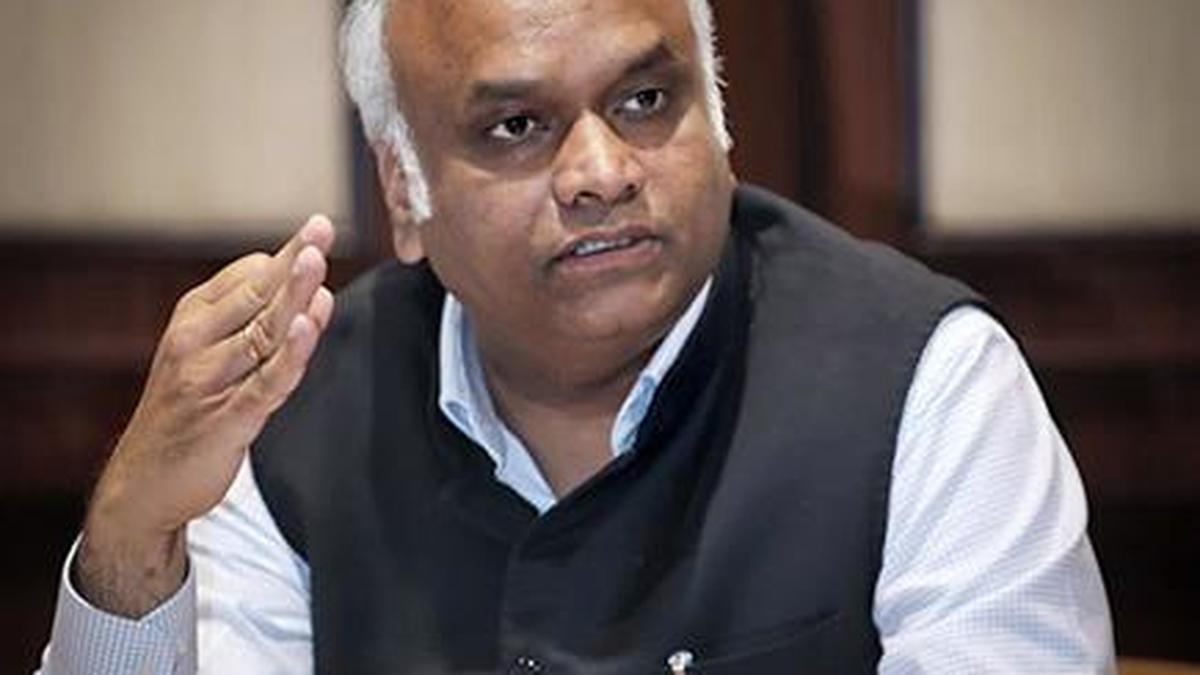
Karnataka’s IT Minister Priyank Kharge said the move could have ‘complex and potentially far-reaching’ consequences for India’s technology industry, with implications extending beyond the traditional outsourcing model. | Photo Credit: File photo The Donald Trump administration’s suspension of the Permanent Labour Certification (PERM) programme for major IT outsourcing companies could pose challenges for Indian technology firms operating in the United States, but may also accelerate India’s emergence as a global hub for research, product development, and artificial intelligence, Karnataka’s IT Minister Priyank Kharge said.In a post on X on October 9 morning, the Minister, who also holds the Home portfolio, said the move could have ‘complex and potentially far-reaching’ consequences for India’s technology industry, with implications extending beyond the traditional outsourcing model.The PERM labour certification process is an important step for many employment-based Green Card applications. Restrictions affecting the process could make it more difficult for Indian technology professionals to pursue permanent residency in the US, while adding to the challenges faced by companies seeking to retain skilled employees and deploy personnel onsite.For Indian IT services companies, the Minister said, the developments could translate into higher operating costs in the US, difficulties in retaining experienced professionals, and reduced flexibility in moving Indian employees to client locations.However, he pointed to a potential structural shift in the global technology industry if deploying engineers to the US becomes more difficult and expensive.“More high-value work may increasingly move to where the talent already is available,” he said, outlining the possibility of companies assigning a greater share of research, engineering, and product development activities to India.Such a shift, Mr. Kharge argued, could strengthen the role of Global Capability Centres (GCCs), which multinational companies have been expanding in Indian cities to undertake functions ranging from technology development and analytics to product engineering and research.The Minister further anticipated tighter mobility conditions could accelerate GCC expansion, bring more global research and development mandates to Indian cities, and increase domestic demand for senior technology professionals.The implications could be significant for India’s ambition to move beyond its established position as a provider of IT services and become a more prominent destination for global innovation.Artificial intelligence, deep technology, and advanced product development could be among the areas benefiting if multinational companies increasingly locate high-value functions in India, where they can access a substantial pool of engineering and technology talent, Mr. Kharge said in the post.The potential gains, however, would depend on how companies respond to the changing immigration environment, he said. Restrictions on workforce mobility could increase costs for Indian service providers, complicate client engagement, and affect employees whose roles require a physical presence in the US.For the Indian technology sector, the emerging challenge is, therefore, to balance the immediate impact on overseas operations with opportunities to expand higher-value work within the country.The Minister’s remarks highlight how changes in US immigration and employment policies could influence not only the movement of Indian professionals but also the geographical distribution of technology investment, research, and innovation. If companies respond by shifting more responsibilities to India, the country could gain a larger role in global technology development, even as traditional outsourcing businesses navigate a more complex operating environment. Published - October 09, 2026 12:00 pm IST
US Green Card curbs could accelerate India’s shift to high-value tech work: Karnataka’s IT Minister
Full Article
Original Source
Read the full article at Thehindu →KhanList aggregates and links to publicly available news content. We do not host full articles from third-party sources. Always verify important information with original sources.