
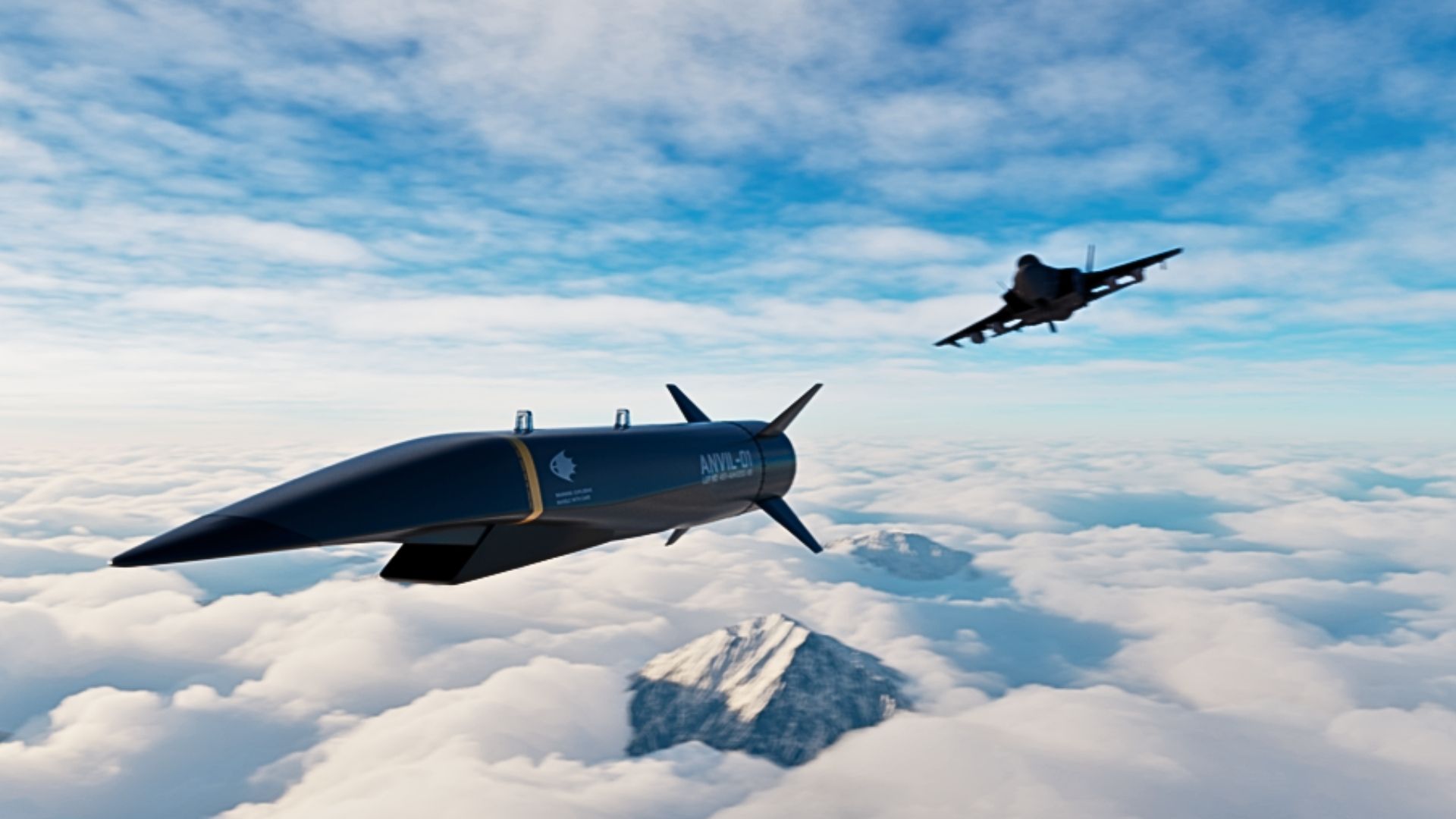
VulcanForms and Specter Aerospace are partnering to build a dedicated U.S. manufacturing operation for airbreathing hypersonic weapons, targeting one of the biggest challenges facing the technology. Producing systems at scale. The companies said the partnership will combine Specter’s experience developing hypersonic vehicles with VulcanForms’ high-volume metal additive manufacturing and post-processing capabilities. The goal is to move hypersonic systems beyond development and testing toward more scalable production of munitions, interceptors and cruise missiles. Building a production pipeline for hypersonics The partnership was announced by the two companies as demand grows for hypersonic weapons and other high-speed systems. Specter says it has worked with the Department of Defense since its founding in 2013 and is developing long-range hypersonic technology for U.S. forces and allies. The companies said they are already using production-ready facilities operated by both organizations while evaluating locations for a future dedicated manufacturing facility. They are conducting a nationwide site evaluation, but have not disclosed where the facility would be located, how much it will cost, or how much production capacity it will eventually provide. The planned operation is intended to cover more than just individual components. The companies said it will support manufacturing and end-to-end integration, meaning the effort is intended to bring together the manufacturing and assembly processes needed to produce complete weapon systems rather than simply supplying individual printed parts. That distinction is important for hypersonic weapons, where complex propulsion, thermal-management, and aerodynamic components must work together under extreme conditions. VulcanForms specializes in digitally driven metal additive manufacturing alongside machining, inspection and other production processes. Its aerospace operations work with materials including titanium and nickel-based superalloys and are designed to produce flight-critical components for aerospace applications. The company says its manufacturing platform can handle production ranging from prototypes and pilot runs to high-volume manufacturing, with facilities in Devens and Newburyport, Massachusetts. Why manufacturing is becoming a hypersonic bottleneck Hypersonic weapons are difficult to manufacture not simply because they fly extremely fast, but because their propulsion and structures have to survive severe thermal and mechanical environments. Airbreathing systems such as ramjets and scramjets must also manage airflow and combustion at extreme speeds. Components can require complex internal geometries, specialized materials, and tight manufacturing tolerances. Additive manufacturing can be useful in this environment because it allows engineers to produce geometries that can be difficult or expensive to manufacture using conventional methods. Specter has already been using additive manufacturing and computational design to shorten its development cycles. In a separate collaboration with software company nTop, Specter said it reduced the iteration time for one regeneratively cooled engine configuration from more than a day to less than 20 minutes. The company has also demonstrated a workflow for generating and analyzing multiple hypersonic vehicle configurations from parametric models. The new partnership attempts to carry that philosophy into production. Specter has also been pursuing other lower-cost high-speed systems. In February, it announced a collaboration with Sierra Nevada Corporation on a supersonic aerial-effects product line using Specter’s ramjet and scramjet propulsion expertise. The companies said they were targeting scalable manufacturing and affordability, with initial flight testing scheduled for the third quarter of 2026. For VulcanForms, the partnership extends its existing focus on building domestic manufacturing capacity for high-performance industries. The company has argued that integrating additive manufacturing, machining, inspection, and digital production workflows can shorten lead times while strengthening U.S. supply chains. If the partnership succeeds, its significance could extend beyond one weapon program. The objective is to create a manufacturing base that can produce airbreathing hypersonic systems at a higher cadence and lower cost than traditional production methods have allowed. For the U.S. hypersonics effort, that could be just as important as developing another vehicle capable of flying at extreme speeds.Get the latest in engineering, tech, space & science - delivered daily to your inbox.Kaif Shaikh is a journalist and writer passionate about turning complex information into clear, impactful stories. His writing covers technology, sustainability, geopolitics, and occasionally fiction. A graduate in Journalism and Mass Communication, his work has appeared in the Times of India and beyond. After a near-fatal experience, Kaif began seeing both stories and silences differently. Outside work, he juggles far too many projects and passions, but always makes time to read, reflect, and hold onto the thread of wonder.
U.S. firms join forces to upscale hypersonic manufacturing base using 3D printing
Full Article
Original Source
Read the full article at Interestingengineering →KhanList aggregates and links to publicly available news content. We do not host full articles from third-party sources. Always verify important information with original sources.