
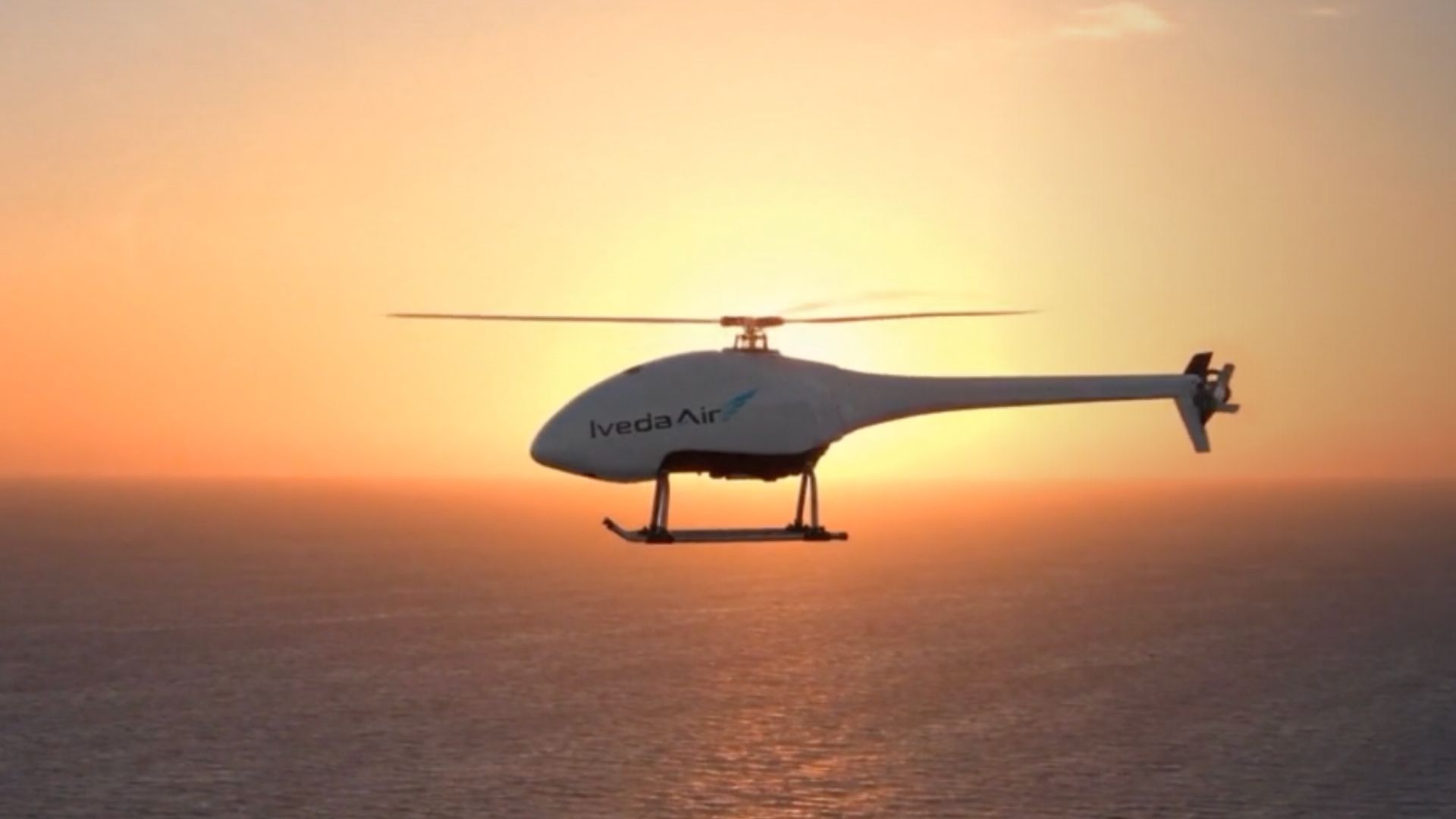
Arizona-based technology company Iveda has introduced IvedaAir, a line of autonomous rotary-wing aircraft designed to transport supplies, conduct reconnaissance, and relay aerial communications during military and emergency operations. The lineup is led by the gas-powered GX10-F100, an unmanned helicopter capable of remaining airborne for more than 150 minutes. According to Iveda, that is up to five times longer than the endurance offered by traditional battery-powered quadcopters. Gas-powered drone carries 19 pounds The GX10-F100 measures 72 inches(6 feet) in length and has a rotor diameter of the same size. It uses a semi-symmetrical carbon-fiber wing and can carry up to 19 pounds(9 kg) of cargo. The unmanned aircraft has a fuel capacity of 1.43 gallons, equivalent to around five liters. It can reach a maximum speed of 68 mph and travel across a range of 19 miles. The combination of extended endurance and cargo capacity is intended to support operations in locations where conventional battery-powered drones may face limitations. These include coastlines, isolated terrain, and environments exposed to high winds. For military users, the helicopter could support logistics by transporting equipment and supplies to personnel operating in difficult or dangerous areas. It can also conduct reconnaissance and serve as an aerial communications relay. Beyond tactical missions, Iveda is positioning the aircraft for maritime security, public safety, emergency response, infrastructure monitoring, and architectural applications. Autonomy software enables target tracking The GX10-F100 uses the company’s in-house IvedaAI autonomy software to support navigation and aerial intelligence missions. The software enables waypoint navigation, allowing operators to establish a predetermined route for the aircraft. It also supports target tracking and real-time video transmission, providing operators with footage while the helicopter remains in flight. Iveda said the aircraft was developed for missions in demanding operational environments rather than the more limited conditions in which many commercial quadcopters are used. “Mission-critical operators have been forced to work within the limitations of drone systems that were never designed for the environments they operate in,” said David Ly, CEO and founder of Iveda. “This new helicopter line was built to solve that problem,” he added. The IvedaAir portfolio also includes the EX10-E, an electric version of the GX10-F100. A quadcopter multirotor aircraft is separately available for commercial applications. Available for government procurement Iveda says the aircraft portfolio meets National Defense Authorization Act and Trade Agreements Act compliance standards, addressing federal requirements governing the origin and security of procured technology. US government agencies can immediately procure the rotary-wing systems through Iveda’s federal partner, GlobalMed. The aircraft are available under the Defense Logistics Agency’s Tailored Logistics Support contract, providing agencies with an existing federal purchasing channel. Certified civilian and military pilots can also buy units directly from the company. Following the launch of IvedaAir, the company plans to explore converting retired full-size helicopters into autonomous aerial platforms. Such conversions could create a new use for aircraft that have reached the end of their conventional service lives. Iveda, however, has not provided a development schedule or disclosed technical details about the proposed helicopter-conversion initiative.Get the latest in engineering, tech, space & science - delivered daily to your inbox.Atharva is a full-time content writer with a post-graduate degree in media & amp; entertainment and a graduate degree in electronics & telecommunications. He has written in the sports and technology domains respectively. In his leisure time, Atharva loves learning about digital marketing and watching soccer matches. His main goal behind joining Interesting Engineering is to learn more about how the recent technological advancements are helping human beings on both societal and individual levels in their daily lives.
US firm unveils gas-powered autonomous helicopter drone with 150-minute endurance
Full Article
Original Source
Read the full article at Interestingengineering →KhanList aggregates and links to publicly available news content. We do not host full articles from third-party sources. Always verify important information with original sources.