
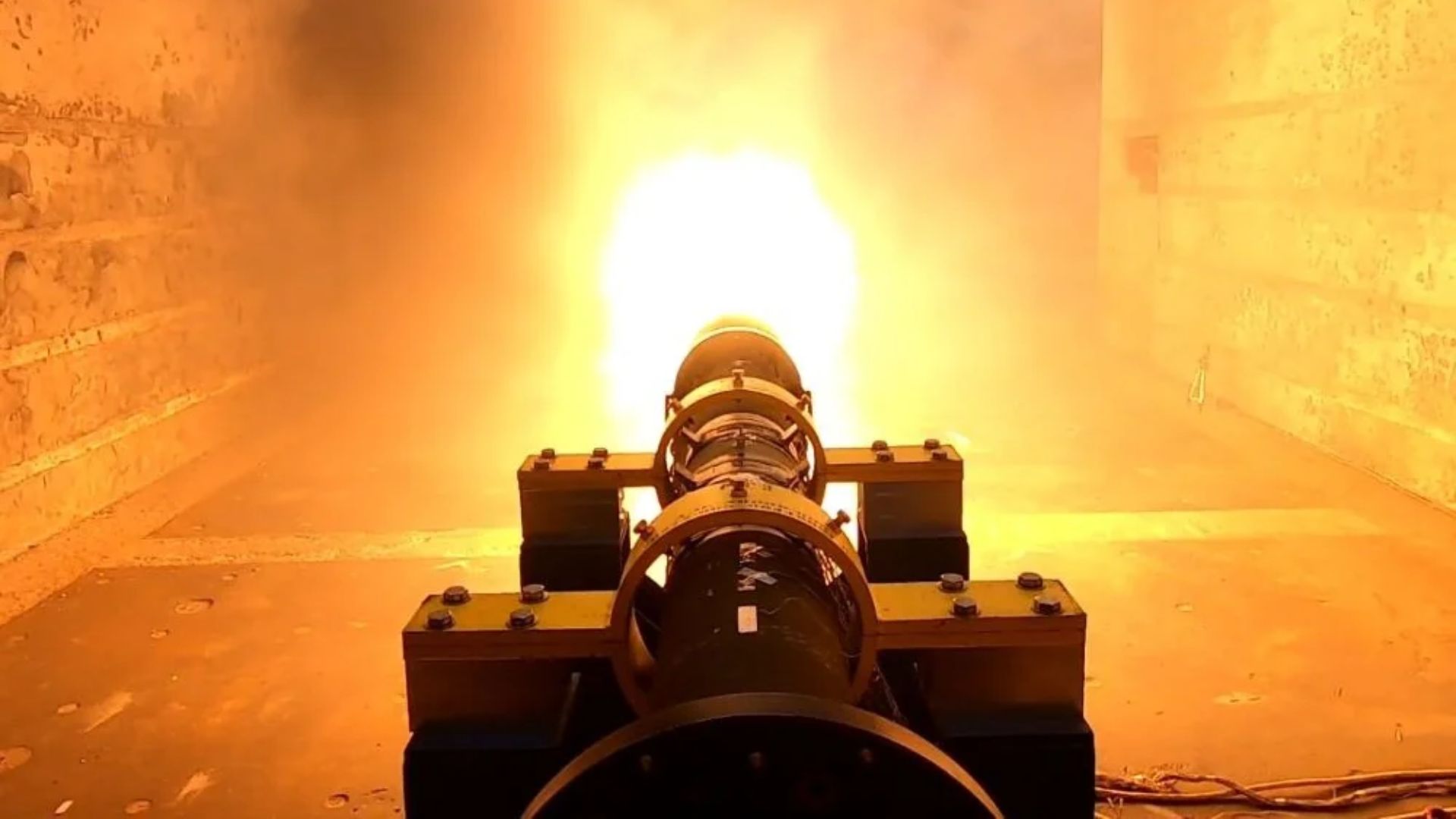
Northrop Grumman said on November 16 that a new $1.6 billion order will increase rocket motor production for the US Army’s Patriot PAC-3 Missile Segment Enhancement (MSE) interceptor. The company builds the motors at its Allegany Ballistics Laboratory in Rocket Center, West Virginia. The multiyear award also covers ignition safety devices that Lockheed Martin uses to build the interceptors. Northrop Grumman said the order is intended to speed up deliveries to US and allied forces. What the new order covers The award is part of a broader set of agreements worth $3 billion that Northrop Grumman announced in August to expand interceptor production. The November announcement identified the components covered by the latest order and its dollar value. It did not specify the number of motors ordered or when shipments would begin. Northrop Grumman said the award supports the Department of War’s Acquisition Transformation Strategy. For manufacturers and suppliers, the company said, a multiyear commitment gives them a clearer view of future demand as they plan how much production capacity to add. Rocket motor capacity grows across three states Northrop Grumman said it has nearly tripled solid rocket motor capacity at Allegany Ballistics Laboratory since 2021. The West Virginia site builds the dual-pulse motor for the PAC-3 MSE, which the company said gives the interceptor greater range and maneuverability. Over the same period, Northrop Grumman said it doubled solid rocket motor capacity at its Utah facilities and increased capacity by 25% at its Elkton site in Maryland. The increases reflect work across the company’s broader munitions business. The announcement gave the changes in capacity at each location without breaking down how much of that capacity was allocated to individual programs. Propulsion investments date back to 2019 Ben Davies, corporate vice president and president of Northrop Grumman Defense Systems, said the company began investing in its propulsion manufacturing operations years before the new award. “We’re answering the nation’s call with urgency and turning years of propulsion investment into expanded capacity for the warfighter,” he said. “Since 2019, we’ve modernized our propulsion industrial base, committing more than $2 billion in munitions technologies and facilities — including over $1 billion in solid rocket motor production,” Davies continued. “This award translates that commitment into greater scale, so we can deliver more PAC-3 MSE interceptors to U.S. and allied forces faster,” he continued. Northrop Grumman said it has delivered more than 1.3 million rocket motors worldwide across its portfolio and has worked in propulsion for about seven decades. The company said its expansion also extends to suppliers. It tied that work to the department’s effort to maintain munitions stockpiles while meeting demand from the US and its allies. Northrop Grumman reported the capacity increases as percentages or multiples of 2021 levels. The announcement did not give the underlying figures or say how many motors each site produces annually. Get the latest in engineering, tech, space & science - delivered daily to your inbox.Atharva is a full-time content writer with a post-graduate degree in media & amp; entertainment and a graduate degree in electronics & telecommunications. He has written in the sports and technology domains respectively. In his leisure time, Atharva loves learning about digital marketing and watching soccer matches. His main goal behind joining Interesting Engineering is to learn more about how the recent technological advancements are helping human beings on both societal and individual levels in their daily lives.
US firm ramps up Patriot missile motor production under $1.6 billion order
Full Article
Original Source
Read the full article at Interestingengineering →KhanList aggregates and links to publicly available news content. We do not host full articles from third-party sources. Always verify important information with original sources.