
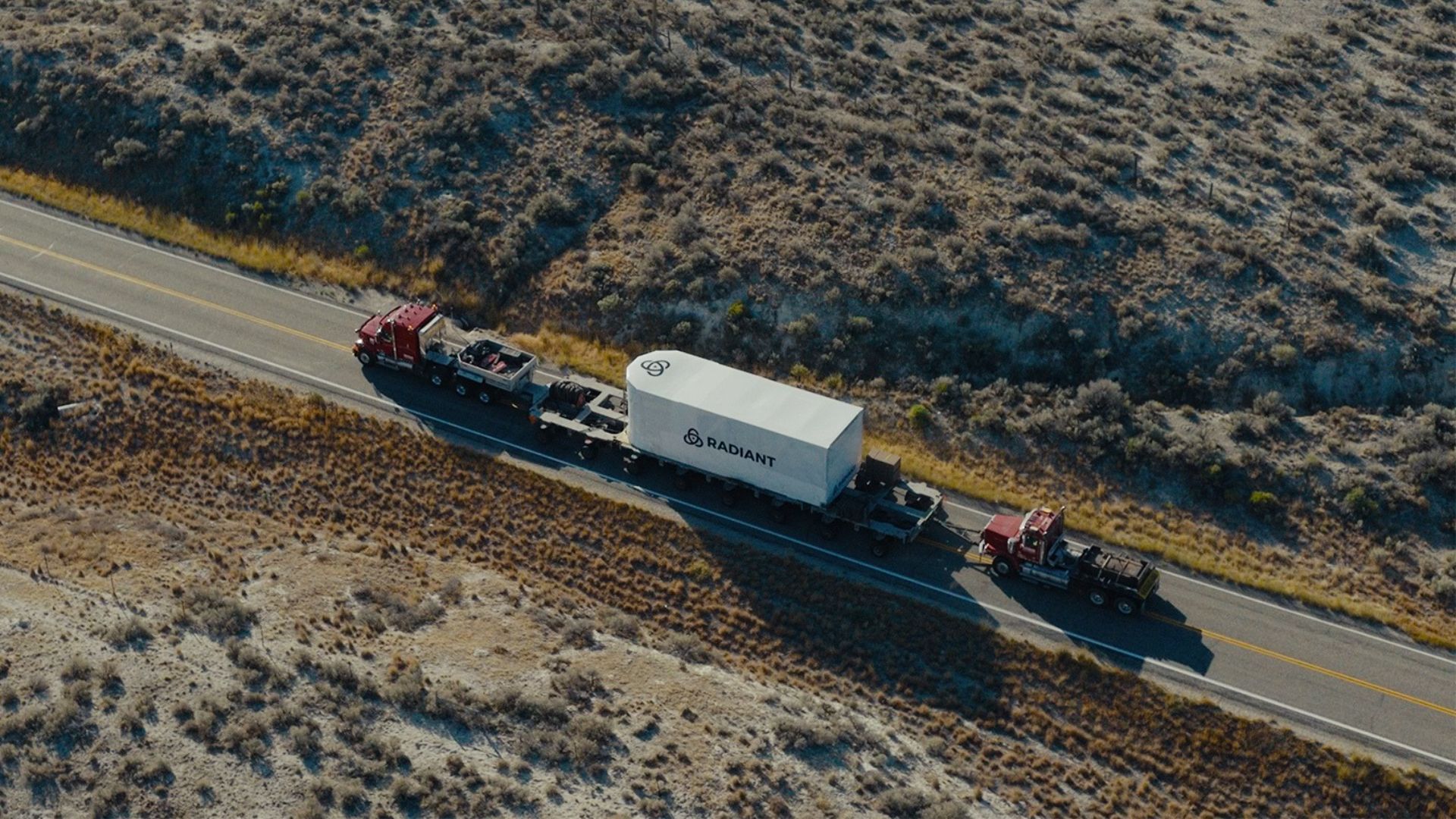
A new generation of transportable nuclear reactors is moving closer to commercial production in the United States. Two manufacturing sites in California and Tennessee will support the production and fueling of 1-megawatt microreactors. Their development targets initial customer deliveries in 2028, with eventual capacity reaching hundreds of units annually. Radiant plans to invest more than $380 million across the two locations. The expansion will support its Kaleidos reactor, which uses a factory-built design intended for transport by truck. Its production strategy also includes an unusual capability: fueling reactors at a private facility before shipping them to customers. Two sites, different roles The expanded El Segundo, California, headquarters will serve as the primary assembly and engineering center. Radiant has committed more than $100 million to its Los Angeles-area operations. The expansion adds approximately 200,000 square feet of manufacturing and research space. Engineers will use the facility to assemble multiple reactors simultaneously. Its equipment includes bridge cranes and dedicated testing infrastructure for reactor control systems. Radiant will also manufacture turbomachinery and power-generation equipment in-house. The facility has already produced the first Kaleidos reactor. That unit is currently at Idaho National Laboratory, where it will undergo testing. The expanded production space will help engineers move from individual reactor builds toward repeatable manufacturing. Tennessee will handle another critical part of the process. Radiant is developing an 81-acre campus in Oak Ridge for reactor manufacturing, fueling, and storage. The project represents an additional investment of approximately $280 million. Its fueling infrastructure will allow Radiant to prepare sealed reactors before transporting them to customer locations. This approach could simplify deployment for military installations and commercial facilities. Customers would not need conventional underground construction to establish an on-site nuclear installation. Commercial orders take shape Radiant has already attracted customers across military and commercial markets. The U.S. Army awarded the company up to $750 million to develop and deploy 15 Kaleidos reactors. Initial deliveries are planned for 2028, with all 15 units expected by 2030. The Department of the Air Force selected Radiant for a microreactor project at Buckley Space Force Base in Colorado. The Navy also chose the company to support energy independence at Naval Weapons Station Crane in Indiana. Commercial data center operator Equinix has separately agreed to purchase 20 units. Testing and fuel supply The company is also preparing Kaleidos for full-scale testing at Idaho National Laboratory’s DOME facility. The program will evaluate the same reactor design intended for commercial customers. Testing will examine sustained full-power operation, autonomous controls, and performance at operating temperatures. The Department of Energy has approved the reactor’s Documented Safety Analysis. Kaleidos is now undergoing the DOE’s Readiness Review ahead of its planned full-power test campaign. Fuel availability represents another important part of the production plan. Radiant has secured Department of Energy HALEU allocations and enrichment agreements with Urenco and Centrus Energy. It also signed a multiton TRISO fuel supply agreement with Standard Nuclear extending into the early 2030s. Get the latest in engineering, tech, space & science - delivered daily to your inbox.Aamir is a seasoned tech journalist with experience at Exhibit Magazine, Republic World, and PR Newswire. With a deep love for all things tech and science, he has spent years decoding the latest innovations and exploring how they shape industries, lifestyles, and the future of humanity.
US factories prepare to mass-produce transportable nuclear microreactors at scale
Full Article
Original Source
Read the full article at Interestingengineering →KhanList aggregates and links to publicly available news content. We do not host full articles from third-party sources. Always verify important information with original sources.