
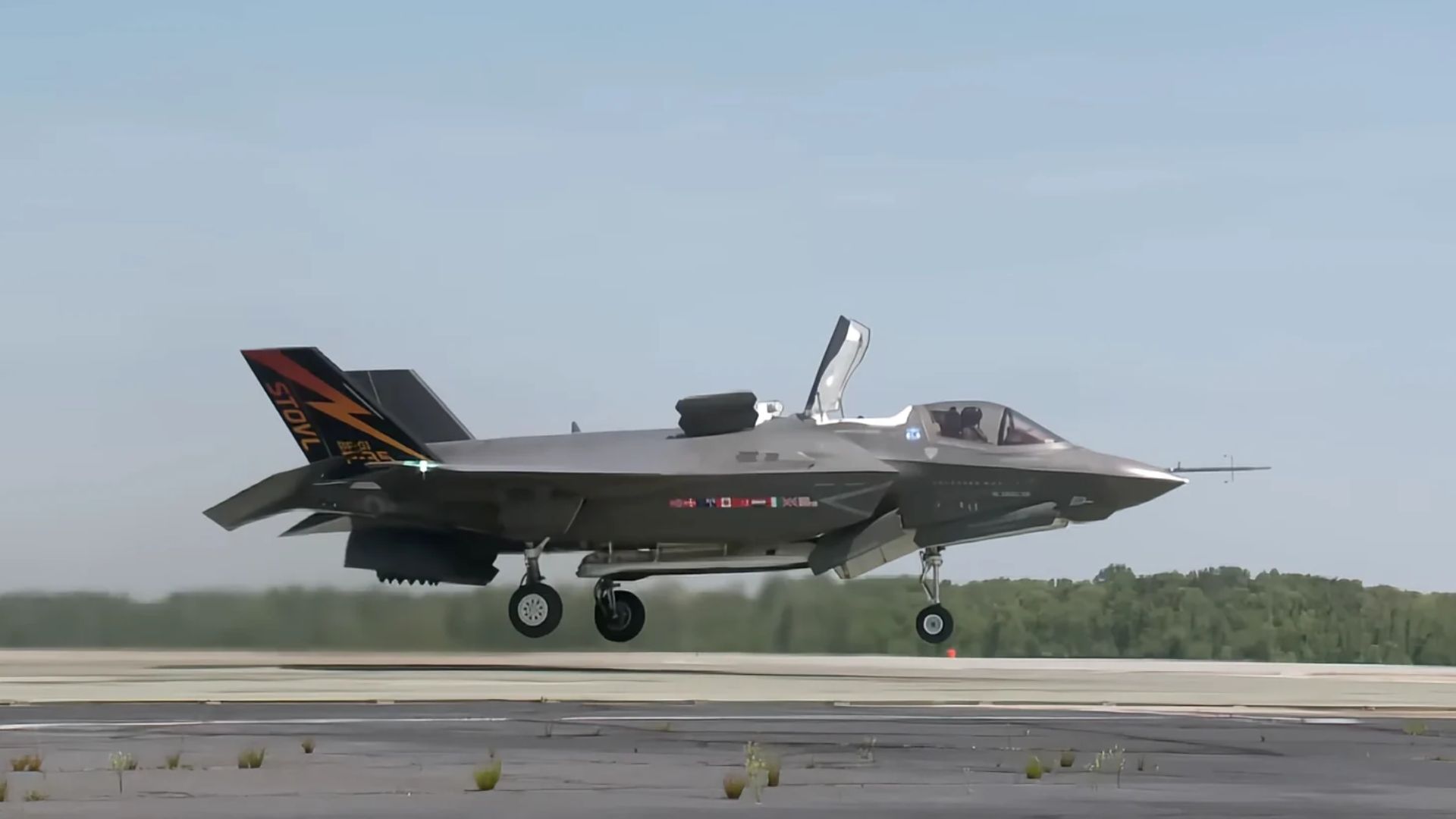
The US is facing difficulties tracking millions of spare parts for its F-35 fighter jet program, raising concerns about equipment accountability and aircraft readiness. A government watchdog has found significant gaps in the Pentagon’s inventory management system, which does not accurately reflect the location and status of parts distributed across hundreds of facilities worldwide. The shortcomings have also left the military unable to account for some missing components and maintain reliable records of equipment undergoing maintenance and repairs. The findings highlight persistent logistical and financial management problems within the F-35 program. F-35 inventory chaos The US Department of War is struggling to track approximately 26 million spare parts for its F-35 fighter jet fleet, worth an estimated $31 billion, according to a report by the Government Accountability Office (GAO). The parts are stored at more than 700 government and contractor facilities worldwide. However, Pentagon records are outdated, incomplete, and often inaccurate, making it difficult to locate components or account for missing items. GAO found that the F-35 Joint Program Office (JPO) does not maintain a reliable inventory. Its records do not reflect real-time changes, and procedures to verify information provided by contractors remain inadequate. One major gap involves parts undergoing maintenance or repairs. As of March 2026, the program office had not entered approximately 17,000 such parts into its tracking system. GAO valued them at around $1.3 billion, although Pentagon officials said the figure could reach $2.5 billion. The office also remains unable to account for previously reported missing parts worth more than $85 million. GAO first identified the problem in 2023, but their status remained unknown as of March 2026. Around 70 percent of F-35 parts are held at government-managed facilities, while the remaining 30 percent are stored at contractor sites. However, the Pentagon lacks real-time visibility into contractor inventories. Major contractors also cannot fully track parts held by lower-tier suppliers, making physical verification difficult. Components transported by commercial shipping companies can also disappear from tracking systems. F-35 maintenance woes The F-35 program office has been working to connect its database with contractor inventory systems. It was testing an interface with one major contractor and expected to establish a live connection in September 2026. However, GAO noted that procedures to verify contractor-provided information were still missing. This is the watchdog‘s third review of F-35 financial management since 2019. Of the 34 recommendations issued by GAO and the Department of War Inspector General on parts accountability, 26 remain open. These include a 2022 recommendation to conduct regular physical inventories. GAO also found that the Pentagon lacks procedures to investigate losses at government-managed facilities, limiting its ability to detect potential fraud, waste, or theft. The watchdog issued four new recommendations, asking the Pentagon to monitor reported losses, establish specific procedures for property officers, provide them with training, and determine how many officers are needed to oversee the program. The Department of War agreed with all four. The accounting problems could also affect F-35 operational readiness. In a separate June report, GAO found that only 25 percent of the aircraft were fully mission capable in fiscal 2025, down from 38 percent in fiscal 2021. The overall mission-capable rate also fell from 67 percent to 44 percent. The Pentagon estimates it needs an additional $13.7 billion through fiscal 2031 to meet its readiness targets by 2030. GAO warned that continued failures in parts management could affect aircraft readiness and financial reporting. The F-35 is the most expensive weapons program in US history, with lifetime costs estimated at more than $1.9 trillion. More than 800 aircraft are in service with the US Air Force, Navy, and Marine Corps. Get the latest in engineering, tech, space & science - delivered daily to your inbox.Jijo is an automotive and business journalist based in India. Armed with a BA in History (Honors) from St. Stephen's College, Delhi University, and a PG diploma in Journalism from the Indian Institute of Mass Communication, Delhi, he has worked for news agencies, national newspapers, and automotive magazines. In his spare time, he likes to go off-roading, engage in political discourse, travel, and teach languages.
US F-35 parts tracking failure raises questions over fighter jet fleet readiness
Full Article
Original Source
Read the full article at Interestingengineering →KhanList aggregates and links to publicly available news content. We do not host full articles from third-party sources. Always verify important information with original sources.