
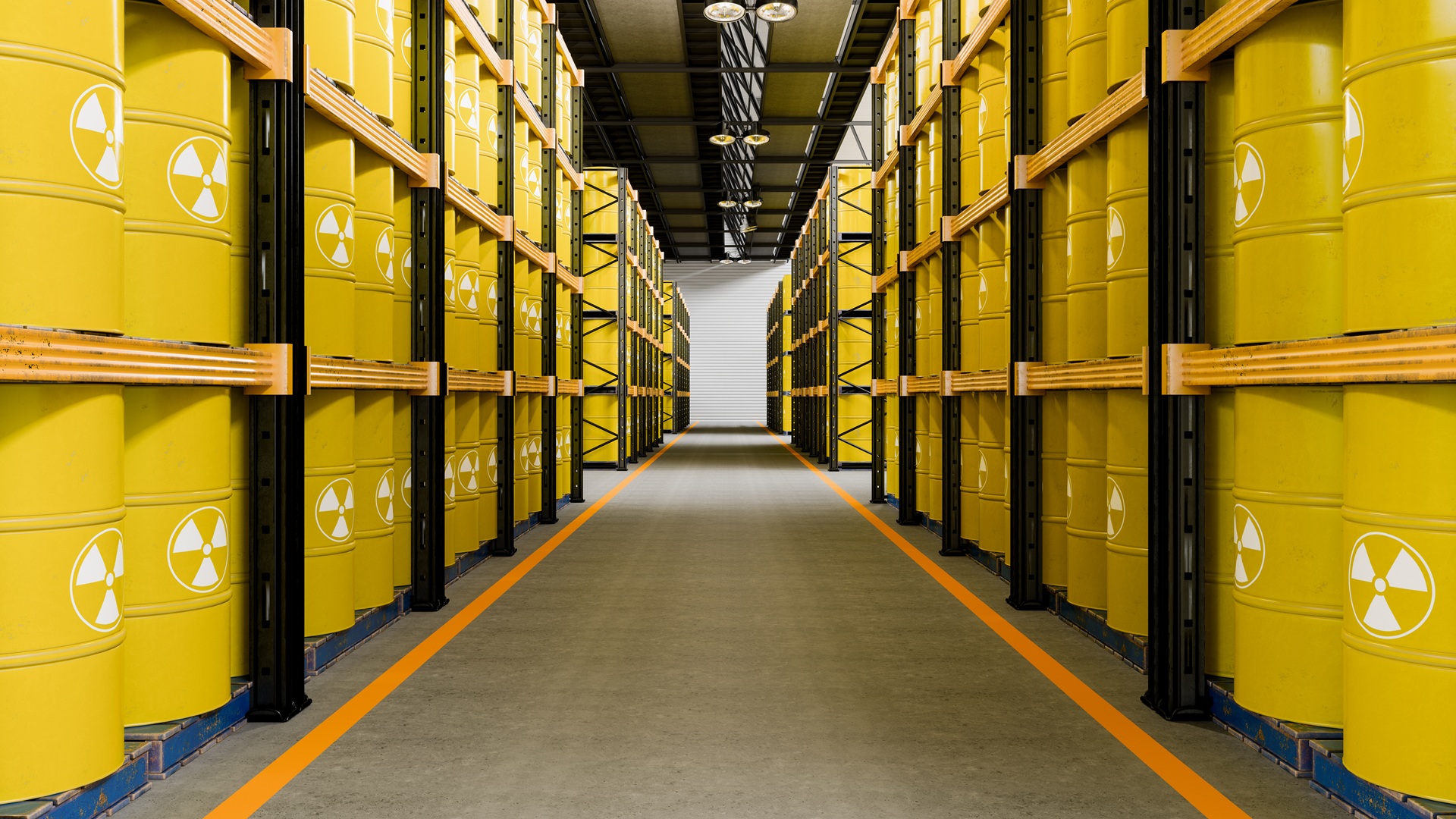
Representative image of radioactive waste barrels.Getty Images Researchers in South Carolina have turned to artificial intelligence (AI) to develop tools that could tackle the some of the most complex nuclear cleanup challenges in the US and cut more than USD 150 billion in lifecycle savings. The project is carried out at the Advanced Manufacturing Collaborative (AMC), a 63,000-square-foot research site in Aiken and part of the Savanna River National Laboratory (SRNL). It was launched on August 7, 2025. The hub brings together researchers, engineers, students, companies, as well as academics. Together, they work on technologies including AI, robotics, additive manufacturing, and advanced materials. Johney Green, SRNL director, said the facility is boosting US capabilities, creating opportunities and accelerating the development of impactful technologies, a year after opening. “Its success reflects the dedication of our partners and the promise of how integrated innovation can advance environmental technologies, energy infrastructure, nuclear energy, fusion energy and national security,” he added. Targeting nuclear waste In the past year, the AMRC has reportedly prioritized challenges including nuclear materials, waste management, and environmental cleanup. The research team is already working on a first-of-its-kind AI model to improve predictive capabilities and optimize manufacturing processes. For the effort, the lab is drawing on more than seven decades of experience with nuclear materials, restoration and revitalization. It is combining that expertise with site-specific datasets to develop the technology. The Advanced Manufacturing Collaborative (AMC) in South Carolina. Credit: SRNL The models, according to SRNL, are aimed at tackling environmental remediation, waste management and infrastructure resilience. This could ultimately yield more than USD 150 billion in lifecycle cleanup savings while helping safeguard national security assets. The projects also support the US Department of Energy’s (DOE) Genesis Mission, which brings together national laboratories, academia, and industry to use AI for advances in energy, scientific discovery, and national security. “In only one year, the AMC has demonstrated the power of bringing diverse expertise together under one roof,” Green continued. Advanced computing power For the effort, the scientists used a mission-focused high-performance computing system that is available to all SRNL staff. It provides computing resources for AI projects under the Genesis Mission, as well as complex modeling and simulation work at the laboratory. The AMC also features laboratories and shared research spaces designed to bring several technologies together under one roof. The researchers are working across materials design and processing, additive manufacturing, as well as robotics and automation. Moreover, the hub is also collaborating with outside organizations, like Silica-X, 3D Systems and Georgia Tech. One collaboration between SRNL and Silica-X has already received an R&D 100 Award for developing materials that could safely absorb and store nuclear waste. The awards recognize 100 of the most technologically innovative products each year. They are often referred to as the “Oscars of Innovation.” “The AMC has quickly become a space where people feel energized to explore, experiment, and build,” G. Jeremy Leong, AMC director, concluded in a press release. “Our first year has been defined by collaboration and real teamwork that accelerates discovery and brings new ideas to life. We are just getting started.”Get the latest in engineering, tech, space & science - delivered daily to your inbox.Based in Skopje, North Macedonia. Her work has appeared in Daily Mail, Mirror, Daily Star, Yahoo, NationalWorld, Newsweek, Press Gazette and others. She covers stories on batteries, wind energy, sustainable shipping and new discoveries. When she's not chasing the next big science story, she's traveling, exploring new cultures, or enjoying good food with even better wine.
US develops first-of-its-kind smart tools to tackle nuclear waste and cleanup
Full Article
Original Source
Read the full article at Interestingengineering →KhanList aggregates and links to publicly available news content. We do not host full articles from third-party sources. Always verify important information with original sources.