
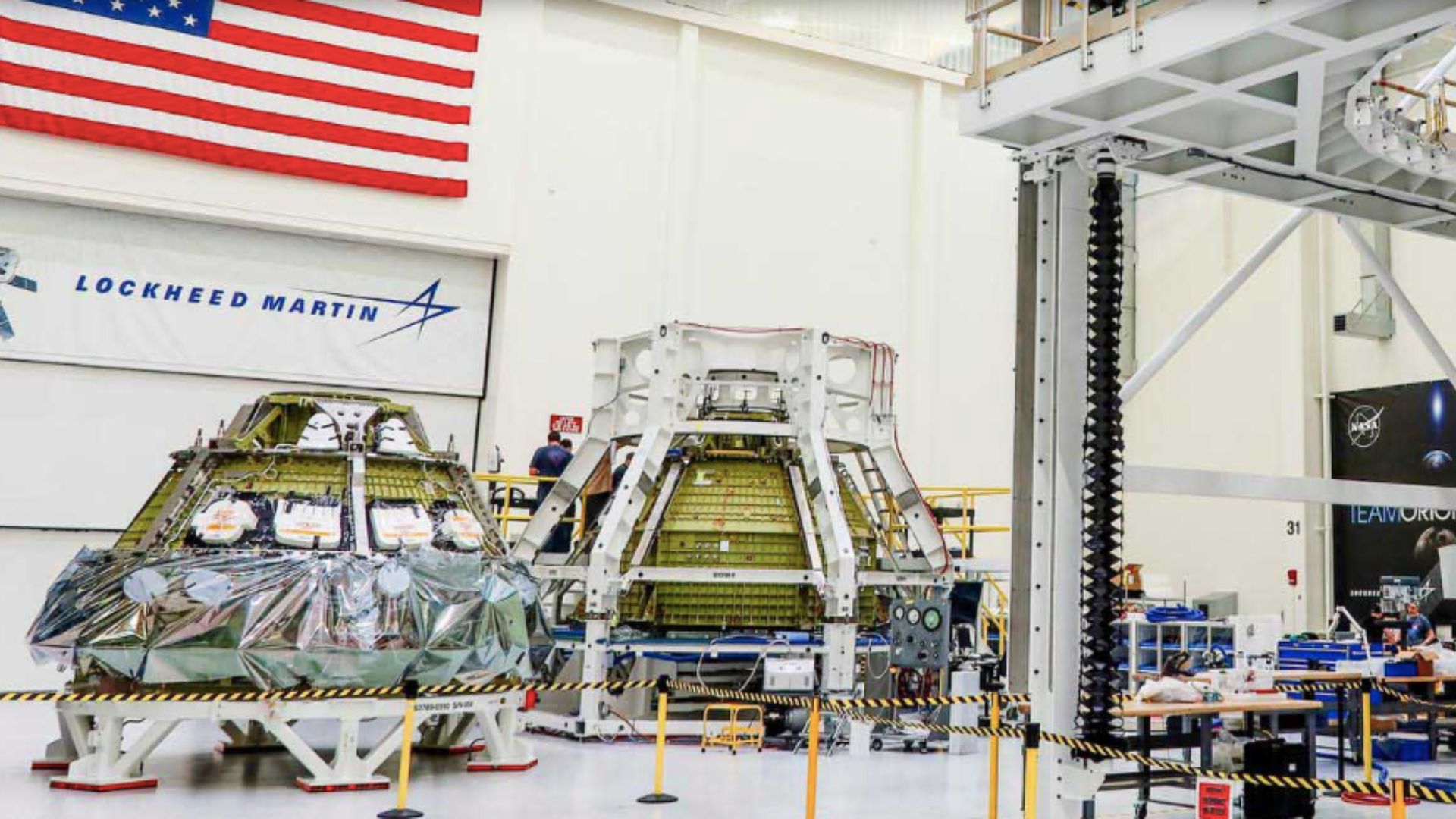
As NASA tightens its timeline to establish a permanent human outpost on the Moon, primary contractor Lockheed Martin is accelerating its manufacturing philosophy. The defense giant is turning the production of the Orion spacecraft into a streamlined assembly line designed to support NASA’s upcoming Artemis III, IV, and V missions. Overall, these efforts will support NASA’s revamped Artemis framework and Ignition directives designed to establish a sustained human presence on the Moon. Technicians analyze the heat shield tiles for the Orion Artemis IV spacecraft. Speeding up Orion production The Orion spacecraft is being designed to survive deep space while prioritizing human safety and high-rate manufacturing. Its life support system maintains a breathable environment for four crew members during extended flights. For atmospheric re-entry, the capsule features a 16.5-foot Avcoat heat shield built to withstand 5,000°F heat at speeds approaching 25,000 mph. Spacecraft operations utilize multi-redundant computers, data networks, and glass cockpit displays to allow automated monitoring and manual control. Transitioning from a “development mindset” to a “production mindset” requires changing how space hardware gets certified. Lockheed Martin experts and engineers are using data from previous flights to skip repetitive qualification testing, rather than treating every Orion capsule as an unproven prototype. Once a design is proven flightworthy, testing focuses exclusively on verifying build quality. “Once a design is qualified, acceptance testing can focus on verifying that each unit was built correctly,” said Tim Norick, Lockheed Martin Orion program hardware director. “We’re using experience from previous flights to reduce testing time and scope while preserving the must-do tests and evidence needed to confirm flight readiness and protect crew safety.” Lockheed Martin is also reusing flight-qualified hardware from prior Artemis missions to cut costs and protect flight schedules. Lockheed Martin has expanded its Orion workforce by adding over 100 technicians and support personnel, pushing operations to a round-the-clock, three-shift schedule, seven days a week. “Acceleration comes down to three things: putting more resources against the work, doing the work more efficiently, and reducing unnecessary scope and avoidable rework,” said Scott Daniels, Orion Assembly, Integration, and Test director at Kennedy. To the moon and beyond To keep assembly lines moving, the program introduced dedicated “Rapid Response Teams.” When an unexpected technical anomaly pops up on the floor, these senior subject matter experts jump in to resolve it immediately. “We’re embedding authority within various levels so the right people can react quickly when a problem arises, rather than losing time in a long chain of decisions,” said Brian Hinde, Lockheed Martin Orion Production Engineering senior manager. This approach keeps core integration crews focused on meeting primary delivery targets without getting bogged down by administrative delays. Accelerated production goals reach far down into the supply chain. Infrastructure upgrades at NASA’s Michoud Assembly Facility in Louisiana boosted the manufacturing of Orion’s Avcoat heat shield. Facility expansions and improved tooling increased weekly output from roughly four material billets to more than 20. Artemis I completed an uncrewed flight around the Moon, and Artemis II subsequently carried four astronauts on a historic lunar flyby. Artemis III will follow as a crewed orbital rendezvous test in Earth orbit, laying the essential technical groundwork for Artemis IV to execute the first crewed lunar surface landing since Apollo 17. This progression would help transition from temporary visits to a permanent human outpost on the Moon, using lessons learned on the lunar surface as a stepping stone for eventual crewed missions to Mars. Get the latest in engineering, tech, space & science - delivered daily to your inbox.Mrigakshi is a science journalist who enjoys writing about space exploration, biology, and technological innovations. Her work has been featured in well-known publications including Nature India, Supercluster, The Weather Channel and Astronomy magazine. If you have pitches in mind, please do not hesitate to email her.
US defense giant accelerates NASA’s Moon capsule production for Artemis missions
Full Article
Original Source
Read the full article at Interestingengineering →KhanList aggregates and links to publicly available news content. We do not host full articles from third-party sources. Always verify important information with original sources.