
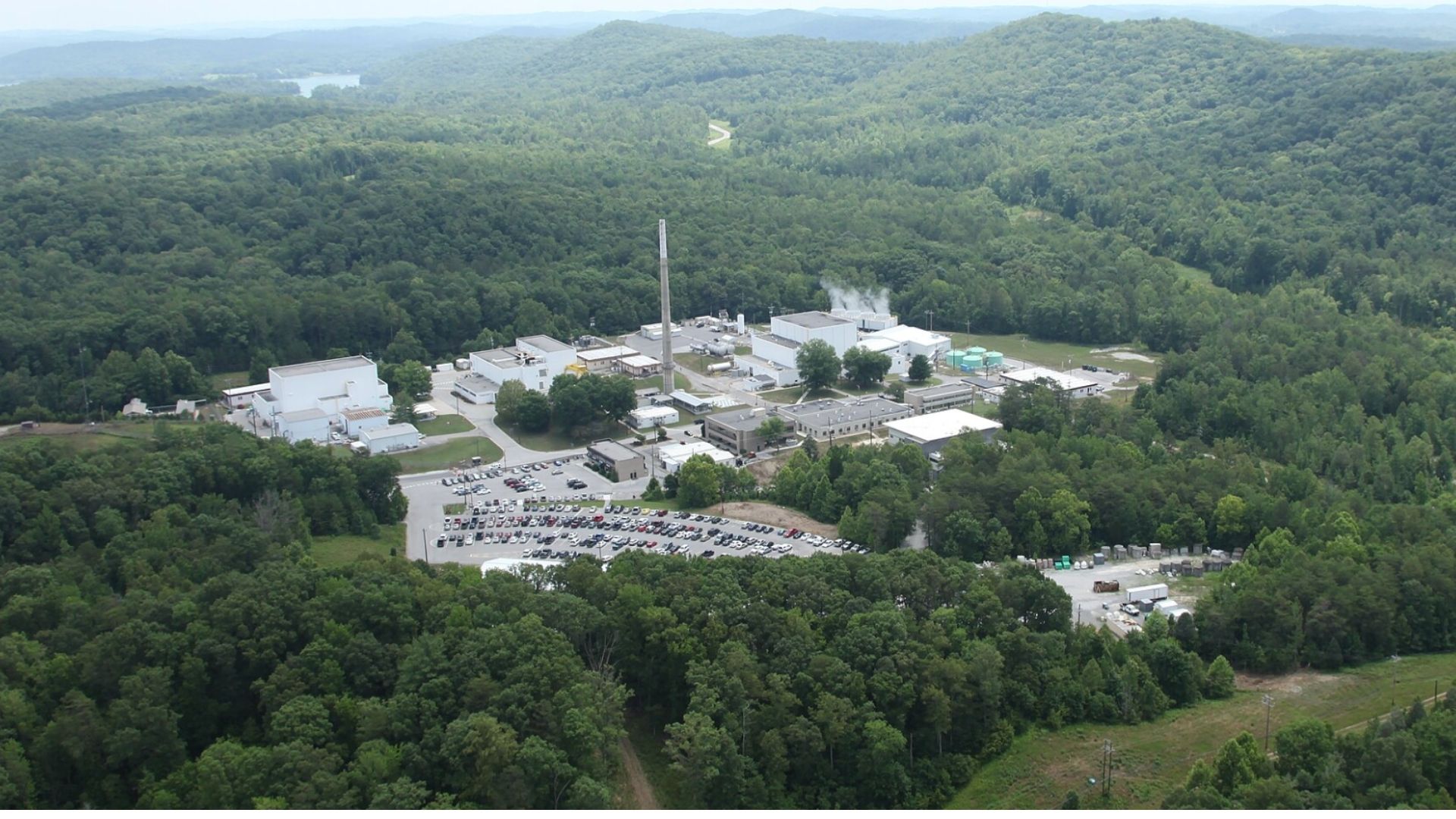
The United States could use Oak Ridge National Laboratory’s (ORNL) High Flux Isotope Reactor (HFIR) to accelerate the development and qualification of fuels needed for new and existing nuclear power plants. HFIR is one of the few American research reactors capable of exposing experimental fuels and materials to the intense neutron conditions required for advanced testing. Its experiments can produce performance and safety data for developers, utilities, and technical reports supporting regulatory qualification by the US Nuclear Regulatory Commission. Three regions support different experiments HFIR is one of the world’s highest-flux steady-state research reactors. Its intense neutron flux allows scientists to study materials across different neutron energies and reproduce some of the conditions fuels experience inside commercial reactors. The facility contains three primary irradiation regions. Small and relatively simple “rabbit” capsules can be rapidly designed, assembled, and placed in the reactor’s central flux trap, where samples receive the highest neutron exposure. HFIR’s removable and permanent beryllium reflector regions can accommodate larger and more complex experiments. These can include sensors, instrumentation, and thermal neutron shields used to modify the neutron spectrum reaching a sample. Oak Ridge researchers have used the reactor for separate-effects tests, which examine individual fuel behaviors, and integral tests that evaluate several interacting processes. Previous work at HFIR helped establish the architecture of the tri-structural isotropic (TRISO) particle fuel developed for high-temperature gas reactors. Modern systems improve testing accuracy Modernization has expanded HFIR’s ability to conduct instrumented experiments with greater control. ORNL’s Materials Irradiation Facility regulates test temperatures through controlled mixtures of sweep gases and can independently manage several temperature zones within one experiment. Automated systems continuously measure temperature, pressure, and gas composition. Researchers can also monitor experiments remotely and adjust their operating conditions while irradiation is underway. These capabilities have been used to detect fission gas released from TRISO fuels during irradiation. They also allow HFIR to support several sophisticated experiments simultaneously, increasing the amount of information that can be collected during a testing campaign. The reactor’s flux trap can additionally accommodate extensive fuel-cladding irradiations, helping scientists examine how fuels and their surrounding materials behave under neutron exposure. Data could support fuel qualification Results generated at HFIR can contribute to technical reports used by the NRC when evaluating new nuclear fuels. The reactor can provide data on fission gas release, changes in fuel microstructure, and interactions between a fuel and its cladding. HFIR is also located near several ORNL facilities used to manufacture, examine, and analyze nuclear materials. These include the Coated Particle Fuel Development Laboratory, Low Activation Materials Development and Analysis laboratory, Irradiated Fuel Examination Laboratory, and Irradiated Material Examination and Testing Facility. Together, the reactor and supporting laboratories provide a pathway for moving fuels from early experiments toward regulatory qualification. A paper published in Nuclear Engineering and Design outlines how the Department of Energy research reactor in Tennessee can help address a growing fuel-testing backlog. The paper argues that more strategic use of HFIR could help meet rising testing demand as utilities pursue longer plant lifetimes and developers prepare advanced reactors for commercial deployment. Get the latest in engineering, tech, space & science - delivered daily to your inbox.Atharva is a full-time content writer with a post-graduate degree in media & amp; entertainment and a graduate degree in electronics & telecommunications. He has written in the sports and technology domains respectively. In his leisure time, Atharva loves learning about digital marketing and watching soccer matches. His main goal behind joining Interesting Engineering is to learn more about how the recent technological advancements are helping human beings on both societal and individual levels in their daily lives.
US could turn to one of world’s highest-flux reactors to speed up nuclear expansion
Full Article
Original Source
Read the full article at Interestingengineering →KhanList aggregates and links to publicly available news content. We do not host full articles from third-party sources. Always verify important information with original sources.