
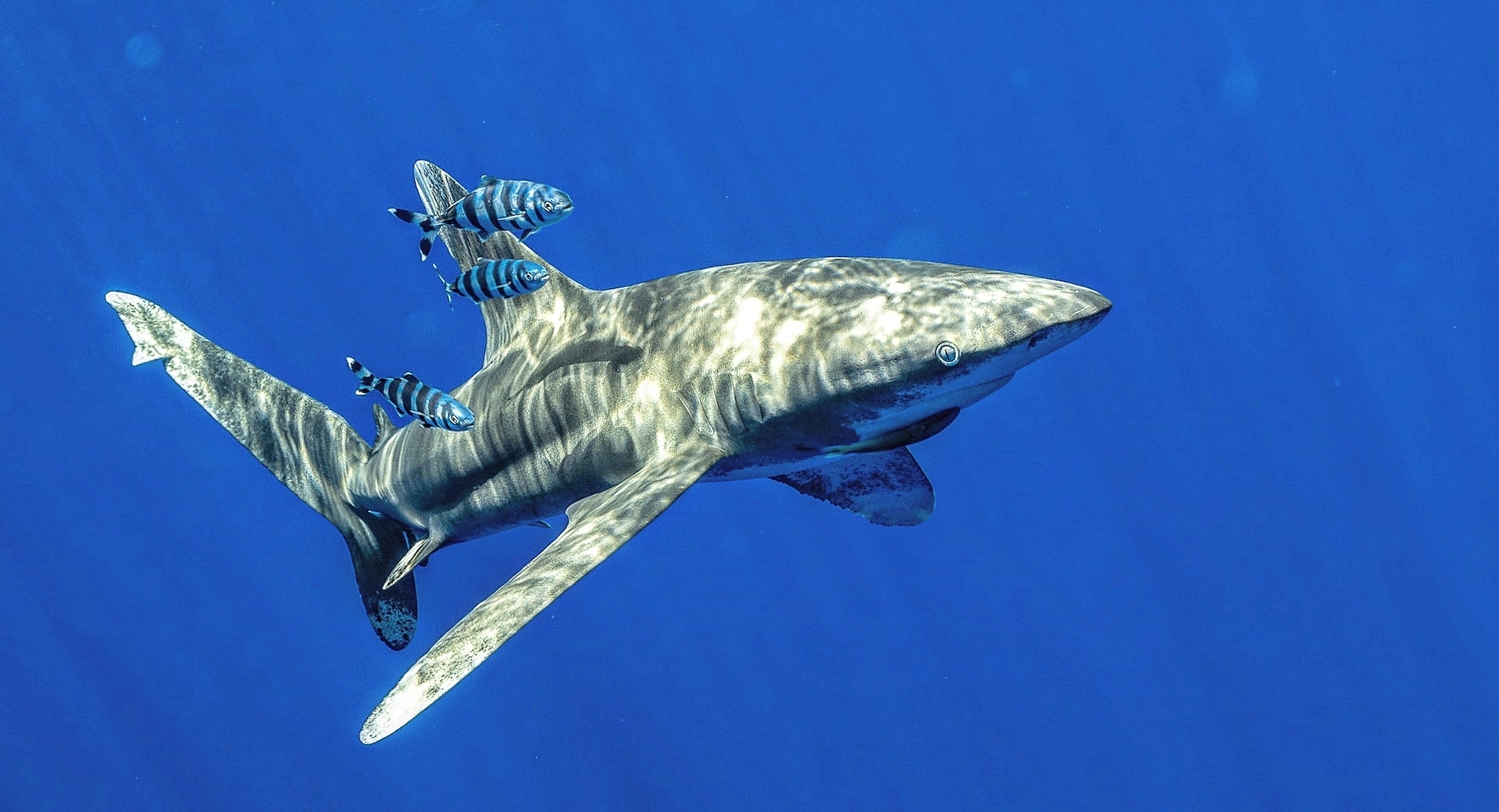
Two U.S. companies have applied to the U.S. government for seabed mining exploration licenses in two patches of international waters in the South Pacific Ocean.One of the patches, known as the Eastern High Seas Pocket 3, is bounded by the exclusive economic zones of the Cook Islands, Kiribati and French Polynesia, and is a special management area for fisheries. Any future mining there could create an early test for how deep-sea mining and fishing interests interact.The French Polynesian government has vocally opposed one company’s proposed mining in this area, arguing that the company developed its plans without appropriately consulting regional governments and that mining activities would impact environmentally sensitive areas, including a highly protected marine area.These mining applications are part of a broader move by U.S. companies to stake claims to the international seabed through a controversial U.S. permitting process that bypasses the multilateral U.N.-affiliated seabed regulator. Two U.S. companies have applied to the U.S. government for seabed mining exploration licenses in two large patches of international waters near the Cook Islands, Kiribati and French Polynesia in the South Pacific Ocean. Local government officials and environmental organizations are pushing back. The applications are part of a broader move by U.S. companies to stake claims to the international seabed through a controversial U.S. permitting process. The process bypasses the U.N.-linked multilateral body tasked with regulating deep-sea mining activities on the high seas and protecting the marine environment. Beyond the two South Pacific sites, U.S. companies are also seeking rights through this process to large seabed blocks in international waters near Guam in the western Pacific and in the Clarion-Clipperton Zone (CCZ), a vast area between Hawai‘i and Mexico, a recent Mongabay investigation showed. Most of these areas harbor polymetallic nodules, avocado-sized rocks that contain nickel, manganese, copper, cobalt and other minerals. In the South Pacific, Delaware-incorporated American Deep Sea Minerals, Inc. (ADSM) and Florida-based American Ocean Minerals Corporation (AOM) have both applied to the U.S. government to explore areas of the seabed for their mining potential, with a view to eventually extract and sell seabed minerals. Their plans focus on two areas: a 101,064-square-kilometer (39,021-square-mile) pocket of international waters bounded by the exclusive economic zones (EEZs) of the Cook Islands, Kiribati and French Polynesia; and a 89,645-km2 (34,612-mi2) area south of the Cook Islands’ EEZ. Louisa Castledine, a spokesperson for the Cook Islands-based ocean advocacy collective Ocean Ancestors, told Mongabay she believed these companies’ plans create a “dangerous pathway of opening up the Pacific region to increased exploitation and vulnerability.” “They’re testing every kind of trajectory and angle and strategy and opportunity they can make to extract,” Castledine said. “And it’s full speed towards extraction.” The French Polynesian government has vocally opposed ADSM’s plans. The governments of the Cook Islands and Kiribati, on the other hand, have not publicly voiced their stances on either company’s plans. The three countries did not respond to Mongabay’s requests for comment. Deep-sea mining plans in the South Pacific ADSM and AOM’s plans have raised concerns about potential impacts on marine biodiversity. This is particularly true when it comes to the area bordered by the Cook Islands, Kiribati and French Polynesia, known as Eastern High Seas Pocket 3. The area is considered a crucial marine corridor for a range of species, including the critically endangered oceanic whitetip shark (Carcharhinus longimanus), and it is directly adjacent to a strictly protected marine area in French Polynesia. The pocket has also been designated a special management area by the Western and Central Pacific Fisheries Commission (WCPFC), a multilateral regional fisheries management organization charged with ensuring the conservation and sustainable use of tuna and other migratory fish stocks across much of the Pacific Ocean. If deep-sea mining eventually takes place in this high seas pocket, it could create an early test for how mining and fishing interests interact. A deep-sea dumbo octopus, (genus Grimpoteuthis) next to a sea anemone. Image courtesy of Schmidt Ocean Institute (CC BY-NC-SA 4.0). The mining companies, however, argue that they would mine responsibly if granted permission. Kim Doster, communications director for the National Oceanic and Atmospheric Administration (NOAA), the U.S. scientific and regulatory agency in charge of issuing deep-sea mining licenses to U.S. companies in international waters, previously told Mongabay its “permitting and review process includes a robust and comprehensive environmental review” and its “gold standard science will provide the benchmark for sustainable deep ocean mining practices for this emerging industry and for our international partners.” NOAA did not respond to Mongabay’s further requests for comment specific to this story. ADSM, a company established in 2025 and run by financial analyst Graham Goulet, is seeking exploration rights over the entire Eastern High Seas Pocket 3. It has proposed a “four-year technical work program” that would culminate in a mining equipment trial, according to its application published on the U.S. Federal Register. Previous reporting, however, suggests that the company does not appear to possess mining equipment or other technology needed to conduct deep-sea mining, nor does it appear to maintain an online presence. AOM, which is led by the former CEO of British-Australian mining giant Rio Tinto, Tom Albanese, has also filed an application with NOAA to mine in a 56,509-km2 (21,818-mi2) enclave within the pocket, according to a company filing with the U.S. Securities and Exchange Commission. The company acknowledges in the filing that an “an earlier-filed application” — apparently ADSM’s — would have “priority of right” to the area, but says it “elected to continue its application, thereby preserving a subordinate and contingent position with respect to that subarea.” AOM has also applied to NOAA for rights to a patch of seabed just south of the Cook Islands’ EEZ, as well as blocks in the CCZ, according to the SEC filing. Separately, AOM is set to acquire a substantial stake in two active deep-sea mining exploration licenses within the Cook Islands’ EEZ after its planned $1 billion merger with Florida-based deep-sea mining company Odyssey Marine Exploration. The merged company will trade on the Nasdaq stock exchange. Manganese nodules on the seafloor offshore of the Cook Islands, targeted by deep-sea mining companies for their mineral content. Image courtesy of the U.S. Geological Survey. Environmental concerns for the Eastern High Seas Pocket 3 French Polynesia, which has banned deep-sea mining in its territorial waters, has objected to the possibility of mining in the Eastern High Seas Pocket 3. In a letter to NOAA lodged in July during the public comment period for ADSM’s application, the French Polynesian government requested NOAA to deny ADSM’s application; or alternatively, to suspend the review process and require ADSM to provide more information, conduct a thorough environmental review, and formally and appropriately consult France, French Polynesia, the Cook Islands, Kiribati and relevant regional organizations, among other requirements. The French Polynesian government also questioned NOAA’s authority to permit mining in international waters, arguing that any mineral resource activity “must be addressed through the multilateral framework established under international law, including the International Seabed Authority.” French Polynesia’s administering power, France, is an International Seabed Authority (ISA) member, and called for an outright ban on the industry in 2022. Doster of NOAA previously told Mongabay that U.S. law under the Deep Seabed Hard Mineral Resources Act (DSHMRA) “establishes the framework through which the U.S. government authorizes citizens to pursue these freedoms in a manner providing reasonable regard to the interests of states as consistent with the general principles of international law.” One of the French Polynesian government’s objections is that the proposed mining area borders its Tainui Atea marine protected area network, a marine protected area (MPA) that spans nearly the entirety of French Polynesia’s EEZ and is the world’s largest MPA. The proposed mining area is also directly adjacent to the Société Ouest reserve, a strictly protected marine area that doesn’t allow any industrial activities such as fishing. The government also notes that the pocket is an ecological corridor “relevant to marine mammals, sharks, rays, turtles, seabirds, pelagic fisheries, deep-sea habitats and future high-seas protection under the BBNJ Agreement.” The BBNJ agreement, also known as the agreement on marine biodiversity of areas beyond national jurisdiction or the high seas treaty, took effect in January and will enable the establishment of marine protected areas in international waters, among other measures. Sharks over a healthy coral reef in Millennium Atoll in the southern Line Islands, Kiribati. Image by Enric Sala, National Geographic Pristine Seas via Flickr (CC BY-SA 2.0). “Given the highly mobile and migratory nature of the species concerned, the documented presence of marine mammals in the waters directly adjacent to the high-seas pocket creates, at minimum, a strong presumption that these animals cross the EEZ boundary and use the high seas area concerned by ADSM’s application,” the French Polynesian government writes. “This is particularly important because marine mammals are protected under French Polynesian law and under international conservation instruments. NOAA should not assume that the administrative limit of the EEZ corresponds to a biological boundary. Any assessment of ADSM’s application must therefore consider potential impacts on marine mammals moving between French Polynesia’s protected waters and the adjacent high seas, including underwater noise, vessel traffic, operational disturbance, lighting, collision risk and cumulative impacts.” Cook Islands organizations Kōrero o te ‘Ōrau, Te Ipukarea Society and Ocean Toa, as well as French Polynesian organization Te Pū ‘Ātiti’a, which are part of the Ocean Ancestors collective, also wrote a letter to NOAA during the public comment period for ADSM’s application. It requested NOAA deny the application, arguing that the region is a “critical migration corridor for tuna stocks that sustain our food security and livelihoods, as well as whales, turtles, and other species.” During the most recent ISA meeting in July, Te Ipukarea Society also voiced its support for establishing the Eastern High Seas Pocket 3 as an MPA under the BBNJ agreement. Goulet, the CEO of ADSM, did not respond to Mongabay’s specific questions about concerns expressed by the French Polynesian government and environmental organizations. He told Mongabay in an email that his company had “proposed an exploration program focused on scientific and environmental study.” “The program is intended to survey the seabed, characterize the surrounding environment, and build a much stronger scientific understanding of the area than exists today,” Goulet said. “We believe that better information is valuable to everyone with an interest in these waters, and we are committed to conducting the work carefully and responsibly.” AOM, which is also looking to mine in the same area, didn’t respond to Mongabay’s request for comment. An acorn worm among polymetallic nodules in the waters of the Cook Islands. Image courtesy of NOAA Ocean Exploration, 2026 Cook Islands ROV Exploration. Overlapping mining and fishing interests The overlapping interests of the fishing and deep-sea mining industries are also raising questions. In 2010, the Western and Central Pacific Fisheries Commission (WCPFC) designated the Eastern High Seas Pocket 3 a special management area, following a proposal by the Cook Islands meant to address concerns about illegal, unreported and unregulated fishing and the risks posed to surrounding countries by vessels transiting to and from the enclosed high seas area. The WCPFC subjects fishing in the pocket to close monitoring and prohibits transshipment — the movement of catch from one vessel to another, which can provide cover for illegal fishing. Rhea Moss-Christian, the WCPFC’s executive director, told Mongabay that the organization has been gathering information about potential deep-sea mining activities in the area and their possible effects on tuna fisheries, and that ADSM had contacted the WCPFC to offer further information. “The WCPFC’s decision to maintain an awareness of DSM [deep-sea mining] activities in the region, including through obtaining observer status to ISA, provides the opportunity for members to consider available information on an ongoing basis, as required,” Moss-Christian said in an email. “This includes consideration of how WCPFC’s work may be affected by non-fisheries activities taking place in the [WCPFC] Convention Area and where (and whether) further action by the Commission may be required.” A cusk-eel in the waters of the Cook Islands. Image courtesy of NOAA Ocean Exploration, 2026 Cook Islands ROV Exploration. Jesse van der Grient, an ecosystem scientist at the Royal Netherlands Institute for Sea Research (NIOZ) and co-lead for the minerals working group at the Deep Ocean Stewardship Initiative (DOSI), a group that provides expertise for deep-sea mining governance, said she found it “worrying” that deep-sea mining was advancing without enough consideration of the potential “impacts on other industries that are vital for that area.” She also pointed out that deep-sea mining might adversely affect fishing not only in the WCPFC’s special management area, but also within the EEZs of the three adjoining countries. “We have a lot of migratory stock that will be swimming through that pocket, but will be going to the national waters of these islands,” van der Grient told Mongabay. She said that if mining does take place in the pocket, it could produce “discharge plumes” that could move into the EEZs of the adjoining countries, affecting tuna and other target species. Will deep-sea mining proceed in the South Pacific? Aside from publishing ADSM’s application in the U.S. Federal Register and holding a virtual public hearing on it in July, NOAA has made no further announcements about the application. It has yet to publicly acknowledge AOM’s applications or publish them in the Federal Register. NOAA did not respond to Mongabay’s questions about these pending applications or say if any other company had applied to mine in the South Pacific. A crinoid perched on bamboo coral in the waters of the Cook Islands. Image courtesy of NOAA Ocean Exploration, 2026 Cook Islands ROV Exploration. Bobbi-Jo Dobush, an independent ocean policy and law consultant based in California, told Mongabay in a text message that she is concerned NOAA is “truncating” the seabed mining application process for international waters because it consolidated its exploration and exploitation application processes and curtailed environmental review timelines. “NOAA leadership has made clear that they understand that their mandate from the White House is to move forward with seabed mineral leasing, full stop,” she said. She raised particular concerns about the applications to mine Eastern High Seas Pocket 3. “There are unresolved issues about liability to adjacent states and to fisheries,” Dobush said. “We have little understanding of the currents there and where the plumes would go. It is a very biodiverse area and … of course, the mineral resources are the common heritage of humankind, not to be given straight to corporations or to one country.” Banner image: An oceanic whitetip shark (Carcharhinus longimanus), a species classified as critically endangered by the IUCN. The species spends time in the Eastern High Seas Pocket 3, an area bordered by the Cook Islands, Kiribati and French Polynesia that U.S. companies have expressed interest in mining. Image by © Ant Brown via iNaturalist (CC BY-NC 4.0). Elizabeth Claire Alberts is a senior staff writer for Mongabay and was a 2024-2025 fellow with the Pulitzer Center’s Ocean Reporting Network. Find her on Bluesky and LinkedIn. US deep-sea mining claims in Pacific’s high seas now rival the area set aside by international regulator US prepares to auction leases for seabed mining blocks in federal waters Credits Topics
US companies apply to explore deep-sea mining in area bordering Pacific island states
Full Article
Original Source
Read the full article at News →KhanList aggregates and links to publicly available news content. We do not host full articles from third-party sources. Always verify important information with original sources.