
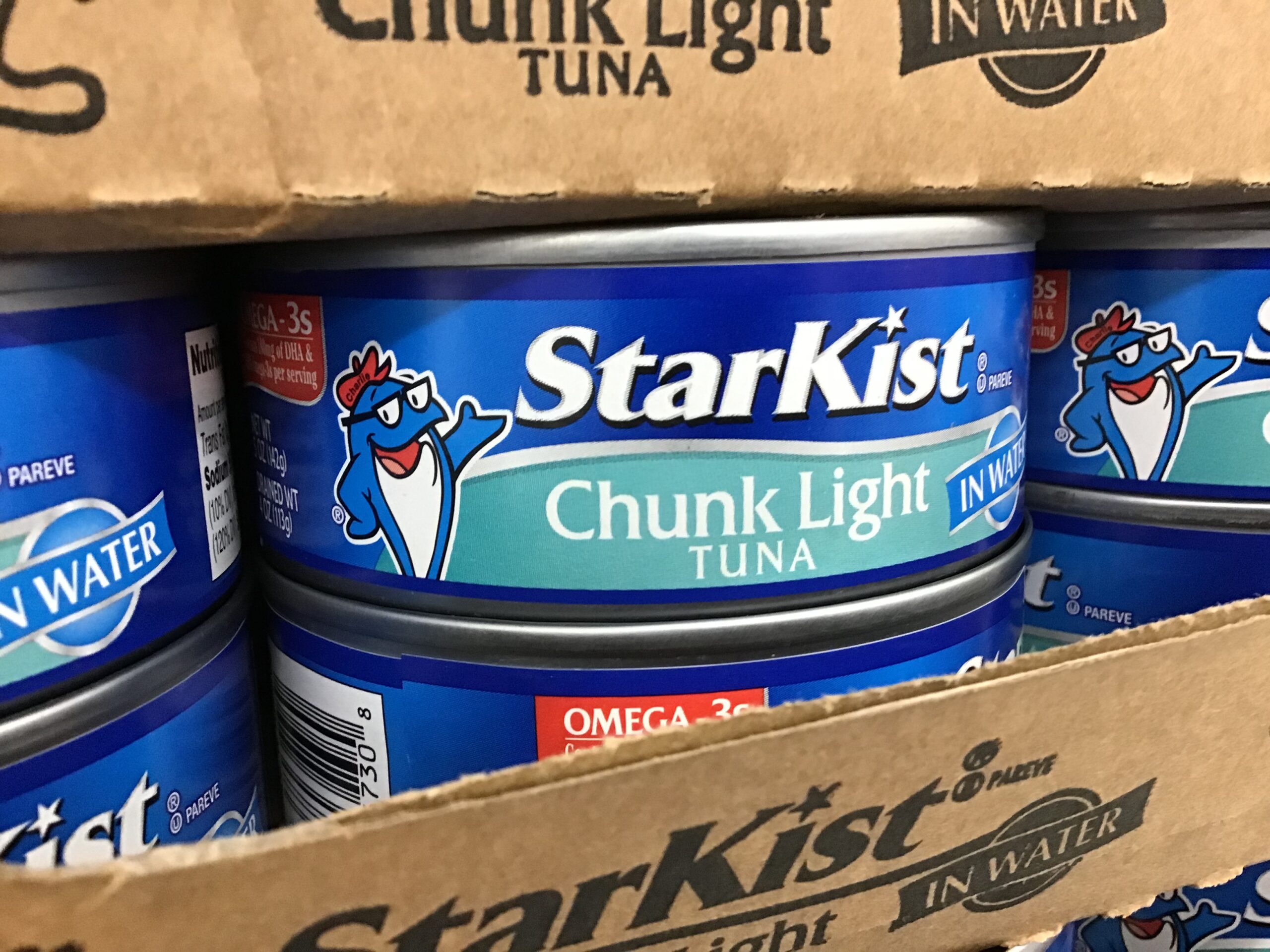
An Indonesian migrant fishers’ union is pressing U.S. tuna brand StarKist to sign a binding labor agreement over allegations of forced labor in the company’s supply chain.StarKist says it has halted purchases from fishing vessels identified in a rights group’s report on forced labor, and hired an outside firm to investigate.The fishers are also calling on the brand to leverage its buying power to win protections, with their Taiwan-based union saying voluntary audits and certification schemes have failed to deliver. U.S. tuna brand StarKist has announced a halt on purchases from fishing vessels linked to forced labor practices in a recent report. It also says it has hired an outside firm to investigate after an Indonesian migrant fishers’ union demanded a binding labor agreement with the company. In a statement sent to Mongabay on Nov. 10, StarKist said it has “zero tolerance” for forced labor and human rights violations throughout its supply chain. “We take all allegations of labor and human rights violations seriously, including those recently raised by FOSPI and Global Labor Justice (GLJ),” Matthew Hall, StarKist’s head of global sustainability, said in the statement. The statement was issued nearly two months after U.S.-based GLJ published a report as part of a campaign with the Taiwan-based Indonesian migrant fishers’ union, FOSPI-PMFU. The report, “On the Hook: Forced Labor in StarKist’s Supply Chain,” said it found indications of forced labor among Indonesian migrant fishers working on board Taiwanese vessels in StarKist’s Pacific albacore tuna supply chain. Taiwanese fishers unload albacore from a tuna longliner. Image courtesy of NOAA Central Library Historical Fisheries Collection. StarKist, owned by South Korean seafood giant Dongwon Industries, sells Pacific albacore tuna in the United States. The brand accounts for 42% of the U.S. market share of processed tuna imports, “making its sourcing practices significant for the wider industry,” GLJ said. In the StarKist statement, Hall said the company had appointed an independent third-party firm, Key Traceability, to conduct a probe and had opened its internal nonconformance process for the vessels identified in the report. The investigation is expected to include full vessel assessments to check for compliance with the code of conduct and vessel standards stipulated by the Seafood Task Force, a global trade association. These assessments would be carried out by StarKist’s suppliers and a third-party organization it didn’t name. StarKist doesn’t own or operate its own fishing vessels, and so “cannot directly control,” Hall said. He emphasized the company has halted purchasing from the vessels in question during the investigation. According to the statement, purchasing will only resume if “the investigation is satisfactorily resolved and acceptable corrective actions, where required, have been implemented and independently verified by our third-party partner.” StarKist didn’t say when the purchase halt began or how many vessels it applied to. CAPTION: Canning production line at the StarKist Samoa Cannery in Pago Pago, American Samoa. Image by U.S. Government Accountability Office via Wikimedia Commons (Public domain). The GLJ report was based on a two-and-a-half-year investigation, during which it interviewed 92 Indonesian fishers working or formerly employed on 37 Taiwanese longliners that supply tuna to StarKist. The NGO said it found indications of forced labor on all vessels and collected enough evidence to make the case that the alleged abuse experienced by 62 of the fishers on board 27 of the vessels met the standard of forced labor typically applied by U.S. Customs and Border Protection and other regulators. All the fishers reported having their passports confiscated and visas tied to specific employers, while nearly all said they had incurred recruitment debt and worked excessive overtime, beyond the legal limit under Taiwanese law. The GLJ investigation linked the vessels to StarKist by matching names from fishers’ interviews against public vessel lists that StarKist and its Taiwanese supplier, Fue Shin Fishery, publish as part of their sustainability initiatives. The group then checked trips and port landings with satellite vessel-tracking data from Global Fishing Watch. The NGO also identified 162 Taiwan-flagged or Taiwanese-owned vessels in StarKist’s Pacific albacore supply chain, with Fue Shin Fishery appearing to be StarKist’s largest supplier, linked with at least 49% of identified Taiwanese vessels. By using trade data and fishers’ accounts, GLJ identified 26 of the vessels that offloaded their catch at StarKist’s cannery in Pago Pago, American Samoa, between 2023 and 2026. On Sept. 17, the same day the report was published, GLJ and FOSPI-PMFU filed a complaint against StarKist’s parent company, Dongwon Industries, with South Korea’s OECD National Contact Point. In response to Mongabay’s query, Dongwon said it and StarKist are “separate legal entities, each with its own management team” responsible for day-to-day operations. StarKist has engaged a third party to carry out an assessment and is awaiting the findings, Dongwon said in an email to Mongabay on Nov. 6. It also referred Mongabay’s questions to StarKist. Cans of StarKist brand tuna. Image by Mike Mozart via Flickr (CC BY 2.0). Enforceable agreement FOSPI-PMFU and GLJ are pushing for an enforceable brand agreement (EBA), a legally binding contract between a workers’ organization and a company, rather than the voluntary audits and certifications they say have failed. Such agreements have been used mainly in garment and farm supply chains. GLJ executive director Jennifer Rosenbaum cited a 2024 agreement covering two garment factories in Indonesia’s Central Java province as proof the approach works. In an interview with Mongabay on Oct. 16, FOSPI-PMFU general secretary Achmad Mudzakir said the union had sent StarKist two letters, one in February and the other in August, asking for a meeting with the U.S. company and an EBA. According to FOSPI-PMFU, it wants an agreement that makes its demands enforceable, with a direct role for the union in monitoring them. “If EBA is implemented, that means there is a mandatory requirement coming from the final link in the supply chain,” Mudzakir said. “Whether they like it or not, they will still have to comply.” The fishers’ union also issued five demands: guaranteed Wi-Fi on board fishing vessels; a safe workplace; fair pay and contracts; freedom to organize without retaliation; and a transparent grievance mechanism. FOSPI-PMFU called on StarKist to step in to help with vessel owners’ operating costs rather than leave them to the owners. Talks with vessel owners about better conditions for crew members typically stall because owners say costs are high, Mudzakir said. “When StarKist makes large profits, it should also contribute by helping cover the employers’ operating costs,” he said. He said a binding agreement with StarKist would give fishers a way around such impasses, as the requirements would come from the buyer at the end of the supply chain and vessel owners supplying StarKist would have to comply. Mudzakir said the union has still not received a response from StarKist. FOSPI-PMFU and GLJ joint campaign demanding an enforceable brand agreement from StarKist, which they allege sources its Pacific albacore tuna from Taiwanese vessels where the Indonesian migrant crews experience forced labor. Image courtesy of Global Labor Justice. FOSPI-PMFU is still seeking a negotiated outcome and has not discussed legal action, but it would resort to a lawsuit if its letters and complaints keep going unanswered, Mudzakir added. “Our strategy prioritizes not immediately going in to hit them hard,” he said, referring to StarKist. In its statement, StarKist didn’t address the GLJ report’s specific findings, the letters the union says it sent to the company, the proposal for a binding agreement, or the OECD complaint. GLJ acknowledged that StarKist doesn’t employ the fishers or directly manage their working conditions, but said the company has leverage through its choice of suppliers. “While seafood companies are aware of these conditions, they continue to rely on voluntary policies, audits, certifications, and piecemeal remedies that leave protections largely to the discretion of companies and employers,” Zacari Edwards, GLJ’s seafood program director, said in a press release in September. Edwards said the report’s findings show that forced labor wasn’t limited to isolated incidents on individual vessels, but was tied to structural conditions across the employment cycle and supply chain. “Structural problems cannot be fixed with piecemeal solutions,” he said. Basten Gokkon is a senior staff writer for Indonesia at Mongabay. See related story: Bumble Bee asks court to dismiss lawsuit alleging forced labor in tuna supply chain FEEDBACK: Use this form to send a message to the author of this post. If you want to post a public comment, you can do that at the bottom of the page. Credits Topics
US brand StarKist suspends tuna sourcing from vessels accused of exploiting Indonesian fishers
Full Article
Original Source
Read the full article at News →KhanList aggregates and links to publicly available news content. We do not host full articles from third-party sources. Always verify important information with original sources.