
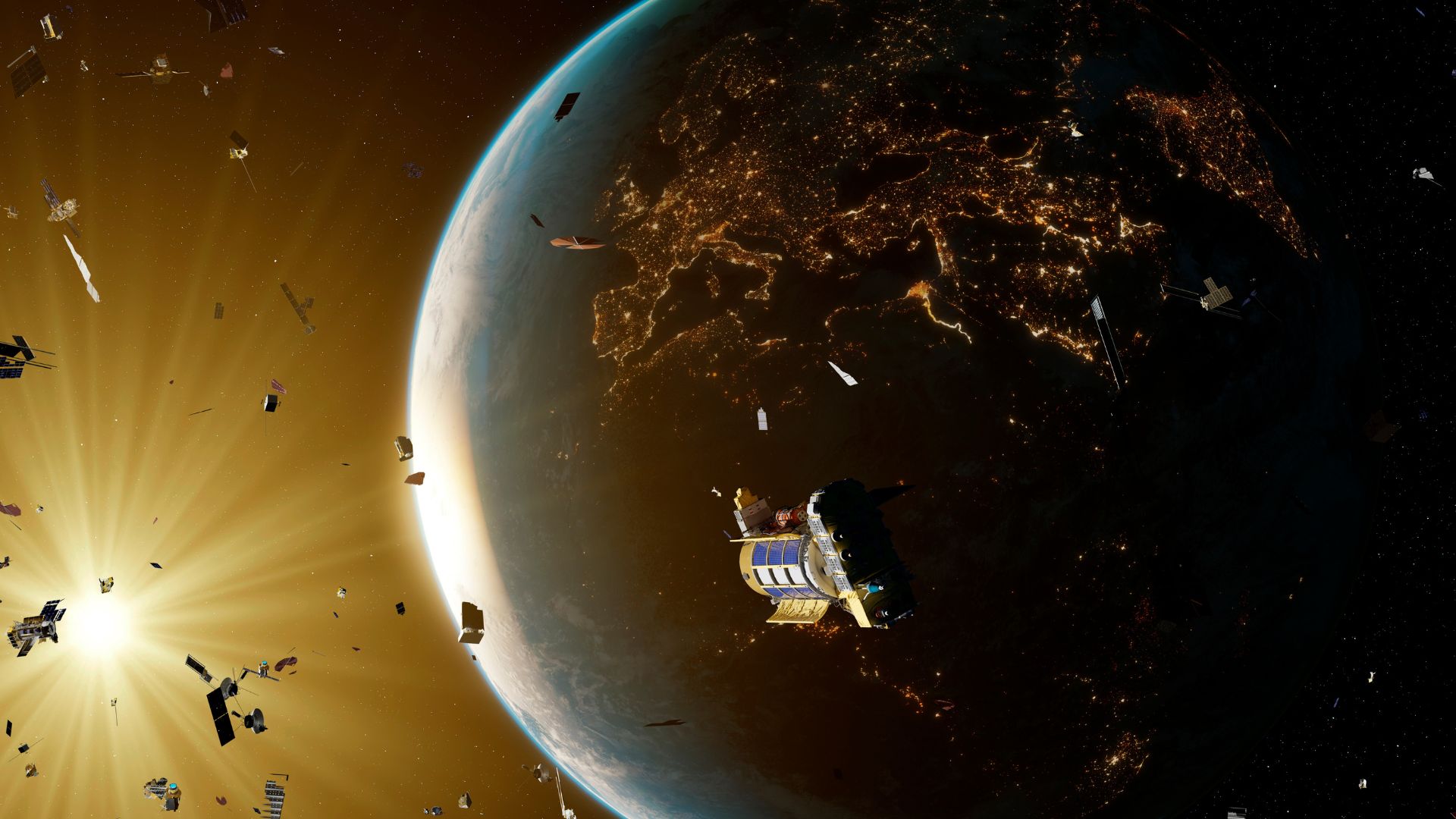
The United States has taken a significant step toward developing faster and more responsive capabilities for monitoring activity in space. A recent demonstration involving Lawrence Livermore National Laboratory (LLNL), Rocket Lab and the U.S. Space Force has shown how an advanced optical payload can help spacecraft rapidly locate, track and inspect objects in orbit. Mission successfully demonstrated a new capability The demonstration was conducted as part of the VICTUS HAZE tactically responsive space mission, an initiative designed to test how quickly the United States can respond to a potential threat in space. According to LLNL, the mission successfully demonstrated a new capability for Space Domain Awareness (SDA)—the ability to detect, track, characterize and understand objects operating in the increasingly busy orbital environment.The number of objects being placed into orbit has increased substantially over the past decade. Modern launch vehicles can deploy multiple satellites during a single mission, creating an increasingly complex orbital environment.For military and civilian space operators, knowing where objects are and understanding their behavior is becoming increasingly important. A spacecraft that suddenly changes its orbit, approaches another satellite or behaves unexpectedly may require closer inspection. Traditional space-monitoring methods can provide limited information Traditional space-monitoring methods can provide information from the ground, but there are situations in which an inspector spacecraft capable of approaching and imaging another object could provide much more detailed information.“We are honored to have contributed the imaging payload for this innovative mission,” said Ben Bahney, leader of the LLNL Space Program. “Tactically responsive space is what we do.”The mission is part of a broader effort led by USSF to leverage the United States’ innovative commercial space industry to improve the service’s ability to respond to security challenges. With an emphasis on speed, flexibility and operational relevance, the new threat landscape requires space teams to fundamentally shift how they think about launch, payload integration and mission execution.The Space Program at LLNL is uniquely positioned to meet this objective with advanced optics systems designed for rapid deployment and integration. The VICTUS HAZE optical imaging payload uses LLNL’s monolithic telescopes, which are fabricated out of a single silica substrate, to deliver exceptional mechanical stability at a low-cost.“The LLNL Space Program is thrilled to be a part of this critical TacRS demonstration in partnership with USSF and Rocket Lab,” said Cohl Hatala, project manager and lead mechanical engineer for the LLNL Space Program. “The capability of our optical payload makes it the perfect candidate for VICTUS HAZE.” Within 24 hours of launch, the team completed the commissioning of the payload, demonstrating how the optics system can support rapid action and decision-making in space operations. By pairing a fast launch capability with a responsive imaging payload, the mission tested not only launch readiness but also the ability to gather and assess information quickly once on orbit. The optical payload successfully demonstrated angles-only navigation using live-feed images and an algorithm embedded within its payload electronics, enabling closed-loop control between the payload and the spacecraft, as per the release. Get the latest in engineering, tech, space & science - delivered daily to your inbox.Prabhat, an alumnus of the Indian Institute of Mass Communication, is a tech and defense journalist. While he enjoys writing on modern weapons and emerging tech, he has also reported on global politics and business. He has been previously associated with well-known media houses, including the International Business Times (Singapore Edition) and ANI.
US boosts its on-orbit threat inspection capability with new successful demonstration
Full Article
Original Source
Read the full article at Interestingengineering →KhanList aggregates and links to publicly available news content. We do not host full articles from third-party sources. Always verify important information with original sources.