
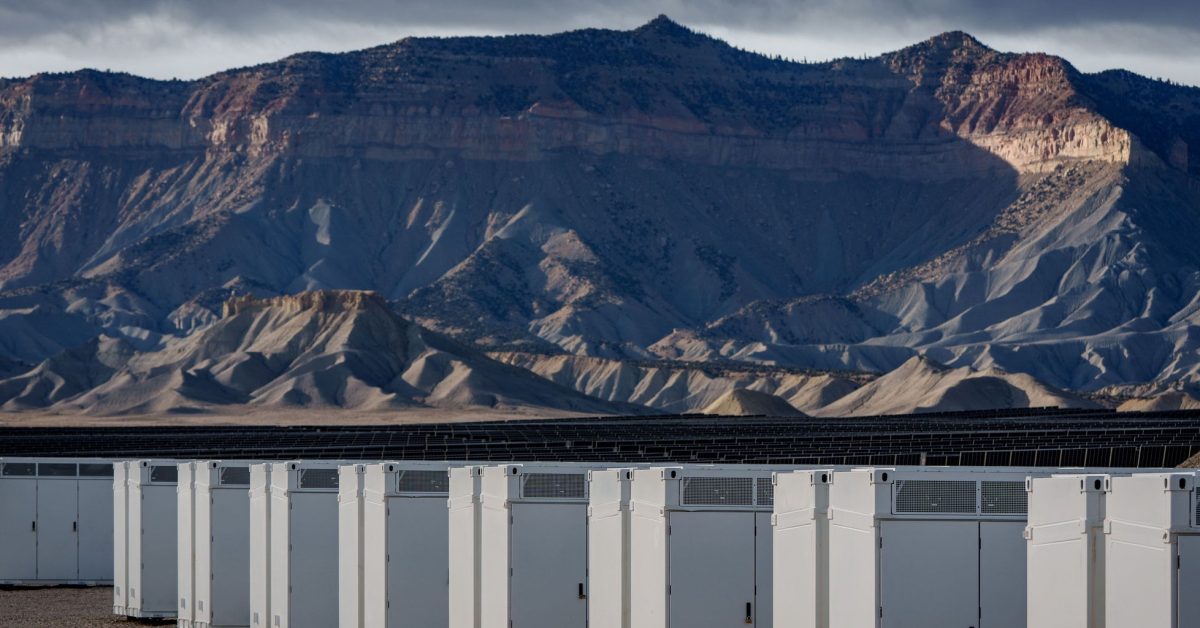
Photo: rPlus Energies The US has installed more than 200 gigawatt-hours (GWh) of battery storage, with nearly 50 GWh coming online in the first nine months of 2026 alone. The US added 48.3 GWh of battery storage through September, up 20% from the same stretch last year, according to the latest report from the Solar Energy Industries Association (SEIA) and Benchmark Mineral Intelligence. Q3 was a little slower: The US installed 14.3 GWh in those three months, down 1% year over year. Texas is in the lead Texas added 12.3 GWh of grid-scale batteries through September, more than any other state. Arizona came in second at 7.7 GWh, followed by California at 6.8 GWh. And 11 states had already broken their annual storage installation records with three months to go – Colorado, Massachusetts, Utah, Michigan, Georgia, Mississippi, Virginia, Iowa, Montana, Alabama, and Illinois. Utility-scale batteries did most of the work in Q3, accounting for 12.2 GWh of new capacity. Businesses and industrial sites added another 1.3 GWh, and residential added 746 megawatt-hours (MWh). That was the best Q3 yet for home batteries, though installs through September were still down 12% year over year. Some homeowners moved up their installations last year before the federal residential clean energy tax credit ended. “States are moving from targets to centralized procurements,” said Pete Tillotson, a senior analyst at Benchmark. In September, New York awarded contracts for eight battery projects that can deliver about 950 megawatts (MW) combined. SEIA and Benchmark now expect 708 GWh of storage across the grid, homes, and businesses by 2030, up 3.7% from their previous forecast. The US can also make more battery cells here. A Tennessee factory opened in July and an Indiana factory opened in October, bringing US cell manufacturing capacity to 92.4 GWh, up 50%. What about people’s electric bills? Solar and batteries helped bring down average summer wholesale power prices by 42% in Texas’s ERCOT market and 51% in California’s CAISO market between 2021 and 2026, according to SEIA’s inflation-adjusted analysis. When batteries had power to spare during peak hours, grid operators could call on expensive power plants less often. You wouldn’t know it from looking at the total on residential electric bills. The cost of generating power for households fell in both markets, but the cost of delivering it to homes rose. Overall, residential bills rose 22% at the two California utilities SEIA examined and 3% across its Texas utility sample, driven by higher transmission and distribution costs. California is upgrading its grid to reduce the risk of wildfires. Texas is expanding its grid for rising demand and make it more resilient to storms. More than 300 solar and battery storage companies in the US wrote to Congress last week asking it to pass the Bipartisan American Affordability and Jobs Act. SEIA CEO Tim Pawlenty says the permitting bill would help get projects built faster and ease pressure on power prices. However, many Democrats feel this bill falls short. The Senate voted 70–27 on Monday to end debate on the amendment containing the bill’s text, moving it closer to a final vote. Read more: Tesla’s next big clean energy source is rising in the Arizona desert If you’ve ever considered going solar, make it easy by finding a trusted, reliable solar installer near you that offers competitive pricing by checking out EnergySage. It has hundreds of pre-vetted solar installers competing for your business, ensuring you get high-quality solutions and save 20-30% compared to going it alone. Plus, it’s free to use, and you won’t get sales calls until you select an installer and share your phone number with them. Your personalized solar quotes are easy to compare online, and you’ll get access to unbiased Energy Advisors to help you every step of the way. Get started here. FTC: We use income earning auto affiliate links. More.
US battery storage just topped 200 GWh – here’s where it is
Full Article
Original Source
Read the full article at Electrek →KhanList aggregates and links to publicly available news content. We do not host full articles from third-party sources. Always verify important information with original sources.