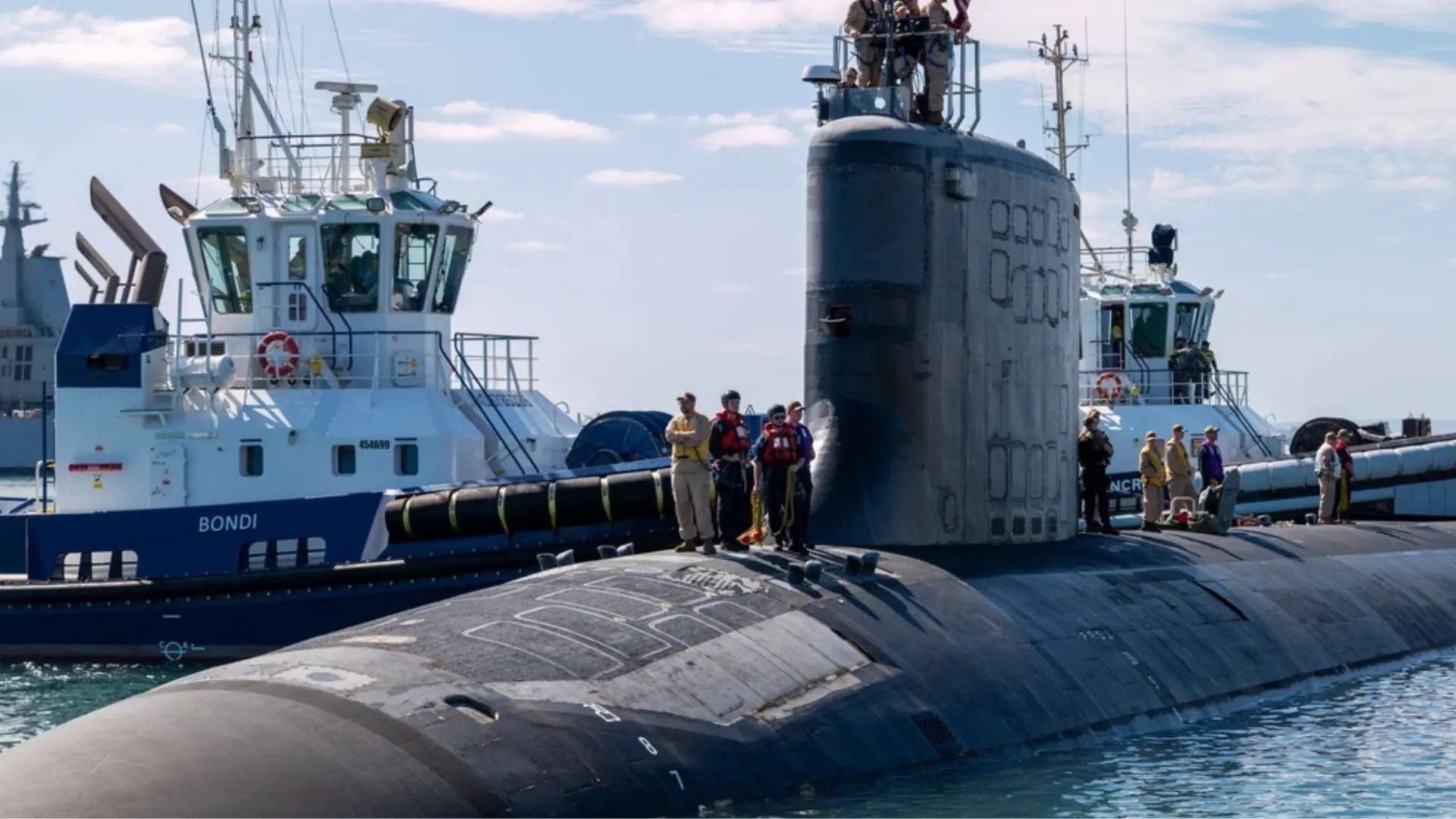
Australia announced on Friday that it will invest an additional A$4.6 billion (U.S.$3.2 billion) to expand its nuclear-powered submarine construction yard in South Australia, reinforcing its commitment to the AUKUS defense partnership despite growing concerns over costs, submarine delivery timelines, and production challenges. The new funding will support the Osborne shipyard in South Australia, where future nuclear-powered submarines will be built under the trilateral AUKUS agreement between Australia, the United States, and the United Kingdom. The investment comes a day after Australian Prime Minister Anthony Albanese received fresh assurances from Britain’s new prime minister about the long-term defense partnership. Funding expands shipyard and workforce The latest allocation adds to the A$3.9 billion (U.S.$2.7 billion) already committed for the Osborne project, which the Australian government describes as one of the country’s largest industrial undertakings. The expanded construction yard is expected to include 50 buildings and will be about 10 times larger than the existing naval shipyard, where surface warships are already under construction. Australian Defense Minister Richard Marles said the investment shows the project is progressing. “This investment is another important step in building the sovereign capability Australia will need to build, operate, maintain and sustain our future submarine fleet,” he said. Speaking at a press conference, Marles added, “It is an investment in a giant leap in Australia’s defense capability.” “This will contribute to a project which will be delivered over the course of the next decade, where we will see 50 different buildings constructed here at the submarine construction yard.” South Australian Premier Peter Malinauskas said the funding will be used for new infrastructure and workforce training. The submarine program is expected to create nearly 10,000 jobs in South Australia, with about 5,000 workers already employed on the project. AUKUS remains under political and public scrutiny Signed in September 2021, the AUKUS agreement aims to strengthen security in the Indo-Pacific as China’s military capabilities continue to grow. The pact has two main components. One covers Australia’s acquisition of conventionally armed, nuclear-powered submarines, while the second focuses on cooperation in advanced technologies such as quantum computing, hypersonic weapons, autonomous systems, and artificial intelligence. Australia’s participation in the program is expected to cost as much as US$250 billion over the next three decades, with broader estimates placing the total cost at around A$368 billion (US$255 billion) over several decades. Despite continued government support, questions remain over whether Australia will receive the submarines on schedule because of slow production rates in U.S. and UK shipyards. The agreement is also the subject of a public inquiry in Australia, while protesters gathered outside the Labor Party’s national conference on Friday to oppose the pact. Changes to submarine deliveries Under the current AUKUS plan, Australia will receive three nuclear-powered submarines from the United States before Australia and Britain jointly develop a new submarine class expected to enter service in the 2040s. The delivery plan changed earlier this year. Australia had originally expected to receive two used submarines and one newly built vessel. In May, officials announced that all three submarines would instead come from active U.S. Navy service, describing the revised arrangement as more cost-effective. Marles rejected suggestions that the project has lost momentum, saying, “AUKUS is happening.” Defense Industry Minister Pat Conroy also defended the program. “To all the naysayers who say that AUKUS isn’t real. AUKUS is well and truly real, and it’s happening right now, right here in South Australia,” he said. The Australian government continues to argue that expanding domestic shipbuilding capability will help prepare the country to build, operate, and maintain its future nuclear-powered submarine fleet while supporting the long-term goals of the AUKUS partnership. Recommended ArticlesGet the latest in engineering, tech, space & science - delivered daily to your inbox.A versatile writer, Sujita has worked with Mashable Middle East and News Daily 24. When she isn't writing, you can find her glued to the latest web series and movies.
US-backed AUKUS nuclear submarine project gets funding boost from Australia
Full Article
Original Source
Read the full article at Interestingengineering →KhanList aggregates and links to publicly available news content. We do not host full articles from third-party sources. Always verify important information with original sources.