
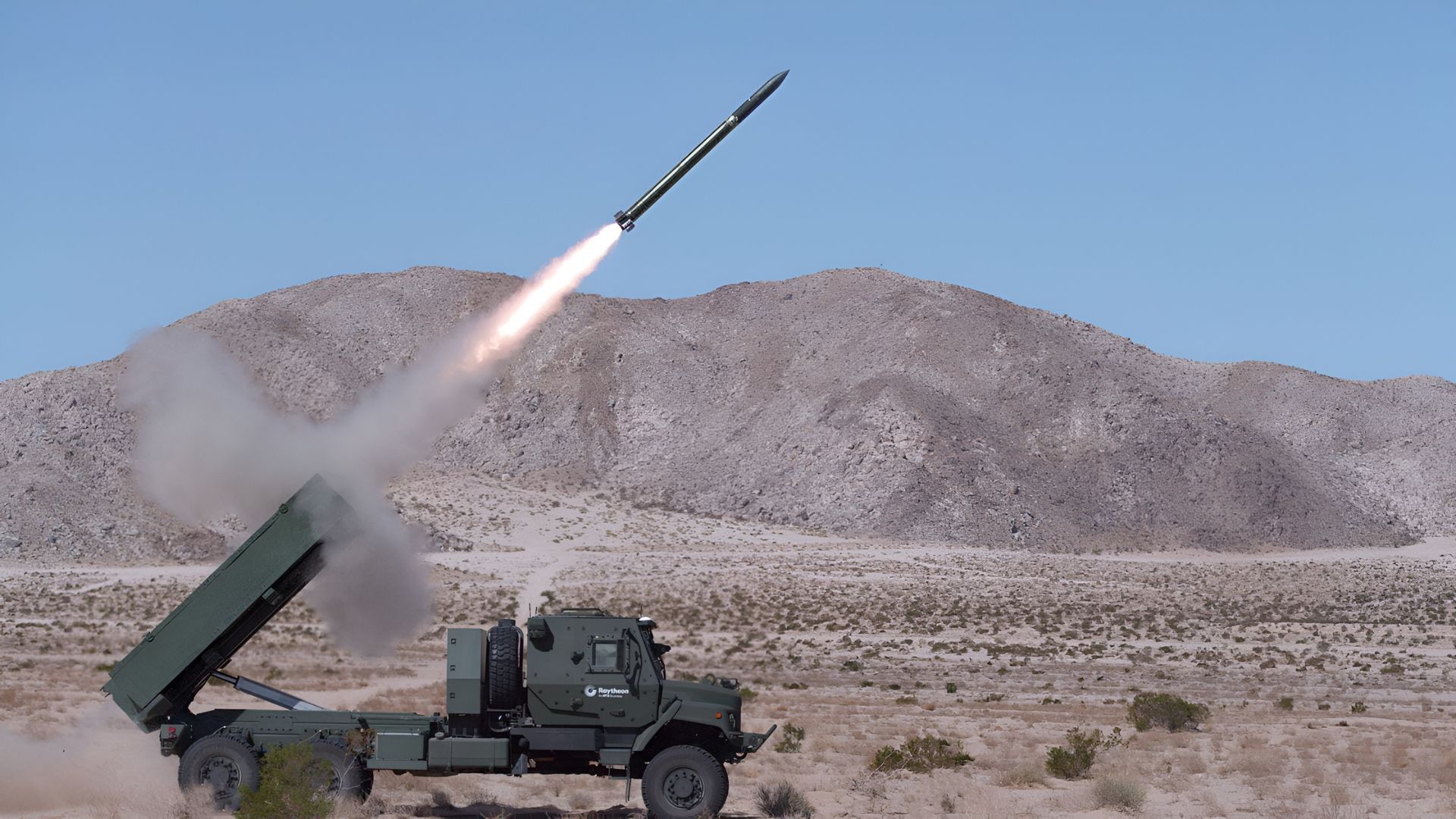
Raytheon has completed a third successful flight test of a new reduced-range rocket system designed to make U.S. Army training more affordable. The DeepStrike JR3 system could replace the Army’s existing Reduced Range Practice Rocket, offering a reusable launch container and a lower-cost rocket for repeated exercises. The test took place at Yuma Proving Ground in Arizona. Raytheon fired multiple rockets in rapid succession, demonstrating several features intended to support the Army’s growing training demands. The results also move the system closer to a formal qualification process, although additional flight testing remains ahead. Reusable pods reduce costs One of the system’s central features is its reusable launch pod container. Instead of treating the entire launch assembly as disposable equipment, the design allows crews to reuse and maintain the container across multiple training exercises. Raytheon also demonstrated the pod’s maintainability during the Yuma trials. This approach could help the Army manage training expenses by reducing the need to replace launch hardware after every exercise. The JR3 rocket fits inside the Multiple Launch Rocket System Family of Munitions (MFOM) pod. Each pod can accommodate 24 rockets, giving the system compatibility with an established launch architecture. That capacity could make the DeepStrike JR3 useful across different Army training operations. It also gives the service a way to practice rocket artillery procedures without relying exclusively on more expensive operational ammunition. The test evaluated more than the launch system’s physical design. Raytheon examined the rocket’s range, flight trajectory, and accuracy during the demonstration. Engineers also assessed the visibility of its marking solution, which helps personnel identify where training rounds land. Commercial suppliers support production Raytheon developed the JR3 rocket through a rapid prototyping initiative. The program also brings together established defense contractors, smaller technology suppliers and government production facilities. Its industrial partners include Combined Systems Inc., Corvid Technologies, L3Harris Technologies and Northrop Grumman. Letterkenny Munitions Center also contributes to the production effort. This arrangement draws on existing manufacturing capabilities and commercially available technologies. Raytheon wants the approach to shorten production timelines while controlling manufacturing costs. The company’s strategy also addresses a practical challenge for military training programs. A replacement training rocket must offer dependable performance without introducing the expense associated with operational weapons. Brian Burton, Raytheon’s vice president of Precision Fires & Maneuver, said the JR3 combines expected training performance with lower costs and reduced complexity. He also pointed to the reusable pod as a key part of the system’s design. More flight tests ahead The third successful demonstration gives Raytheon another opportunity to evaluate the rocket before qualification. The company plans additional flight tests to establish further evidence of the design’s maturity. Those trials will help determine whether the JR3 can meet the Army’s technical and operational requirements. Its ability to support repeated launches, maintain consistent accuracy, and simplify training logistics will remain important evaluation points. The Army’s existing Reduced Range Practice Rocket provides a training alternative to operational rocket ammunition. A replacement could help preserve valuable live-fire training opportunities without requiring the service to expend its full-capability munitions. DeepStrike JR3 is not yet a qualified replacement. However, its latest flight demonstration provides another milestone toward that goal, with affordability and reusable launch hardware at the center of its development. Get the latest in engineering, tech, space & science - delivered daily to your inbox.Aamir is a seasoned tech journalist with experience at Exhibit Magazine, Republic World, and PR Newswire. With a deep love for all things tech and science, he has spent years decoding the latest innovations and exploring how they shape industries, lifestyles, and the future of humanity.
US Army’s reusable 24-rocket pod system scores another win with third flight test
Full Article
Original Source
Read the full article at Interestingengineering →KhanList aggregates and links to publicly available news content. We do not host full articles from third-party sources. Always verify important information with original sources.