
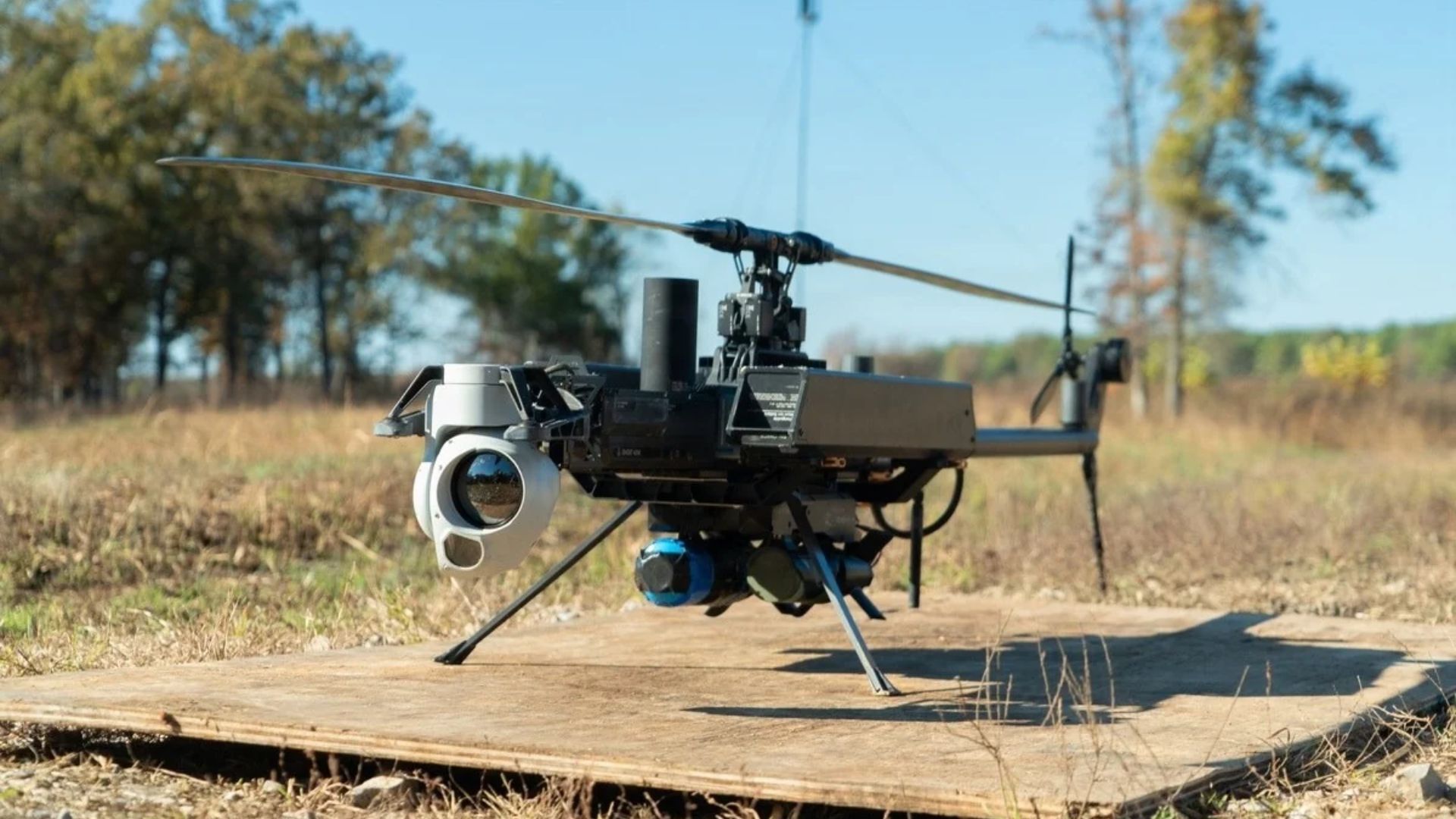
Soldiers with the 101st Airborne Division (Air Assault) recently spent a week turning standard reconnaissance drones into precision strike assets. During live-fire exercises from November 2 to 8, troops tested two new systems designed to drop munitions from the sky. It was conducted by soldiers from the Delta Multi-Purpose Company, part of the 1st Battalion, 502nd Infantry Regiment, 2nd Mobile Brigade. The technologies are called DARK and BLADE. Together, they mark a sharp shift in how American infantry units fight. Grassroots origins The Army’s shift toward armed drones originated in the field during a deployment to Poland rather than in a Pentagon lab. Encouraged by company commander Capt. Jacob Moberly to innovate with available resources, Soldiers used a 3D printer and basic materials to build the “Widowmaker,” an inexpensive grenade-dropping attachment. This improvised device demonstrated that unmanned aircraft could actively deliver munitions rather than just conduct surveillance. “Through empowering my Soldiers to innovate and test their ideas. Our Multi-Purpose Company has been able to tackle complex problems in order to drive solutions that will ultimately save lives on the battlefield and dramatically increase our lethality in combat,” Moberly said. Closing the battlefield gap After early improvised experiments, the unit transitioned to standardized gear, centering its November drills at Fort Campbell on Orbital Research’s Drone Agnostic Release Kit (DARK). Compared to typical attachments built for a single aircraft, DARK has a modular design that fits various existing drones, including the Anduril Ghost-X. This enables the platforms to carry and drop both lethal explosives and nonlethal payloads like smoke grenades. Alongside DARK, the Soldiers tested Broad Lethality Air Deployed Effects, known as BLADE. In contrast to the 3D-printed Widowmaker, BLADE is an experimental munition purpose-built for drones. It packs punch comparable to conventional military ordnance, giving ground commanders new ways to neutralize threats without waiting for air support. During simulated ground assaults, Soldiers in the company’s Advanced Reconnaissance and Effects Systems (ARES) platoon deployed both tools in combat scenarios. Unmanned aircraft conducted forward reconnaissance, deployed smoke screens to hide advancing infantry, and dropped live explosives on targets. Lessons from the war in Ukraine heavily shaped the exercise. Armed quadcopters and small unmanned aircraft have become defining features of ground combat there, demonstrating how rapidly cheap aerial tech can alter frontline tactics. U.S. infantry units spent years treating small drones as little more than flying cameras. Moberly aims to rewrite that playbook across the entire Army. “This capability we are demonstrating in collaboration with our maneuver live fire exercise proves that we are closing the gap in capability with lethal UAS,” Moberly said. His ambition stretches well beyond Fort Campbell. “My hope is for every unit in the Army with the UAS we have is able to integrate this capability into their own systems and achieve the same enablement as we have experienced here in Wardog Company,” he added. Eventually, the “Screaming Eagles” care less about simply deploying more drones than about equipping infantry Soldiers with adaptable, rapid firepower for an unpredictable battlefield.Get the latest in engineering, tech, space & science - delivered daily to your inbox.Mrigakshi is a science journalist who enjoys writing about space exploration, biology, and technological innovations. Her work has been featured in well-known publications including Nature India, Supercluster, The Weather Channel and Astronomy magazine. If you have pitches in mind, please do not hesitate to email her.
US Army unleashes modular drones equipped with lethal bombs in live-fire drills
Full Article
Original Source
Read the full article at Interestingengineering →KhanList aggregates and links to publicly available news content. We do not host full articles from third-party sources. Always verify important information with original sources.