
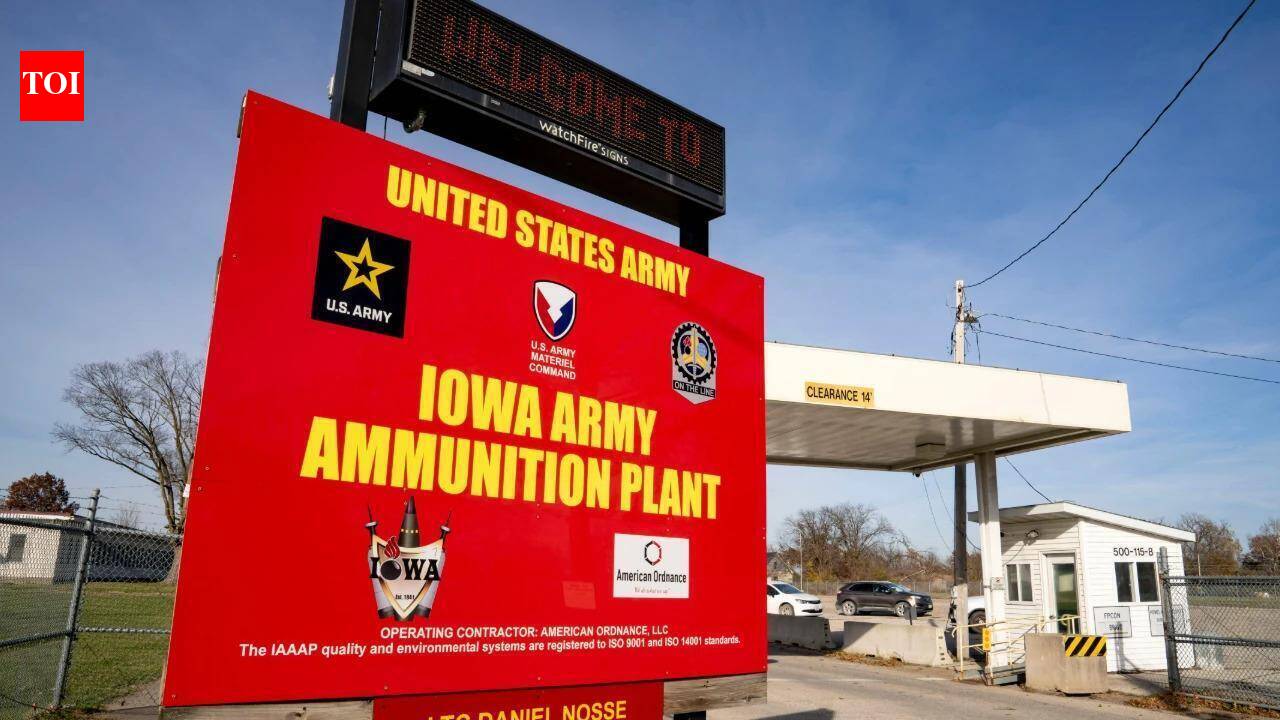
Iowa Army Ammunition Plant detonation set for 9am CST Wednesday (Picture: Reuters)The US Army will blow up nearly 10,000 pounds of degraded lead azide at the Iowa Army Ammunition Plant in Middletown, Iowa, at around 9am CST on Wednesday (8.30pm IST). The stockpile, about 9,700 pounds (roughly 4,400 kg) packed into 68 drums, has crystallised to the point where officials say it could go off on its own as temperatures drop. A federal appeals court cleared the controlled detonation on Monday, though the exact time still depends on the weather.The Army's latest maps show lead dust drifting southwest, with airborne particles possibly reaching 100 miles (about 160 km) into Missouri. FEMA is helping residents of Middletown, a town of about 360 people that borders the plant, relocate before the blast."Inaction is no longer an option," said Maj. Gen. Eric Shirley, who leads the operation.Decades-old lead azide has become too unstable to move or openLead azide is a primary explosive, the small, sensitive charge used to set off larger munitions such as grenades. The US began using it almost a century ago and moved away from it about 15 years ago because it is so hard to store and transport. In 2009, the country's remaining stock was consolidated at the Iowa facility. Some of it was already more than 60 years old.The compound sat in sawdust and burlap bags inside the drums, topped up with a water and ethanol mix so it would not freeze. A routine inspection on March 11 found significant crystallisation on the outside of the barrels. In that state, lead azide is so sensitive to friction that even unscrewing a bolt could trigger a chain reaction. Opening the lids to add more liquid was off the table.Army says waiting out the winter is the bigger riskExperts from the Army, the Environmental Protection Agency (EPA) and other agencies weighed chemical neutralisation, thermal treatment, relocation and continued storage, and rejected all four. Neutralisation meant opening the drums, while burning or moving the material would expose it to vibration and impact. Leaving it alone was no safer, as cold weather only makes it more volatile."It's not a matter of if, it's a matter of when," Robert Cekada, director of the Bureau of Alcohol, Tobacco, Firearms and Explosives (ATF), said on Tuesday.The detonation was first set for last Friday, and the date has shifted three times since. The Iowa Environmental Council and the Sierra Club went to court to halt it pending an environmental study, and President Donald Trump said the Army would hold off until the court ruled.Water walls, foam and gel blocks will try to trap the lead dustThe drums sit in 80-year-old earth-covered magazines, concrete bunkers that are already cracked and likely to break open. Around them, the Army has stacked sand barriers roughly two storeys high, a water wall built from four 16,000-gallon tanks, gel blocks and two feet of aqueous foam. Misters will soak the surrounding soil, and drones will track lead levels in the air.The last comparable disposal was in Colorado in 1977, when 7,000 pounds of lead azide was detonated in the open with zero mitigation. Even then, 75% of the lead stayed on site, according to Col. Aaron Teller, commander of the 71st Explosive Ordnance Disposal Group. The Army expects its new barriers to sharply cut the 25% that escaped back then."We don't believe that the public should be in a panic," said Acting Secretary of the Army Adam Telle.Lead dust plume could travel up to 100 miles into MissouriEarlier projections had the plume heading north, but maps released on Tuesday now point southwest. Heavier particles are expected to settle in a narrow strip 35 to 40 miles (56 to 64 km) long, covering parts of southeastern Iowa and just crossing the Missouri state line.The evacuation zone is a five-mile cone southwest of the plant, plus a one-mile buffer. Iowa Governor Kim Reynolds has declared a disaster emergency in Des Moines, Lee and Van Buren counties, and Missouri has activated its State Emergency Operations Center. The US Department of Agriculture estimates 350 farms could be affected.Lead exposure safety tips: stay indoors, recirculate air, wet-clean laterThere is no safe level of lead exposure. Infants and children under six, pregnant women and people with heart disease, kidney disease or dementia are the most vulnerable, and officials have urged them to leave the area. FEMA is offering transport, meals and hotel stays through Friday, November 27, via its helpline at 1-800-621-3362.People outside the zone are advised to shut windows and doors, set heating to recirculate and switch off bathroom and kitchen exhaust fans. A fresh furnace filter rated MERV 11 or higher helps, as does a HEPA air purifier. Iowa's health department recommends staying indoors for 24 to 48 hours after the blast.Once officials give the all-clear, surfaces children touch, from play equipment to patios and windowsills, should be wet-cleaned rather than swept dry. Residents worried about property damage can file a claim with the Army on Standard Form 95 within two years.
US Army to detonate 10,000 pounds of explosives in Iowa: Here's why
Full Article
Original Source
Read the full article at Timesofindia →KhanList aggregates and links to publicly available news content. We do not host full articles from third-party sources. Always verify important information with original sources.