
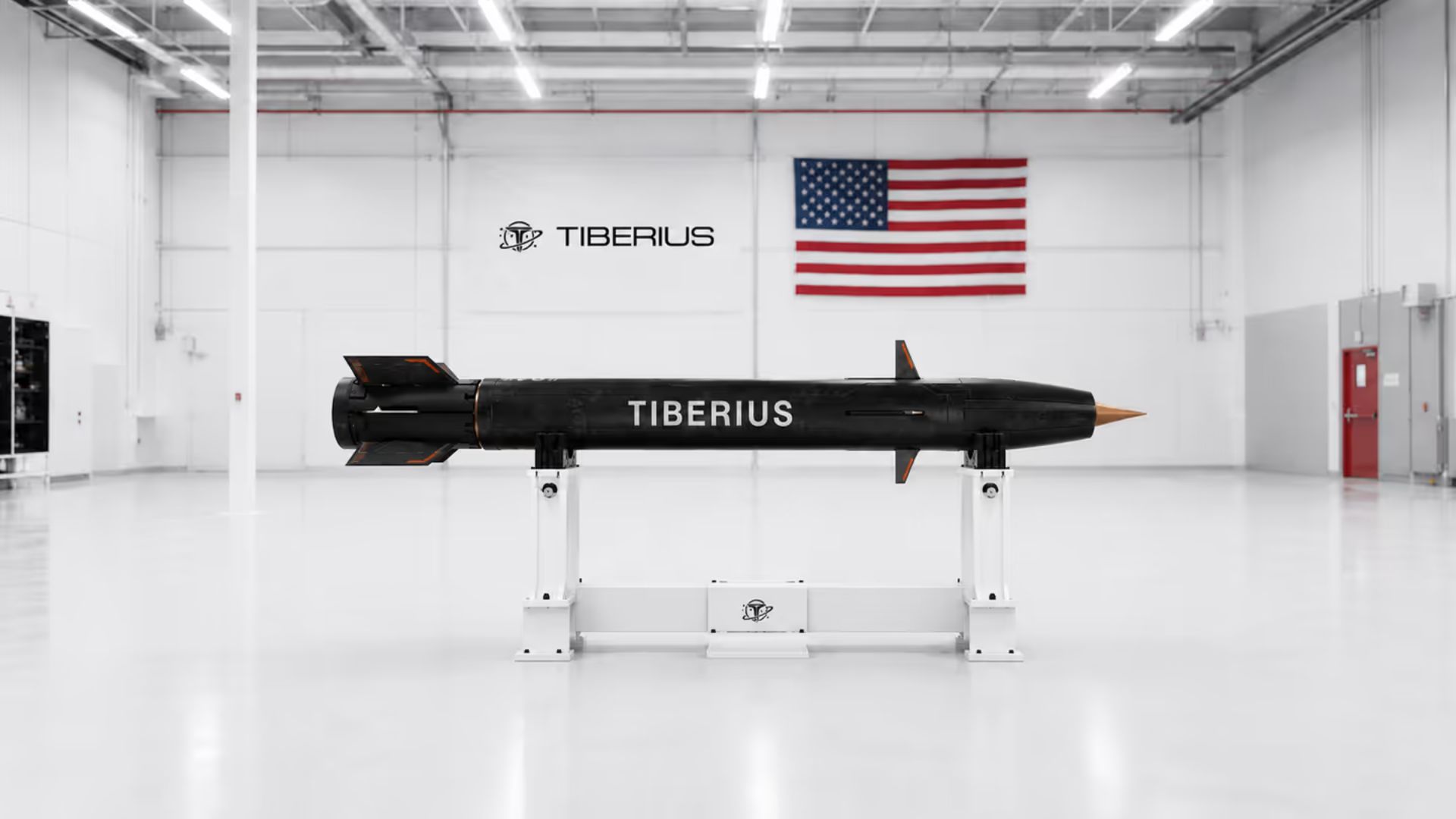
Tiberius Aerospace has signed a Cooperative Research and Development Agreement with the U.S. Army to advance Sceptre, its precision-guided, ramjet-powered 155mm (about 6.1 inches) artillery munition. Announced on Thursday, the partnership brings the defense company together with the U.S. Army Combat Capabilities Development Command Armaments Center to mature the weapon. The program seeks to extend the reach and precision of existing tube artillery without requiring militaries to purchase new launchers. Sceptre is designed to travel beyond Mach 3, climb above 65,000 feet, and strike targets up to 93 miles (150 kilometers) away, including in environments where GPS signals are unavailable or disrupted. Collaboration targets technical maturation The agreement creates a framework through which Tiberius Aerospace and DEVCOM Armaments Center can conduct mutually approved research and technical work. Such agreements allow U.S. government laboratories and private companies to share expertise, facilities, and resources while developing technologies of common interest. For Tiberius, the arrangement represents another step in Sceptre’s development and expands its work with the U.S. Department of Defense. The effort will focus on validating and refining the technologies needed to turn the experimental round into a mature artillery capability. Sceptre differs from conventional rocket-assisted projectiles because its liquid-fueled ramjet delivers propulsion throughout its flight. This sustained thrust is intended to help the shell achieve greater speed, altitude, and range after being fired from a NATO-standard 155mm howitzer. The munition is designed to land within five meters of its target, according to the company. Its ability to operate without GPS could prove valuable in contested battlefields where satellite navigation faces jamming, spoofing, or other electronic interference. Existing howitzers gain longer reach A central feature of Sceptre is its compatibility with artillery systems already used by NATO forces. The round does not need a dedicated launcher or bespoke firing platform, potentially allowing militaries to expand their long-range firepower while retaining current howitzers. Its propulsion system can also use several readily available military fuels, including diesel, JP-4, and JP-8. By drawing on established battlefield fuel networks, the design is intended to reduce the storage, transportation, and sustainment burden associated with introducing a new type of munition. Tiberius reached a major development milestone in April 2026 when it launched a liquid-fueled ramjet from a NATO-standard 155mm howitzer. The company described it as a world-first demonstration. Software-defined shell evolves with threats Previous testing has examined whether the round can withstand launch forces of approximately 16,000 g. Tiberius has also demonstrated fin deployment and stable aerodynamic flight as part of a test campaign that evaluates Sceptre’s underlying systems separately before integrating them. The shell uses a modular, open software architecture intended to support upgrades during its operational life. Tiberius plans to connect it with GRAIL, an AI-powered platform developed to accelerate weapon-system improvements. Through GRAIL, engineers could introduce updated targeting functions, guidance algorithms, mission software, and autonomous capabilities as requirements change. The platform also links operational needs with engineering, testing, and distributed manufacturing, allowing the munition to respond more quickly to battlefield threats without replacing its fundamental hardware.Recommended ArticlesGet the latest in engineering, tech, space & science - delivered daily to your inbox.Atharva is a full-time content writer with a post-graduate degree in media & amp; entertainment and a graduate degree in electronics & telecommunications. He has written in the sports and technology domains respectively. In his leisure time, Atharva loves learning about digital marketing and watching soccer matches. His main goal behind joining Interesting Engineering is to learn more about how the recent technological advancements are helping human beings on both societal and individual levels in their daily lives.
US Army teams up to mature Mach 3 ramjet shell that flies above 65,000 feet
Full Article
Original Source
Read the full article at Interestingengineering →KhanList aggregates and links to publicly available news content. We do not host full articles from third-party sources. Always verify important information with original sources.