
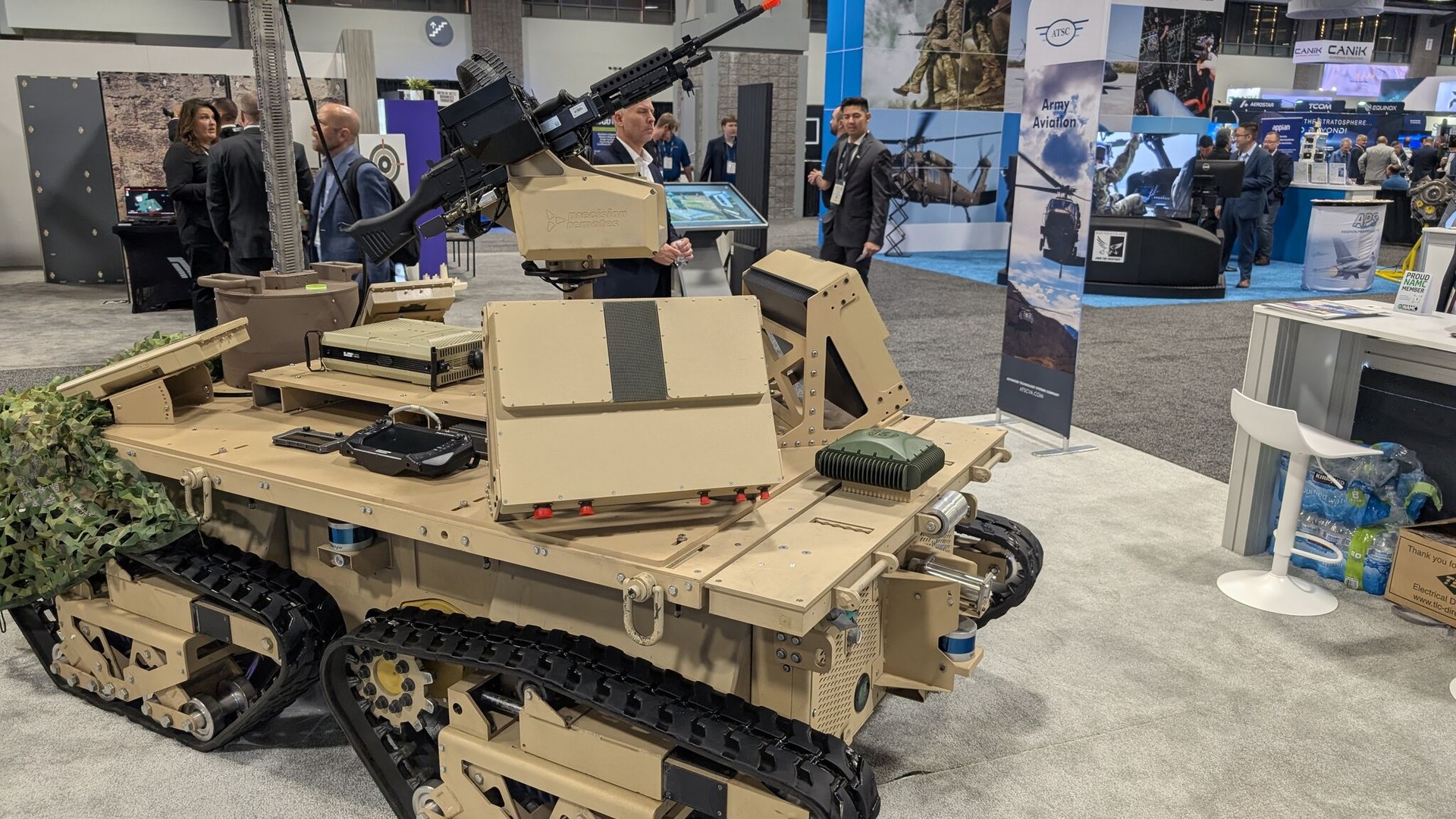
A consortium of defense tech companies led by Stratom secured a contract from the US Army to develop the Tactical Autonomous Logistics Utility System (TALUS), an autonomous logistics platform designed to deliver supplies to units operating in dispersed, high-risk environments. The system is being designed as a modular distribution solution capable of supporting military operations where traditional supply chains may be vulnerable or difficult to maintain. According to Stratom president and CEO Mark Gordon, the contract marks the first public unveiling of TALUS. Gordon explained that the platform represents the team’s response to the Army’s Project Sustainment requirements and combines a wide range of complementary technologies into a single capability. Reducing soldier exposure with autonomous logistics As Stratom explains, future Army units are expected to operate across increasingly dispersed and contested battlefields. This creates a need for autonomous logistics systems that can continue functioning even when conditions are degraded. Therefore, the Stratom-led solution is meant to help meet that challenge by reducing the need for soldiers to be directly exposed during supply operations while keeping critical equipment, supplies, and operational energy moving to distributed forces. By extending the reach of logistics operations, the system could also help units remain supplied for longer periods and improve the resilience of military sustainment networks in environments where traditional distribution methods may be disrupted. Hence, TALUS is expected to autonomously transport supplies, generate and distribute operational energy, and support various mission payloads as the US Army adapts to increasingly contested operations. “The Army needs more than another autonomous vehicle. It needs an integrated logistics capability that can adapt to the mission, operate in contested environments and move quickly toward fielding. TALUS will provide that integrated capability,” Gordon noted. Combining robotics, autonomy and military vehicles The TALUS team brings together several companies, each of them with a specific role and complementary capabilities in the fields of autonomy, vehicle platforms, systems engineering and hardware integration. Stratom is responsible for overall solution integration and brings expertise in robotic and autonomous logistics. ND Defense contributes military vehicle platforms and scalable manufacturing, while Forterra provides its government-validated autonomy technology. GS Engineering supports the effort with model-based systems engineering and testing, while Waltonen Engineering handles hardware design, fabrication, and integration. “By integrating AutoDrive with the team’s proven mobility, logistics and engineering capabilities, TALUS will provide the Army with a practical foundation for autonomous distribution even in the most complex environments,” noted Forterra’s vice president of defense Pat Acox. “ND Defense contributes a proven military vehicle foundation and scalable production capability that support a practical path from integration and operational evaluation to future fielding,” added Timothy George, VP sales and marketing at ND Defense. By combining all of these capabilities, the team behind TALUS aims to deliver a ready-made system built on established defense and commercial technologies, while maintaining the flexibility and scalability needed for US Army operations. Get the latest in engineering, tech, space & science - delivered daily to your inbox.Bojan Stojkovski is a freelance journalist based in Skopje, North Macedonia, covering foreign policy and technology for more than a decade. His work has appeared in Foreign Policy, ZDNet, and Nature.
US Army funds autonomous logistics vehicle TALUS to resupply troops in contested areas
Full Article
Original Source
Read the full article at Interestingengineering →KhanList aggregates and links to publicly available news content. We do not host full articles from third-party sources. Always verify important information with original sources.