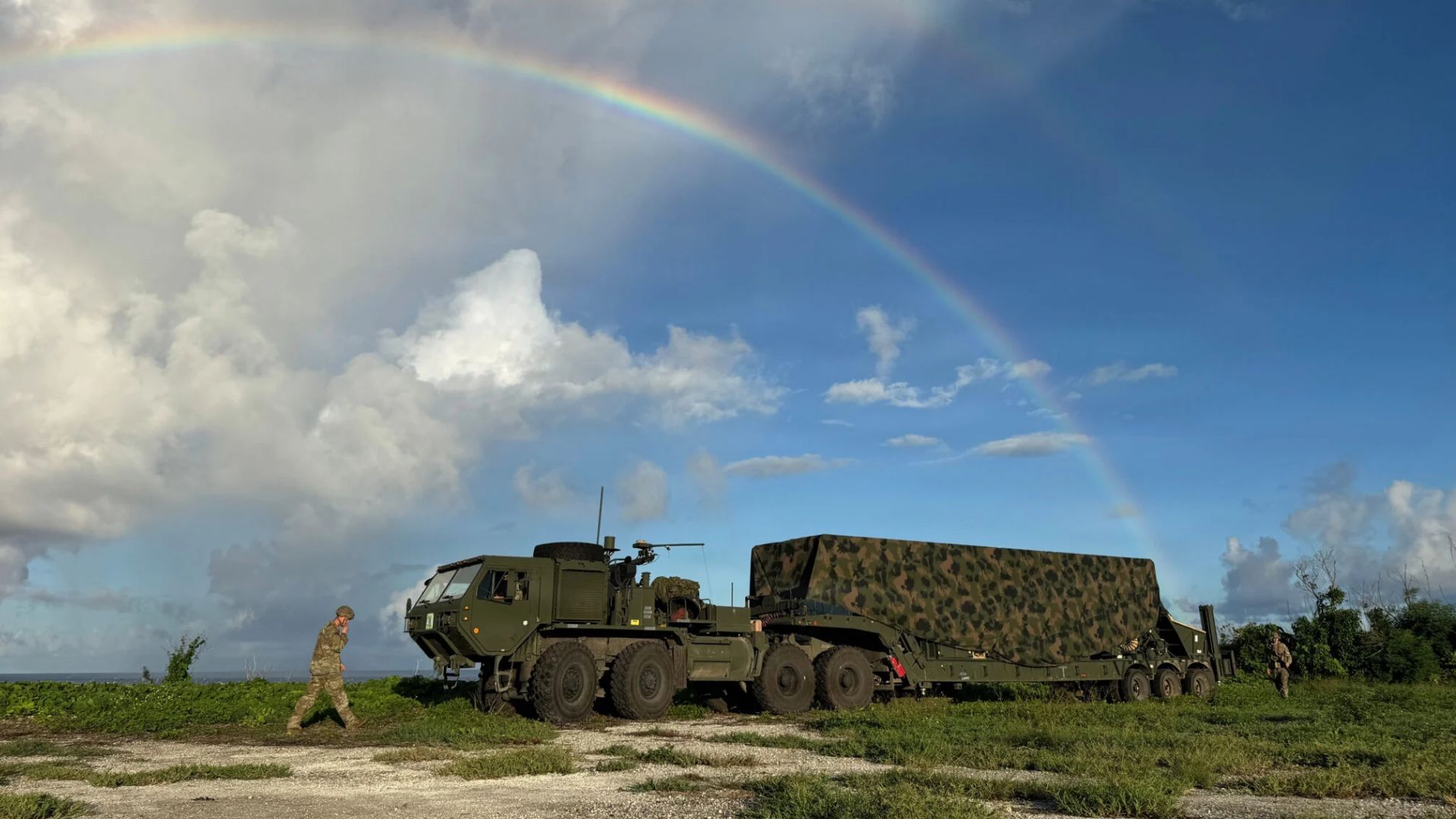
The U.S. Army has confirmed that it deployed its Dark Eagle hypersonic missile system during the Valiant Shield 2026 exercise in the Western Pacific last month, according to War Department photos. The photos surfaced nearly a month after the exercise ended, highlighting the growing role of long-range ground-based missiles are becoming more important in U.S. military planning for the Indo-Pacific. This deployment put one of the Army’s most advanced strike systems into a large training exercise that reflects the growing chance of a serious conflict with China. Soldiers from Multi-Domain Command-Pacific operated the system. This command was recently created by merging the 7th Infantry Division from Washington and the 1st Multi-Domain Task Force. Adm. Samuel Paparo, who leads U.S. Indo-Pacific Command, visited the unit during the drills. Exercise reflects evolving Pacific strategy According to a Pacific Fleet release, Valiant Shield 2026 focused on combat operations across land, air, and sea in a contested setting. In recent years, the exercise has grown to include scenarios that focus on competition with other major military powers. This year’s drills included several major events in addition to the Dark Eagle deployment. These included the use of a Royal Australian Air Force fighter drone, the sinking of a retired amphibious assault ship by a Japan Maritime Self-Defense Force attack boat, and a live-fire demonstration of the U.S. Marine Corps’ Iron Dome air defense system. The delayed release of these images has brought more attention to the Army’s growing focus on long-range strike abilities in the Pacific, as the U.S. military works to improve distributed operations and maritime attack options. Guam expands missile reach Guam is one of the United States’ key military sites in the Western Pacific, with a major naval base and a strategic airfield. As a U.S. territory, it also provides greater flexibility for deploying intermediate-range missile systems than many allied countries in the area. The Dark Eagle system, when based in Guam, can hit targets up to 2,175 miles (3,500 kilometers) away. This range puts parts of China’s eastern coast within reach, making the weapon an important part of the long-range strike network the Army and Navy are building for possible operations in the Pacific. Both the Army and Navy are rolling out versions of the Common-Hypersonic Glide Body. The Army’s version is called Dark Eagle, and the Navy’s is known as Conventional Prompt Strike. These weapons let commanders strike distant targets faster with conventional warheads. Long-range missile network continues to grow The Army first sent Dark Eagle beyond the International Date Line during the Talisman Sabre exercise with Australia last summer. This was the system’s first overseas deployment, following practice runs in the continental United States in 2024. Ground-based are now a big part of the Army’s modernization plans for the Indo-Pacific. Beyond the Korean Peninsula, the Army is focusing more on motorized units that can operate on islands, in jungles, along coasts, and in maritime settings. The Army is also working on mobile missile launchers that can target ships up to 621 miles (1,000 kilometers) away. Another important system is the Mid-Range Capability launcher, which is a ground-based Mk 41 vertical launch system designed for maritime strike missions. The Mid-Range Capability system has been deployed to the Philippines, Australia, and Japan over the past two years. The Army has also carried out two Pacific live-fire tests with SM-6 and Tomahawk missiles, reinforcing its focus on integrating land-based long-range precision fires into its Indo-Pacific strategy.Recommended ArticlesGet the latest in engineering, tech, space & science - delivered daily to your inbox.A versatile writer, Sujita has worked with Mashable Middle East and News Daily 24. When she isn't writing, you can find her glued to the latest web series and movies.
US Army fields 2,175-mile range hypersonic missile during war exercise near China
Full Article
Original Source
Read the full article at Interestingengineering →KhanList aggregates and links to publicly available news content. We do not host full articles from third-party sources. Always verify important information with original sources.