
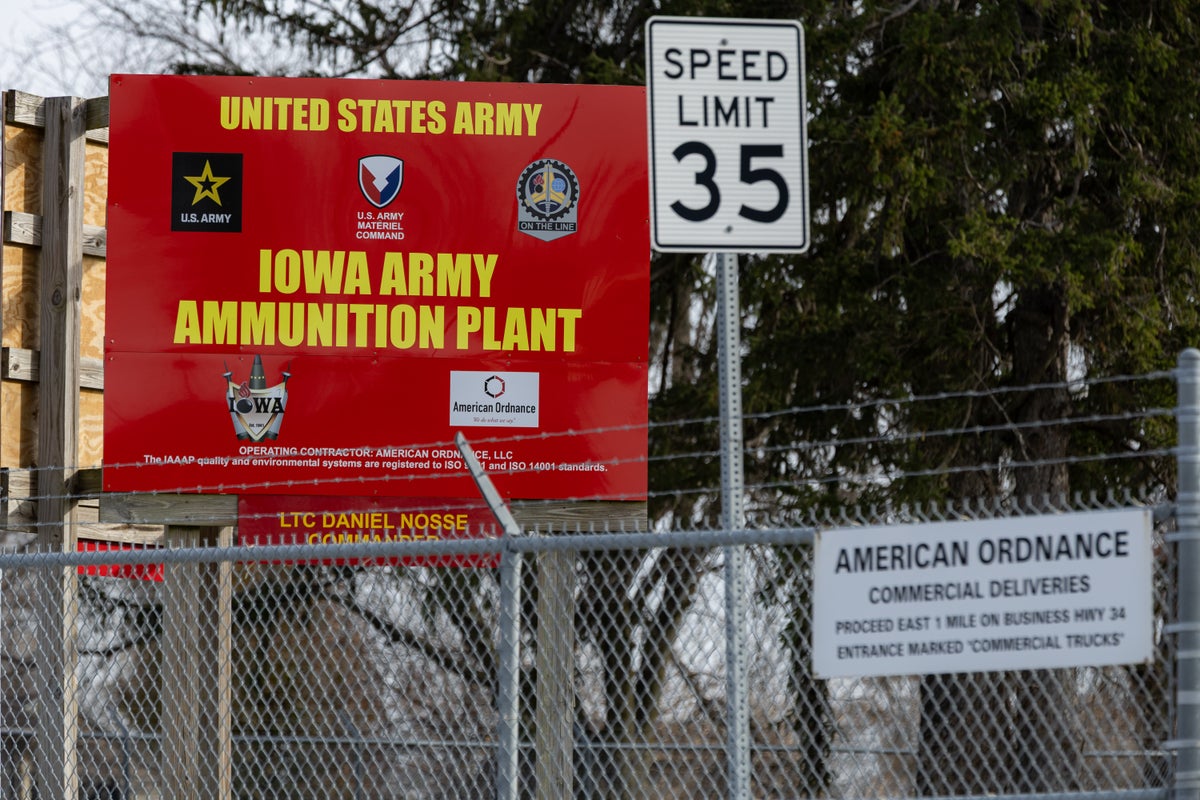
The U.S. Army detonated about 9,500 pounds of degraded lead azide, a sensitive explosive, in bunkers at the Iowa Army Ammunition Plant in Middletown on Wednesday, as nearby residents sheltered in place and braced for potential environmental impacts.A loud boom was heard in the area, and a large plume of smoke was seen rising hundreds of feet into the air above the plant at about 9 a.m. CST.Experts said it could take time to determine how well the blast's particles were contained. Lee Zeldin, the EPA administrator, told CNN after the detonation that the government's mitigation efforts had "exceeded expectations."The Army carried out the operation because inspectors found the 68 drums of material had degraded to the point that they could explode at any time, leaving a controlled detonation as the only viable choice. Officials had warned that there is no safe level of lead exposure, and that children and pregnant women are especially vulnerable, while state and local officials criticized the Army's decision and demanded answers.Ahead of the blast, residents of Middletown, a tiny town of several hundred people near the Illinois border, scrambled to prepare their homes, with some boarding up windows. Those in surrounding towns, and even states, took precautions as well, upending Thanksgiving plans.About an hour before a scheduled blast, Iowa residents received a cellphone alert from the Federal Emergency Management Agency warning that ‘EVACUATION IS NO LONGER SAFE OR ADVISED’ (Copyright 2026 The Associated Press. All rights reserved)To limit the spread of lead, the Army surrounded the bunkers with sand-filled barriers and set up water tanks and misting systems meant to weigh down airborne particles. The Environmental Protection Agency had teams sampling air and soil. Experts said it could take time to determine how well the blast's particles were contained. Lee Zeldin, the EPA administrator, told CNN after the detonation that the government's mitigation efforts had "exceeded expectations."Wednesday's military operation was carried out because inspectors found the 68 drums of material had degraded to the point that it could explode at any time, leaving detonation as the only viable choice.“Inaction is no longer an option,” Eric Shirley, commanding general of U.S. Army Sustainment Command, said in a statement.A view of plant after detonation occurred at 10 am ET (Reuters)State and local officials have criticized the Army's decision, and some have demanded answers."Everyday Iowans are entitled to know how Middletown came to this situation, and learn why the administration believes this is the best path forward," Governor-elect Rob Sand wrote on X ahead of the controlled explosion.The blast was postponed several times before a federal appeals court cleared the way for the explosion. Army officials said they had to act before colder weather raised the risk of an "uncontrolled detonation."The Army transported the nation's stockpile of lead azide to the Iowa plant from bases across the country in 2009, after it moved away from using the explosive. Some of the material was already more than 60 years old when it was moved. This is a breaking story...
US Army explodes 5 tons of lead in Iowa with blast felt for miles and residents waiting for environmental impacts
Full Article
Original Source
Read the full article at Independent →KhanList aggregates and links to publicly available news content. We do not host full articles from third-party sources. Always verify important information with original sources.