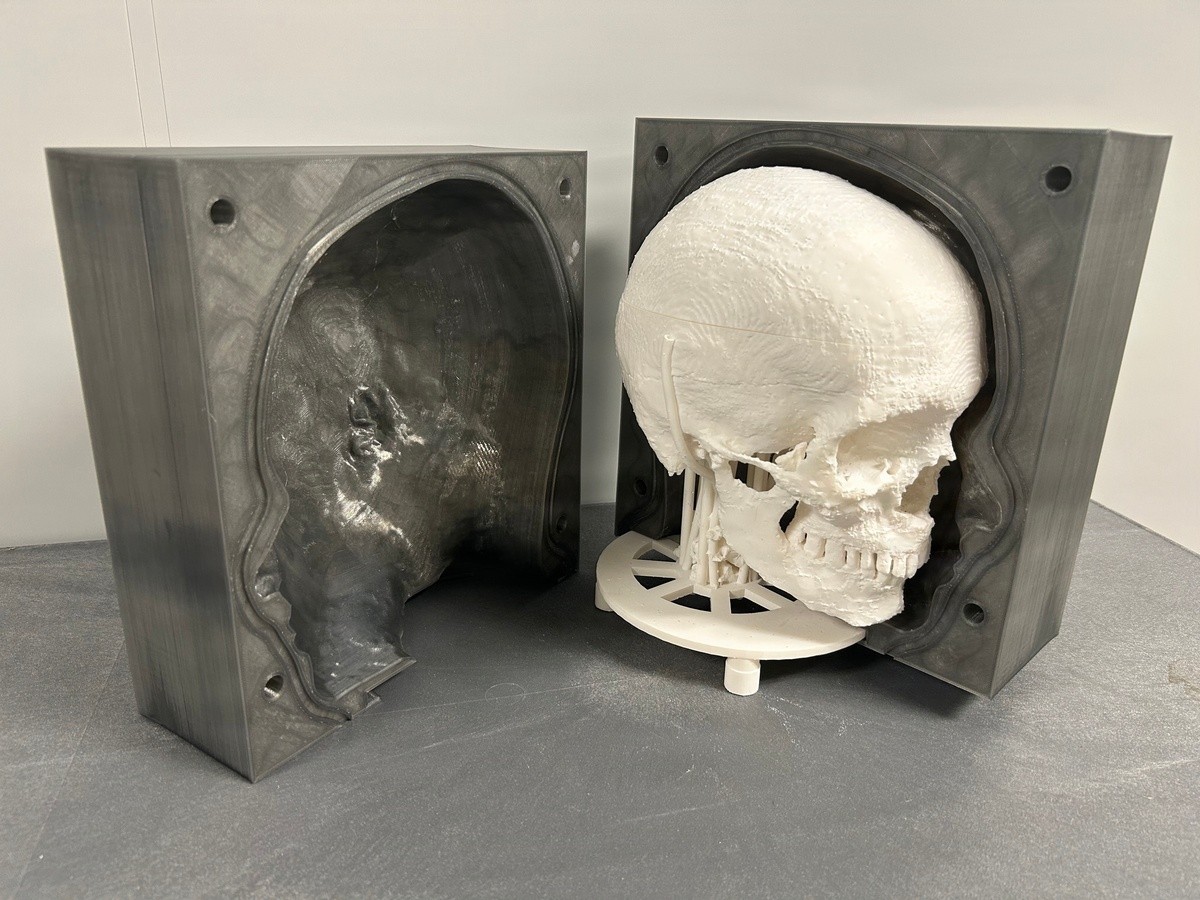
US Army (Army) researchers have developed materials that simulate human skin, bone, and brain tissue to better understand how radiation affects them. The new materials are synthetic, not living lab-grown tissue, and will act as stand-ins (technically called tissue phantoms or surrogates) for research purposes. This is not just for the sake of interest, but to provide a means of developing better protection for Army personnel. As the Army explains, electromagnetic radiation (EM) from things like radar and telecommunications is believed to be potentially harmful to the body, notably the nervous system. So, to better understand the risks, Army researchers have decided to empirically measure how they penetrate tissue without using live tissue. The idea is to take these phantom tissues and place them close to powerful EM sources, transmitters, and other systems to study what happens. According to the Army, the team wants to gather information on EM penetration depth, absorption mechanics, and see if any heat builds up in particular areas. They also want to find out if the skull changes or redirects energy, and test what materials can be used to reduce exposure. “To better protect the warfighter, DEVCOM ARL is investing in the design of model tools and materials for the neuroscientific study of tissues,” said Dr. Dave Hairston, ARL neuroscientist. Army to test EM exposure using realistic dummies “By developing techniques to replicate human skin, bone and neural tissue, Army scientists can safely analyze the biological impacts of extreme battlefield threats—such as radiation exposure. This fundamental research directly informs the design and material composition of advanced protective equipment for our Soldiers,” he added. Essentially, they are building a realistic “crash-test dummy” for EM radiation study. These new surrogates are essential as plastic, metal, or ballistic gel are not great at simulating living tissue when exposed to things like radiation. Human tissue contains a great deal of water and dissolved salts, so it can absorb, conduct, and reflect electromagnetic energy in complicated ways. Skin, bone, and brain tissue each behave differently too. The Army therefore needs materials with approximately the same electromagnetic properties as those tissues, not just the same weight, hardness, or softness. “Current research and development on electromagnetic transmission or biological impact is inhibited by not having proper testing fixtures,” said Chris Sinks, ARL bioengineer. “These tissue surrogates allow for rapid, efficient, and repeatable testing of the bioeffects and safe exposure limits of current and next-generation radio frequency systems used for communication or detection. They are also accelerating the research pipeline and providing a more accurate and efficient means for experimentation and understanding safe exposure limits,” he added. Improving safety in the field Key innovations for the new tissue include the ability to hold water at room temperature for months on end without desiccating or needing refridgeration. Simulated bone is also being produced using 3D-printed resin materials that contain specially designed pores that can contain gel or sensors. “We believe that this work will help increase the safety of not only our Soldiers but for anyone who uses electromagnetic-emitting devices, whether on the battlefield, medical equipment, telecommunications, or even health improvement,” Hairston said. “Personally, this is very important and gratifying to know that we are directly involved in the safety of our Soldiers and civilians alike,” he added. Looking ahead, the Army hopes to use the results to develop things like better helmets, protective liners and fabrics, sensors, and other wearable exposure monitors. It could also help develop safer radar and telecomms equipment, or help set operating limits for personnel in the field. Recommended ArticlesGet the latest in engineering, tech, space & science - delivered daily to your inbox.Christopher graduated from Cardiff University in 2004 with a Masters Degree in Geology. Since then, he has worked exclusively within the Built Environment, Occupational Health and Safety and Environmental Consultancy industries. He is a qualified and accredited Energy Consultant, Green Deal Assessor and Practitioner member of IEMA. Chris’s main interests range from Science and Engineering, Military and Ancient History to Politics and Philosophy.
US Army creates synthetic skin, bone, and brain models to test radiation safety for troops
Full Article
Original Source
Read the full article at Interestingengineering →KhanList aggregates and links to publicly available news content. We do not host full articles from third-party sources. Always verify important information with original sources.