
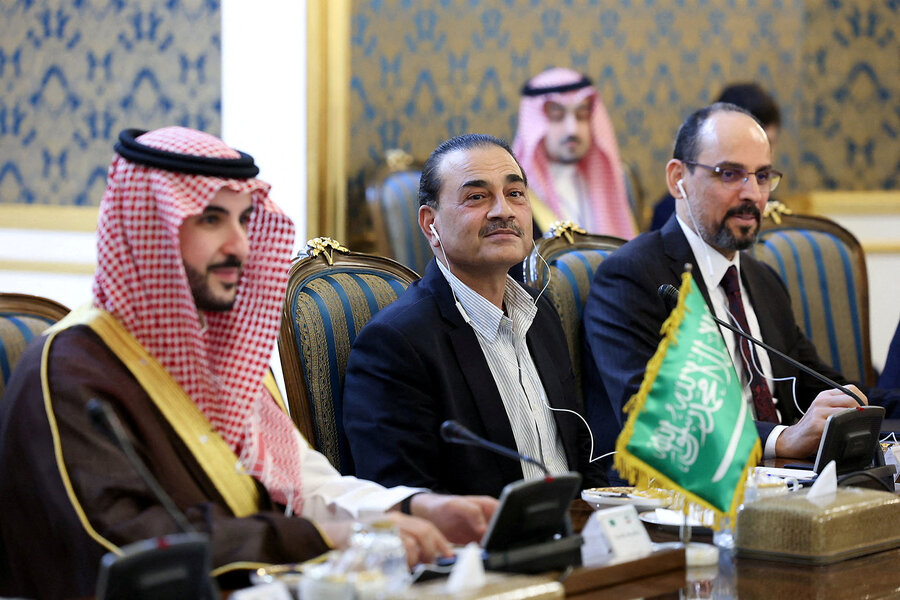
London | Oct. 27, 2026, 4:20 p.m. ET | 5 min read As the United States and Israel increasingly signal an imminent return to military strikes against Iran, and the Islamic Republic vows to expand its retaliation, analysts are expressing doubt that any such escalation will prompt Tehran to concede.The push toward renewing major hostilities, after months of relative stalemate in the eight-month-old war, is raising questions about what lessons were learned – or not – from previous destructive rounds.Beginning in February, the U.S. and Israel followed up the 12-day bombardment of Iran in June 2025 with an unrelenting 40-day joint air campaign that killed Iran’s top leaders and commanders and decimated its military capacity. Yet the two rounds failed to topple the government or achieve any other stated strategic aim. Iran’s nuclear stockpile of highly enriched uranium remains intact but buried under rubble, for example, and Tehran reportedly has reconstituted much of its arsenal of missiles and drones, which have delivered precise strikes across the Gulf region.Sanam Vakil, an Iran expert and head of the Middle East and North Africa program at Chatham House, a London-based think tank, says the U.S. and Israel might now have expanded target lists, but little else is likely to change.“I expect that over the past seven, eight months, they’ve reflected on what is left to be hit. ... But I don’t necessarily think that it’s going to move the dial,” says Dr. Vakil. “That is the definition of madness, because they’re going to go back for round three, do more damage, but probably not really bring the [ruling] system to its knees, or to a consensus that they need to submit.”Diplomacy and threatsThe surge in war rhetoric and recent signs of preparation, including the ordered exodus of all nonessential U.S. diplomats and their families from the Middle East, triggered a visit by senior officials from the Mecca Defense Alliance countries – Saudi Arabia, Turkey, and Pakistan – to Tehran on Monday to defuse tensions. Amir Cohen/ReutersAn election billboard for Benjamin Netanyahu's Likud party depicts, from left, Iranian supreme leader Mojtaba Khamenei, New York City Mayor Zohran Mamdani, Turkish President Tayyip Erdogan, and Hezbollah chief Naim Qassem and a text in Hebrew that reads "They Want Netanyahu to Lose, Don't let them Win," in Tel Aviv, Israel, Aug. 17, 2026. Israeli Prime Minister Benjamin Netanyahu, who is fighting for reelection in a tightly contested vote Tuesday, has spoken of the need to “complete the mission” against Iran. Last Wednesday, Mr. Netanyahu said he ordered the Israel Defense Forces and the Mossad intelligence agency to “topple the regime in Iran” as the “only way to remove this threat.” Over the weekend, a clash erupted between the prime minister and Israel’s military chief of staff, Lt. Gen. Eyal Zamir, over the general’s opposition to an unspecified preelection “action that could lead to a flare-up with Iran,” a military source told Israel’s Channel 12 news.And in the United States, there have been multiple “leaked” stories about fresh Pentagon plans and preparations for a major escalation meant to deliver a “knock-out blow” against Iran. U.S. President Donald Trump, whose Republican Party faces the Nov. 3 midterm elections with surging fuel prices caused by the unpopular Iran war, frequently suggests that he will renew U.S. strikes.“Do I make a deal with them, or do I finish them off?” he asked during a Fox News interview Sunday. On Friday, he said he “may do another little Epic Fury,” referring to the name of the February campaign launched jointly with Israel.Iran issues its own warningsOn the other side, Iranian officials now warn that if Iran is attacked again, valuable U.S. and Gulf assets, such as underwater internet cables, regional data centers, and AI facilities, will be targeted.Ebrahim Azizi, the hard-line head of Iran’s parliamentary security committee, posted on social media over the weekend a map of Israel. His post showed strategic sites from desalination plants to Israel’s nuclear reactor at Dimona, and warned that a “single miscalculation” could render Israel “uninhabitable in under an hour.”And Mohsen Rezaei, Iran’s top security official and head of the Supreme National Security Council, listed Iran’s targets in a “broader plan” if U.S.-Israeli strikes resume. “Everyone must understand that action against Iran carries a cost,” Mr. Rezaei told Drop Site News in a written interview last week. “If diplomacy can bring about that understanding, we prefer diplomacy. But if the war continues, Iran has the tools it needs to keep responding.”Iranian state-run TV has highlighted the message of nightly pro-regime rallies, which have continued for months in Tehran and other cities. Chants signal that they “are prepared for any new round of war.”The U.S. and Israel might think there is “more to be done” on nuclear targets, says Dr. Vakil of Chatham House, noting that Mr. Trump has named a deeply buried facility under Iran’s Pickaxe Mountain. Ariel Schalit/APIsraeli security forces survey the site that was struck by an Iranian missile in Dimona, in southern Israel, March 22, 2026. There might also, she says, be targets that aim to foment an uprising, by worsening an economy ground down by years of sanctions, and by tapping into residual anger over the brutal quashing of anti-regime street protests in January that left at least 7,000 people dead.“We know the Islamic Republic, we know their mindset. It’s unlikely that they would alter their calculations,” says Dr. Vakil. “I think all sides, through the rhetoric, and obviously through kinetic action, will be climbing up the escalation ladder, hoping that the impact of the horror will force the other side to concede.”“The wrong lessons”Israeli analysts, too, questioned the utility of a return to war. Danny Citrinowicz of the Institute for National Security Studies in Tel Aviv posted on social media that the U.S. and Israel “learned the wrong lessons” from the Iran wars, and listed five “realities [that] must be understood” before renewing conflict.“Iran will not surrender. Even a far more intense and destructive military campaign ... is unlikely to force Tehran into capitulation,” Mr. Citrinowicz, a former head of the Iran branch of Israel Defense Intelligence, wrote at the top of the list. “The fundamental lesson of the previous campaigns should be clear: Military superiority does not automatically translate into strategic success,” he added. “Before launching another war, Washington and Jerusalem must answer a basic question: What exactly can another military campaign achieve that the previous ones failed to accomplish, and what is the exit strategy if Iran refuses to back down?”The answers have not yet been publicly articulated, as Iranians brace for resumed strikes. As they wait, there is a display of gallows humor in Tajrish Square, where the Tehran Beautification Organization has erected a billboard installation with an actor dressed as Mr. Trump peering haughtily from behind the bars of a prison cell.“The Iranians have persistently backed up their threats. ... I take them at face value right now,” says Dr. Vakil. Deepen your worldviewwith Monitor Highlights.Politics with respectGet political stories with respectful analysis.There‘s a world of new ideas in everyBooks newsletter.There‘s more to life, enrich yours withCulture & Learning weekly.Follow humanity‘s discoveries withScience & Nature stories in your inbox.Gain a spiritual perspectivefrom the stories in your inbox.Want to understand the deeper impact of critical events? Learn the Monitor‘s insight.Already a subscriber? Log in to hide ads. “Iran has consistently surprised, by not just resisting and showing resilience, but by preparing for these wars and then trotting out the unknowns, like the missile that was directed to Diego Garcia, for example, and by striking provocatively in Azerbaijan and Turkey,” she says. “They’ve been willing to raise the threshold in surprising ways. So I fully expect more surprises.”An Iranian researcher contributed to this report. ALREADY A SUBSCRIBER? LoginReal news can be honest, hopeful, credible, constructive.The Christian Science Monitor was founded in 1908 to lift the standard of journalism and uplift humanity. We aim to “speak the truth in love.” Our goal is not to tell you what to think, but to give you the essential knowledge and understanding to come to your own intelligent conclusions. Join us in this mission by subscribing.
US and Israel threaten new Iran strikes. Would the result be any different?
Full Article
Original Source
Read the full article at Csmonitor →KhanList aggregates and links to publicly available news content. We do not host full articles from third-party sources. Always verify important information with original sources.