
AUGUST 26, 2026 17:38In recent weeks a crisis between Turkey and Israel over Syria policy has shed a spotlight on US Ambassador Tom Barrack. Barrack is the ambassador to Turkey and the US Envoy to Iraq and Syria. This puts him in a unique position in regards to US policy in the Middle East.Barrack is considered close to US President Donald Trump. Therefore, this crisis is part of the personal diplomacy that Trump has conducted as part of what can be seen as the wider global Trump doctrine - the White House is not doing policy conventionally, it leans into personal diplomacy and a willingness to think outside the box.The Trump administration has been thinking outside the box on Syria policy. It was quick to follow advice from Saudi Arabia and also likely from Turkey in regards to embracing the new Syrian government after the fall of the Assad regime. Trump met with the new Syrian President Ahmad al-al-Sharaa and took a liking to him.In Jerusalem the new government in Damascus was met with intensive skepticism and eventually hostility. In the beginning when the Assad regime fell, Jerusalem appeared to be taken by surprise and some believed that the new government of Hayat Tahrir al-Sham would not be able to unify the country.The Trump administration believed al-Sharaa would succeed however, Israeli officials threatened al-Sharaa, called him a “terrorist in a suit” and some even threatened to target him. Israel embarked on a policy backing the Druze in Syria and some floated the idea of backing the Kurds and Alawites. Israel also seized areas near the border and grabbed the summit of Mount Hermon.Syria's Ahmed al-Sharaa and Turkey's President Tayyip Erdogan arrive for a joint press conference at the Presidential Palace in Ankara, Turkey, February 4, 2025 (credit: REUTERS/CAGLA GURDOGAN)Syria’s new rulers believed they could find an agreement with Syria. Initial contacts didn’t turn into a deal though. Syria policy percolated on through several crises in 2025, until the Trump administration was able to bring together a trilateral meeting in January 2026. However, this hadn’t ended Israel-Syria tensions or Israel-Turkey tensions over Syria.Barrack has been vocal following Israeli airstrikes in SyriaThis month those tensions exploded into view with Israeli airstrikes in northern Syria. Barrack, who has been playing an important role in Syria for the last year is now front and center.In the past he has preferred to work a bit more behind the scenes. He has praised energy deals in Syria. He has helped pave the way for the US-backed Syrian Democratic Forces to integrate into the new government’s security forces. He has likely helped guide US policy on Iraq regarding disarming the Iranian-backed militias and supporting the new prime minister Ali al Zaidi. However, Barrack is careful not to make these incredibly complex policies too personal.Dealing with Iraq and Syria is a thankless job. Both countries are going through transitions and both countries sit at the crossroads of the Levant. They have been a center of terrorist threats, the war on ISIS and competition between Iran, the US, Russia, Turkey and other countries. Even China is involved.Other policy makers in Washington who played a role here, such as Brett McGurk and Ambassador James Jeffrey, saw how difficult this was. In addition, Joel Rayburn, the former special envoy for Syria, and Ambassador William Roebuck, who served as deputy special envoy for the Global Coalition Against ISIS, also saw this up close.As such, Barrack came into his role following in the footsteps of others who had seen the gordian knot of US policy in Syria and Iraq up close. Dealing with the new minefield of Israel-Turkey tensions is a difficult task. In part this is because US policy on Israel tends to be separate from some other broader, regional policies.Other US officials who played a key role in 2025 on Trump’s policy regarding Israel have already seen themselves critiqued in media. Steve Witkoff, who played a key role in bringing the hostages home and played a role in other US policies regarding Iran, Russia and other places, is one example.What are media accounts saying about Barrack now?“US working on deconfliction mechanism among Turkey, Israel and Syria, US envoy says,” Al-Monitor reported. “Is Tom Barrack's job on the line because of Golan Heights comments?,” Israel Hayom asks.“A US envoy clarifies his comments on Golan Heights that contradicted Trump’s position,” the Associated Press notes, while Turkiye Today says, “Trump envoy says Barrack’s Türkiye role part of ‘larger policy’ amid Israel tensions.”At The Jerusalem Post we recently had an analysis that said “US envoy Tom Barrack’s Israel criticism tests his credibility as a mediator.” Israel’s Ynet went even further: “How US envoy Tom Barrack nearly ignited an Israel-Turkey war.”After several days of a war of words regarding Barrack, there appears to be some climb down on the rhetoric. Ben Caspit writes at Al-Monitor that “Israel is rethinking its hard-line Syria policy and seeking to repair ties with US envoy and Donald Trump's confidant Tom Barrack.” Ynet also reports that Azerbaijan is seeking to mediate Israel-Turkey tensions.Baku is a close friend of both Ankara and Jerusalem. It doesn’t usually play a major role in Middle East issues, preferring to remain out of the spotlight and out of controversy. However, it wants to see Syria stable and has made this clear.North Press in Syria has also reported on how Israel and Turkey are trying to reduce tensions.Barrack's role in US's Syrian policyBarrack has played a key role in US policy. Combining the Iraq and Syria roles under one person, in the form of the US Ambassador to Ankara, might seem like putting a lot of work in the hands of one person. However, concentrating policy in the hands of one kind of American proconsul may streamline policy. In the past the US has run into problems when its policy was not aligned.Back in the days of the Obama administration the US played a janus-faced role in Syria. One part of the US government was backing Syrian rebel groups. This largely dovetailed with what Turkey, a NATO ally, wanted. Jordan, another US friend, also was happy to support the rebels alongside the US and other western powers. At the State Department and CIA this seemed like a logical choice.However, the Pentagon was tasked in the fall of 2014 with fighting ISIS as part of Joint Task Force Operation Inherent Resolve. US Central Command (CENTCOM) had to go out and find partners in Syria. They began working with the YPG, which helped form the basis for the SDF in 2015. In Ankara this was greeted by surprise. Ankara views the YPG as basically the Syrian version of the PKK, and thus a terrorist group. Turkey now wondered how its NATO ally was working with “terrorists” to fight ISIS.Outside observers might think that the US could streamline this. Get the State Department, CENTCOM, CIA and others in the same room at the White House and figure out what to do on Syria. Instead the SDF crossed the Euphrates river to liberate Manbij from ISIS in 2016. Turkey then invaded Syria under Operation Euphrates Shield to basically put a stop to the SDF advance. For a moment it looked like US-backed forces might run into other US-backed forces. How this would help defeat ISIS or topple the Assad regime was unclear.Thus, harnessing US policy on Syria in the hands of one person, rather than having everyone doing their own thing, is probably best. Having a diplomat who has the trust of Ankara and also Damascus and can speak clearly with the White House makes sense from a policy point of view. Whether this can reduce tensions with Israel and Turkey remains to be seen.Follow us on Google
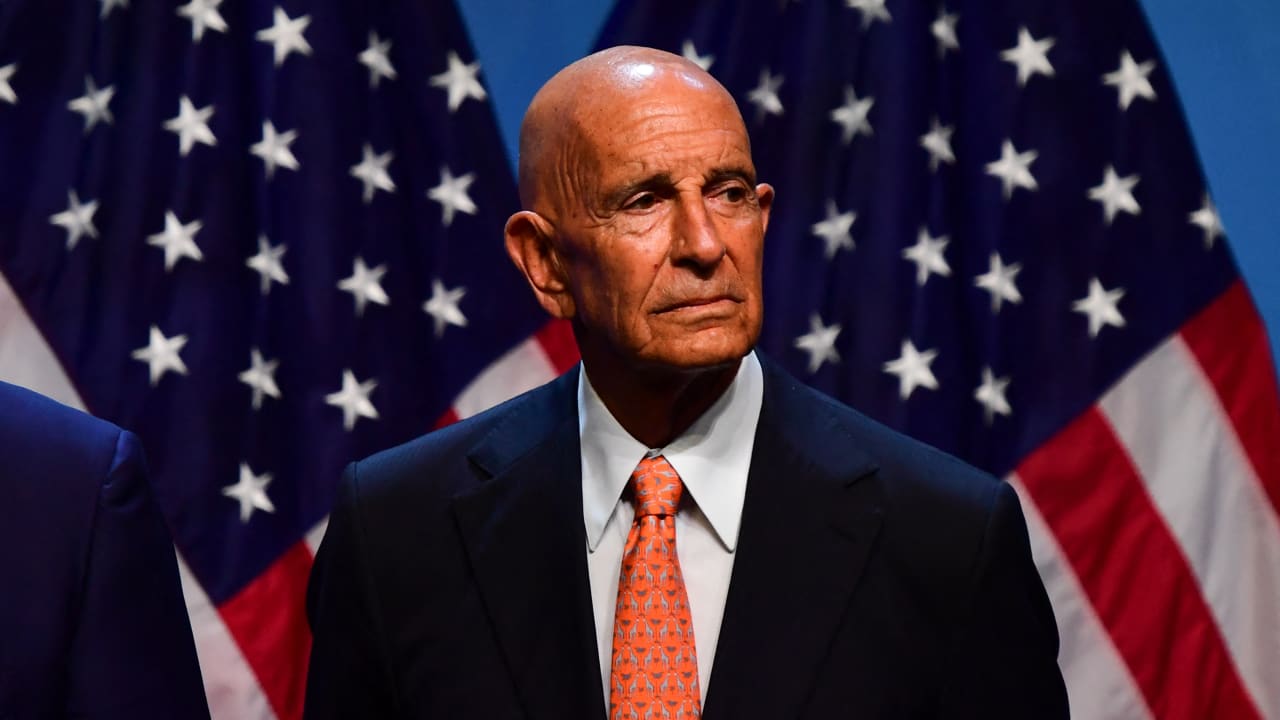
US Ambassador Barrack has a unique position, balancing work in Syria, Turkey, Iraq - analysis
Full Article
Original Source
Read the full article at Jpost →KhanList aggregates and links to publicly available news content. We do not host full articles from third-party sources. Always verify important information with original sources.