
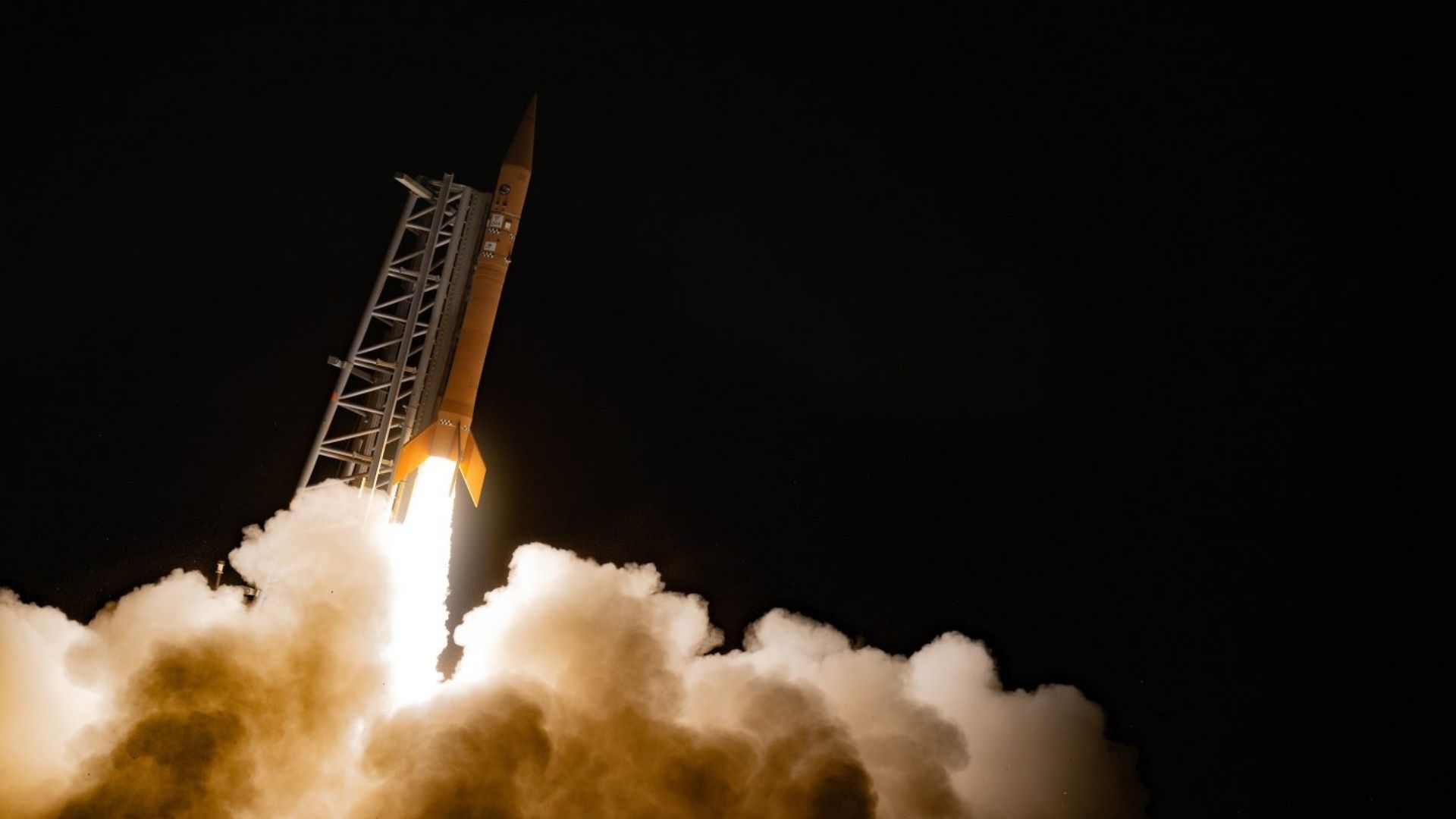
France has successfully launched its SyLEx sounding rocket for the second time, marking the first operational flight of a system designed to restore the country’s sovereign suborbital testing capability. The November 4 launch was conducted from the Directorate General of Armaments’ (DGA) missile test center in Biscarrosse. The launch carried an experimental payload for the French military, supporting research linked to the development of its M51.4 strategic missile. SyLEx stands for Système de Lancement d’Expériences, or Experimental Launch System. Built by ArianeGroup under the direction of the DGA, it is designed to carry experimental equipment to altitudes of 200 to 400 kilometers (124 to 248 miles). The flight followed an initial demonstration on November 28, 2025, making this the system’s second successful launch. French Minister of the Armed Forces and Veterans Catherine Vautrin said the latest mission enabled experiments considered essential to the development of the M51.4 missile. A platform for high-altitude experiments Unlike orbital launch vehicles, sounding rockets follow suborbital trajectories, carrying instruments and experimental payloads to high altitudes before returning to Earth. They provide researchers with access to atmospheric conditions and short periods of microgravity, making them useful for testing materials, sensors, and other technologies. According to ArianeGroup, SyLEx can carry payloads weighing up to 600 kilograms, with multiple experiments accommodated on a single flight depending on the mission configuration. The system is designed for both military and civilian applications, including atmospheric re-entry research and microgravity experiments. SyLEx comprises two rocket configurations. A single-stage and a two-stage version, supported by a dedicated launch pad. The November 4 mission used the single-stage configuration. ArianeGroup said it is now working with the DGA on the next development milestone: the two-stage version. Reportedly, the single-stage setup supports up to 300 kg (661 pounds) of research equipment. Supporting France’s strategic weapons programs The latest launch is particularly significant for France’s nuclear deterrent. The M51 family of submarine-launched ballistic missiles forms the sea-based component of the country’s nuclear forces. The M51.4 is a planned evolution of the missile system, although French officials have not disclosed the specific experiments conducted aboard SyLEx or how they will contribute to its development. Vautrin also highlighted the rocket’s potential to support hypersonic demonstrators. High-altitude experimental flights can help evaluate technologies under demanding flight conditions, including those relevant to atmospheric re-entry and high-speed flight. However, the exact hypersonic research activities planned for SyLEx have not been detailed. Une nouvelle avancée pour notre dissuasion !Cette nuit, la @DGA a réalisé avec succès, depuis le site Landes à Biscarosse du centre d’essais et d’expertise DGA Essais de missiles, un tir expérimental de la fusée-sonde française SyLEx (système de lancement d’expériences),… pic.twitter.com/Pdg0R6Mskp— Catherine Vautrin (@CaVautrin) November 4, 2026 ArianeGroup described the successful launch as a demonstration of its ability to provide a sovereign suborbital testing platform for major development programs. The company said it developed the system in less than three years for the DGA, the program’s contracting authority. Beyond defense, SyLEx could support civilian research and other European applications. Its payload capacity and ability to accommodate multiple experiments offer a platform for scientific investigations that require access to high altitudes. For France, the launch marks the return of a domestic capability for suborbital flights and high-altitude testing after several decades without one. With the single-stage version now through its first operational flight, the next step is developing the two-stage configuration, which could expand the range of missions the system can undertake. Get the latest in engineering, tech, space & science - delivered daily to your inbox.Kaif Shaikh is a journalist and writer passionate about turning complex information into clear, impactful stories. His writing covers technology, sustainability, geopolitics, and occasionally fiction. A graduate in Journalism and Mass Communication, his work has appeared in the Times of India and beyond. After a near-fatal experience, Kaif began seeing both stories and silences differently. Outside work, he juggles far too many projects and passions, but always makes time to read, reflect, and hold onto the thread of wonder.
US ally tests new rocket capable of carrying 660 pounds for hypersonic weapons research
Full Article
Original Source
Read the full article at Interestingengineering →KhanList aggregates and links to publicly available news content. We do not host full articles from third-party sources. Always verify important information with original sources.