
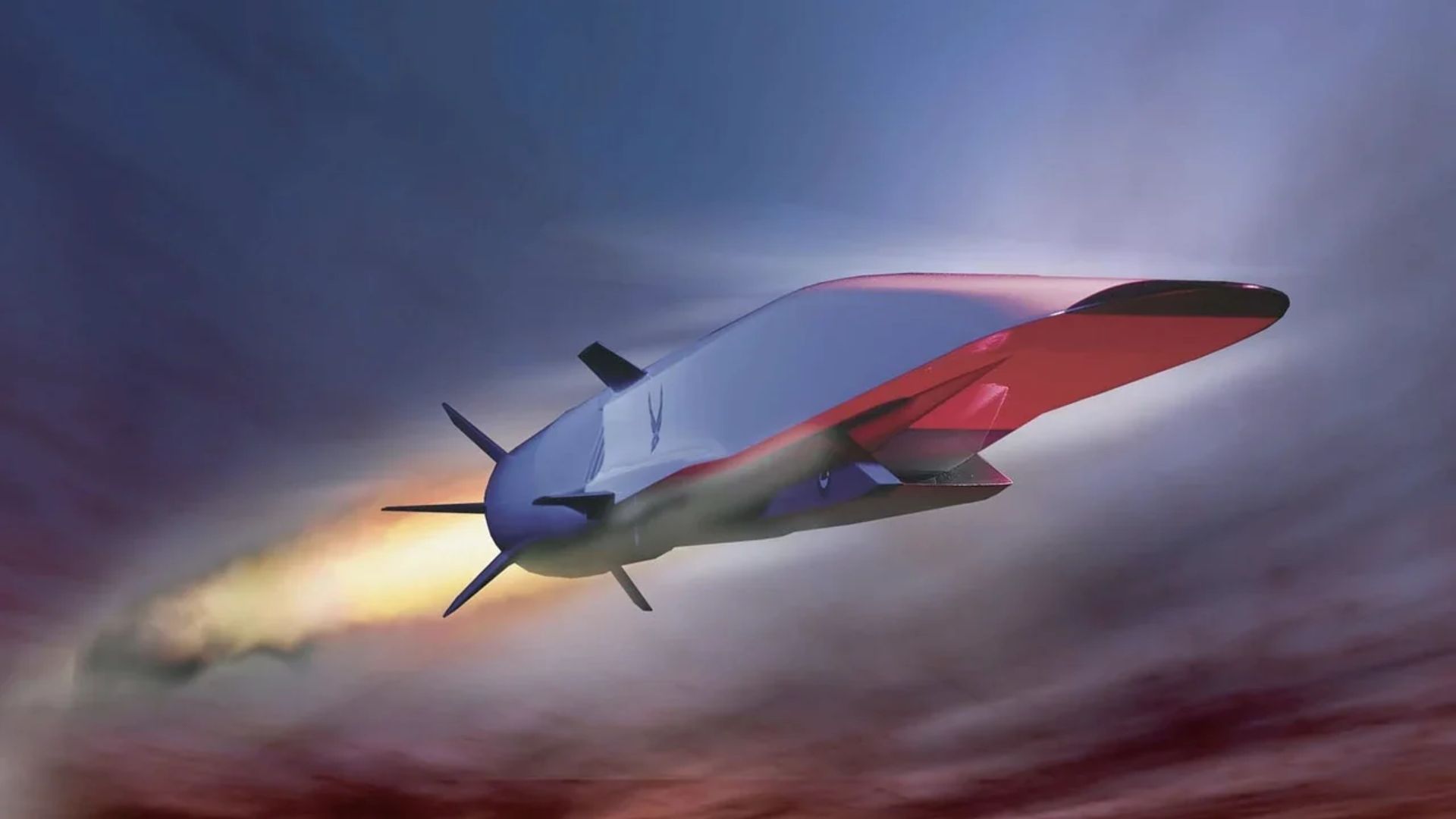
The programme reflects a broader European effort to strengthen its ability to contribute to NATO's collective defense. (Representational image)PixabayKey TakeawaysLong-range precision-strike capabilities have become an increasingly important element of modern defence planning.With a projected range of more than 1,250 miles, the programme reflects a broader European effort to strengthen its ability to contribute to NATO's collective defense.The evolving security environment has highlighted the importance of having credible conventional deterrence options. Allies of the United States in Europe are working to get deep strike capability with two new weapons. The UK and Germany’s next high-precision weapons are expected to be capable of reaching Moscow. The two weapons are expected to be delivered within this decade. Projected range of more than 1,250 miles “We noted the significant progress in our landmark project to develop Deep Precision Strike (DPS) capabilities, with ranges over 2,000 km, to be delivered within the decade, supporting jobs across the supply chain for UK and German industry,” said a joint statement by the UK’s Defense Secretary Wes Streeting MP and Germany’s Defence Minister Boris Pistorius MdB.Wes and Pistorius held the second Defense Ministerial Council under the Trinity House Agreement. Two years after signing the Agreement, both countries governments have made significant progress in strengthening defense cooperation between the United Kingdom and Germany.“The security of the United Kingdom and Germany is inseparable from the security of Europe. We share a responsibility to strengthen the European contribution to NATO, reinforce deterrence and ensure Europe is increasingly able to provide the capabilities and forces necessary for our collective defense. The Trinity House Agreement, reinforced by the Kensington Treaty, provides the framework for us to do this together,” added the statement.The armed forces of the two countries are continuing to deepen cooperation. On land, both countries are developing their strategic partnership to strengthen readiness and interoperability and explore cooperation on future capabilities and uncrewed systems. In the maritime domain, the UK and Germany are advancing cooperation on the procurement of Sting Ray with an Implementing Arrangement signed between our National Armaments Directors today. The two countries previously agreed that German P-8A Poseidon aircraft would fly from the UK on an episodic basis. This year, that commitment was realised for the first time, with RAF Lossiemouth supporting German Navy P-8s on Exercise Dynamic Mongoose in May, and more recently on Exercise Strike Warrior, which concluded early last month. “Through these activities we are strengthening our cooperation in the North Atlantic and North Sea. Our Air Forces will continue to develop their cooperation through the bilateral Flight Plan, including on future uncrewed and collaborative combat capabilities,” said the statement. Deep-strike capability to deliver deterrence option The proposed deep-strike capability is intended to provide the United Kingdom and Germany with a significantly enhanced conventional deterrence option. With a projected range of more than 1,250 miles (2,000 kilometres) the programme reflects a broader European effort to strengthen its ability to contribute to NATO’s collective defense. Long-range precision-strike capabilities have become an increasingly important element of modern defence planning. The evolving security environment has highlighted the importance of having credible conventional deterrence options and the ability to respond to emerging threats across extended distances.The two countries have highlighted that their national security is closely connected to the wider security of Europe. They have consequently reaffirmed their responsibility to strengthen Europe’s contribution to NATO and ensure that European allies can provide the necessary capabilities and forces for collective defense. The deep precision-strike initiative forms part of the wider defense cooperation established through the Trinity House Agreement.Get the latest in engineering, tech, space & science - delivered daily to your inbox.Prabhat, an alumnus of the Indian Institute of Mass Communication, is a tech and defense journalist. While he enjoys writing on modern weapons and emerging tech, he has also reported on global politics and business. He has been previously associated with well-known media houses, including the International Business Times (Singapore Edition) and ANI.
US allies could get over 1,250-mile deep strike capability that can potentially reach Moscow
Full Article
Original Source
Read the full article at Interestingengineering →KhanList aggregates and links to publicly available news content. We do not host full articles from third-party sources. Always verify important information with original sources.