
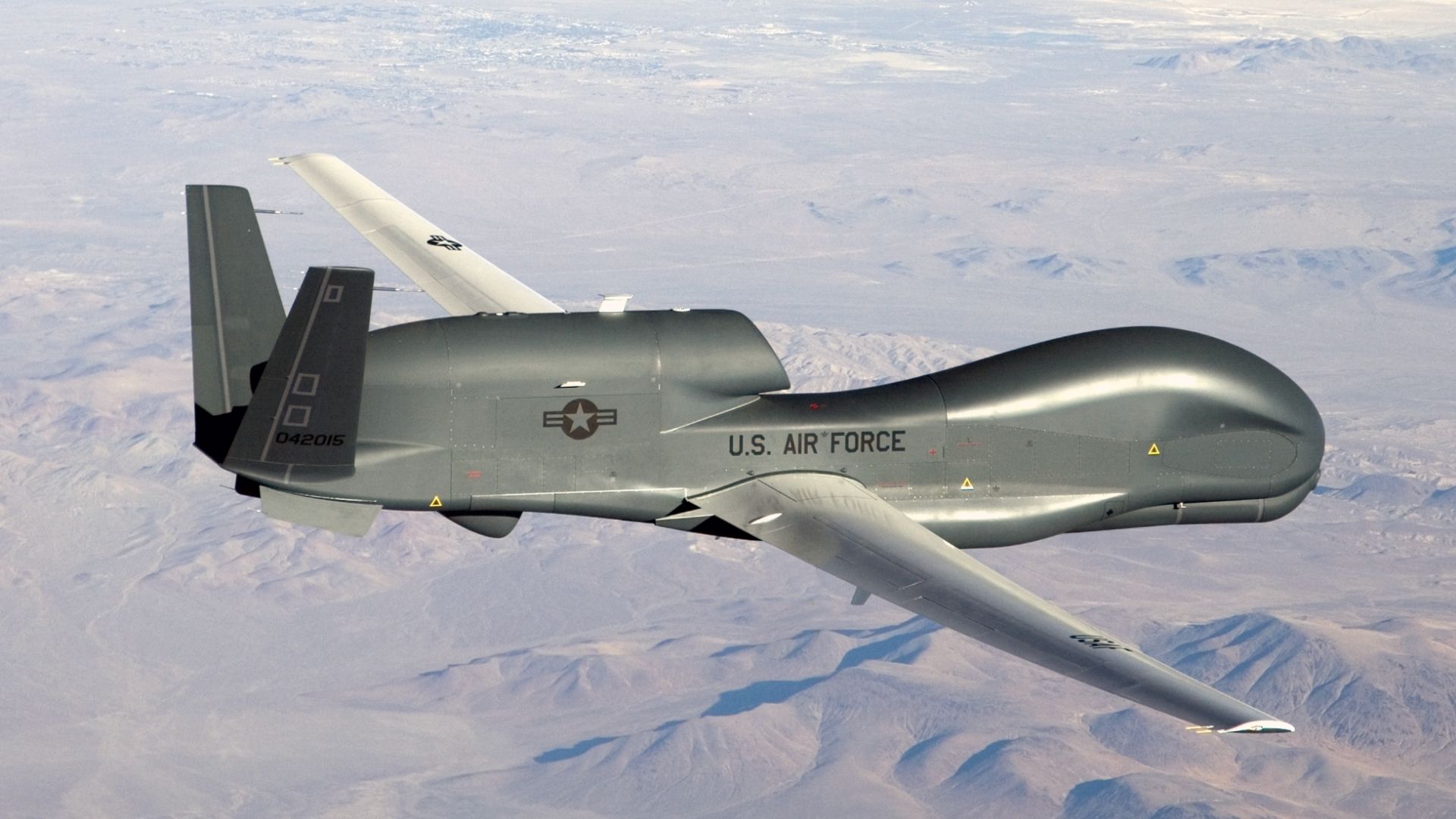
The U.S. Air Force is exploring a new family of low-cost target drones that can imitate threats ranging from hobbyist quadcopters and drone swarms to stealth fighters, strategic bombers, and airborne early warning aircraft. Through a Request for Information (RFI) open until September 28, the service is asking private companies to propose affordable and scalable systems for testing. The testing includes air-to-air weapons, missile seekers, electronic warfare capabilities, and warhead effectiveness against increasingly sophisticated airborne targets. The Air Force wants the drones to “represent the full range of airborne threats, spanning from inexpensive ‘hobby drones’ to the most advanced adversary fighter and large-scale aircraft,” according to the notice. Mach 1.6 drones to imitate stealth fighters At the most demanding end of the spectrum, the Air Force needs target drones that can replicate the flight performance and signatures of advanced fighter aircraft. The requirements include “supersonic capabilities (up to and exceeding Mach 1.6 at 40,000 feet), high-agility/high-G combat maneuvers, precise low-observable Radar Cross-section (RCS) profiles, multi-spectral Infrared (IR) signatures, active RF emissions, and integrated Electronic Attack (EA) capabilities.” Rather than simply matching an enemy fighter’s speed, the targets would need to replicate the characteristics modern sensors and weapons encounter in combat. That includes reduced radar visibility, infrared signatures, radio-frequency emissions, and electronic attacks. The service also wants the drones to be inexpensive and simple enough to be “treated as attritable or expendable when required.” Such a design would allow forces to conduct realistic live-fire exercises without risking a costly aircraft every time a target is destroyed. Targets could replicate bombers and AWACS aircraft Other versions would imitate much larger aircraft. A C-130-sized target, for example, would prioritize physical scale, slow subsonic performance, and the propulsion characteristics of multiengine aircraft rather than speed and agility. These targets would generate representative radar, radio-frequency, and infrared signatures, allowing the Air Force to assess whether missile seekers can track large aircraft and whether warheads can inflict sufficient damage. Targets representing strategic bombers and Airborne Warning and Control System aircraft would need to reproduce their enormous dimensions, thermal profiles, and heavy-aircraft radar signatures. The proposed family would also cover multiple classes of unmanned aircraft. Group 5 drone targets must be capable of reaching 50,000 feet, while Group 3 and Group 4 targets should fly between Mach 0.5 and Mach 0.8 and perform maneuvers generating between 3 and 6 Gs. Small Group 1 and Group 2 targets would operate below 150 knots and support swarm missions. Air Force searches beyond its aging targets The initiative could address limitations in the Air Force’s existing aerial target fleet. The service has operated the BQM-167A subscale aerial target since 2007. However, at roughly 20 feet long with an 11-foot wingspan, it cannot physically resemble aircraft such as China’s much larger J-20 stealth fighter or H-6 bomber. The Air Force also uses QF-16 aircraft converted from retired F-16 fighters. These provide a full-scale target that can represent fourth-generation combat jets, but they were not built to recreate fifth-generation stealth characteristics or simulate large bombers and support aircraft. Converted fighters are also too valuable to destroy routinely in large numbers. To close that gap, the Pentagon is encouraging proposals involving “commercial, modified commercial, dual-use, and non-developmental solutions.” “The government is particularly interested in non-traditional, commercially derived, or dual-use solutions that offer advantages in cost, scalability, and simplicity over legacy systems,” the RFI said. Get the latest in engineering, tech, space & science - delivered daily to your inbox.Atharva is a full-time content writer with a post-graduate degree in media & amp; entertainment and a graduate degree in electronics & telecommunications. He has written in the sports and technology domains respectively. In his leisure time, Atharva loves learning about digital marketing and watching soccer matches. His main goal behind joining Interesting Engineering is to learn more about how the recent technological advancements are helping human beings on both societal and individual levels in their daily lives.
US Air Force plans Mach 1.6 target drones to test weapons against simulated enemy jets
Full Article
Original Source
Read the full article at Interestingengineering →KhanList aggregates and links to publicly available news content. We do not host full articles from third-party sources. Always verify important information with original sources.