
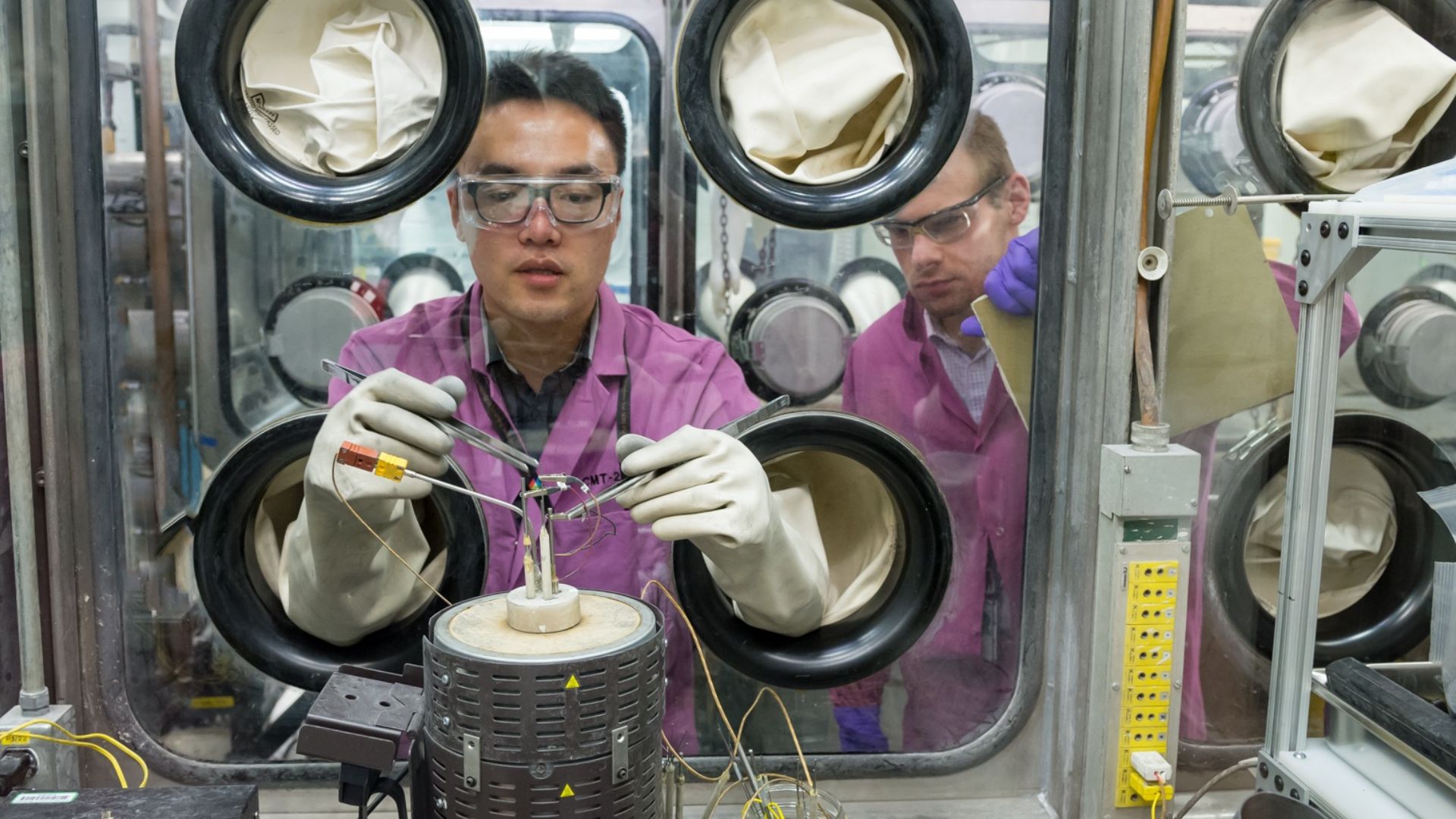
Key TakeawaysContinuously replacing helium bubbles prevents radioactive metal buildup inside advanced molten salt nuclear reactors.Unchecked radioactive noble metals coat heat exchangers, trapping heat and reducing overall reactor efficiency.Computer simulations show steady bubble replenishment solves a 50-year cleanup limit for liquid fuel. Pumping fresh helium bubbles through liquid nuclear fuel could solve a decades-old engineering hurdle. This steady cleanup method may speed up the arrival of advanced reactors on the U.S. power grid. Researchers at Rensselaer Polytechnic Institute and the US Department of Energy’s Argonne National Laboratory studied the process. They found that systematically replacing used bubbles prevents radioactive buildup inside molten salt reactors (MSRs). Their findings resolve a limitation that has challenged scientists since the 1960s and 1970s. “It turns out that engineering better bubble injection and extraction systems may be the best way to manage noble metals in MSRs,” said Ling Zou, a nuclear engineer at Argonne National Laboratory. “Despite their small size, they make a big difference in keeping a system clean, cost-effective, and safe.” Taking a different approach Most commercial nuclear plants in the United States rely on solid fuel rods filled with densely packed pellets. This solid design keeps radioactive byproducts locked inside. Advanced MSRs take a different approach by circulating liquid fuel continuously through the reactor core. When nuclear fission splits atoms inside this liquid fuel, the resulting byproducts travel freely throughout the system. Many of these elements dissolve safely into the liquid or bind into compounds. However, a radioactive group known as noble metals remains in pure metallic form. These stubborn elements include silver, palladium, rhodium, ruthenium, molybdenum, and tellurium. Because these microscopic metal particles do not dissolve, they stick to internal reactor components. Over time, they form a coating on the reactor’s primary heat exchangers. This layer traps heat rather than letting it transfer out. “This makes the reactor less efficient and forces it to work harder to maintain the same power output,” said ANL. “The system grows more expensive to run, maintain, and repair. There can also be safety issues.” Tracking the movement Engineers already knew that injecting tiny helium bubbles into the liquid fuel helps capture stray metal particles. As the bubbles circulate, the metallic contaminants cling to their surfaces. Operators can then pump the gas out and store the radioactive waste safely. However, historical experiments showed that the bubbles eventually reach capacity. Once full, they lose their ability to collect particles and leave the fuel contaminated. To overcome this limit, Zou and fellow Argonne nuclear engineer Rui Hu built two computer simulations. They combined historical data from the 1960s and 1970s with SAM, a modern reactor safety analysis software. The team tracked the movement of radioactive tellurium-132 across two different scenarios. One simulation assumed the bubbles gradually lost their collection efficiency during a single pass through the reactor. The other tracked how the bubbles degraded over thousands of repeated loops. The models demonstrated that bubble size and concentration dictate where radioactive particles settle. “With this information in hand, they [the researchers] arrived at a simple conclusion to the complicated question about how to keep MSRs safe and clean: Keep adding fresh helium bubbles,” concluded ANL.The study was published in the journal Nuclear Technology.Get the latest in engineering, tech, space & science - delivered daily to your inbox.An active and versatile journalist and news editor. He has covered regular and breaking news for several leading publications and news media, including The Hindu, Economic Times, Tomorrow Makers, and many more. Aman holds expertise in politics, travel, and tech news, especially in AI, advanced algorithms, and blockchain, with a strong curiosity about all things that fall under science and tech.
US advanced nuclear reactors could beat 50-year radioactive buildup with helium bubble flows
Full Article
Original Source
Read the full article at Interestingengineering →KhanList aggregates and links to publicly available news content. We do not host full articles from third-party sources. Always verify important information with original sources.