
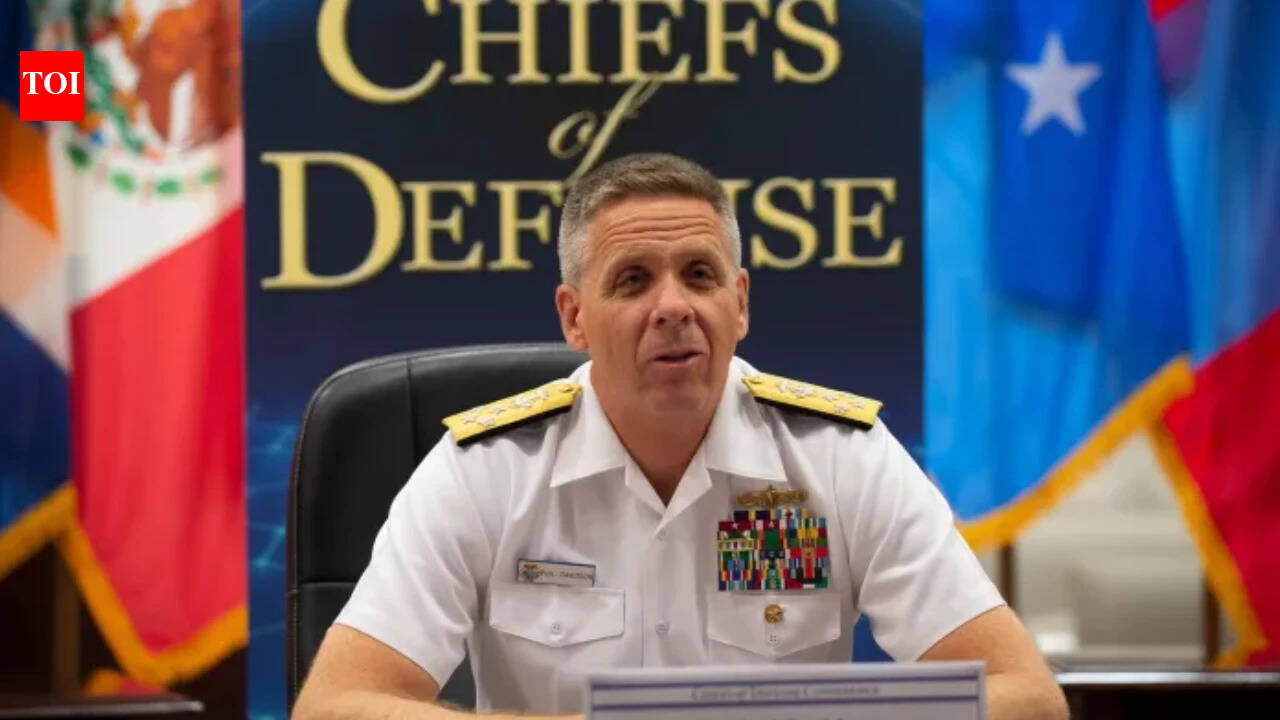
The US admiral who warned that China could be ready to invade Taiwan by 2027 now hopes his prediction proves wrong. With the deadline approaching, Philip Davidson believes years of military preparations and stronger US alliances may have helped deter Beijing.But he warns that critical gaps in Taiwan's defence remain, raising fresh questions about whether Washington is prepared for a potential war with China.Davidson, a retired US Navy admiral and former commander of the US Indo-Pacific Command, first raised the alarm in March 2021. Testifying before the US Senate Armed Services Committee, he warned that China's threat to Taiwan could become "manifest during this decade, in fact, in the next six years".His assessment gave rise to what is now known as the 'Davidson Window', referring to the period up to 2027 in which Beijing could develop the military capability to seize Taiwan by force.The warning was later reinforced by then-CIA Director William Burns in 2023, who said Chinese President Xi Jinping had instructed the People's Liberation Army (PLA) to be ready to invade Taiwan by 2027.However, the assessment referred to China's military readiness rather than a confirmed decision by Beijing to launch an invasion. According to The War Zone TWZ, Davidson's latest remarks came as China continued to step up military exercises around Taiwan, which Beijing considers part of its territory.Davidson believes the situation has changed considerably since he left military command in 2021. Speaking on the Why Should We Care About the Indo-Pacific? podcast, he said improvements in US military deployments, stronger regional alliances and Taiwan's own defence preparations could have altered the calculations in Beijing.He pointed to the growing US military presence in the Philippines and along the First Island Chain, alongside Japan's expanding defence capabilities, as developments that could make a Chinese attack on Taiwan more difficult.Davidson also credited Taiwan with making progress in strengthening its ability to resist a Chinese attack. He pointed to the extension of compulsory military service from four months to one year and improvements in national emergency preparedness.He particularly highlighted Taiwan's push towards asymmetric warfare, including drones, naval mines, autonomous systems and mobile coastal defence weapons, designed to inflict heavy losses on Chinese forces attempting an amphibious landing.Critical gaps in Taiwan's defenceDavidson also raised concerns over the shortage of US air defence interceptors, which could affect Washington's ability to meet Taiwan's military requirements.The ongoing conflict in the Middle East and weapons supplied to Ukraine have put pressure on American stockpiles, while growing demand from other US allies has further strained supplies.According to figures from the Centre for Strategic and International Studies (CSIS) cited by TWZ, the US currently produces around 650 Patriot PAC-3 MSE interceptors annually, with half of the output going to American forces and the remainder to allies and partners. The Pentagon has sought to increase production, with Lockheed Martin committed to raising annual output to 2,000 interceptors under a January contract.Davidson also urged Washington to expedite the delivery of around $14 billion in committed military sales to Taiwan, saying the weapons should arrive within the next few months or a year.The package includes Patriot PAC-3 and NASAMS air defence missiles, which are critical to countering Chinese aerial and missile threats. The delivery has reportedly been delayed following the May 2026 summit between US President Donald Trump and Chinese President Xi Jinping, with Beijing opposing American arms sales to Taipei. Davidson warned that further delays could weaken Taiwan's ability to deter a potential Chinese attack.Another concern for Davidson is China's growing information warfare capability. He warned that Beijing was attempting to undermine Taiwan's democratic processes and erode public confidence in US political, military and business leadership through propaganda and social media manipulation.He said the problem had worsened since his time as Indo-Pacific commander, with China, Russia, Iran and other actors exploiting crises and incidents to spread disinformation.Davidson cited estimates suggesting that bots and propaganda accounts could generate up to 70% of commentary in some social media discussions, calling the situation "really dangerous". He argued that Washington must invest as much effort in information warfare as it does in drones and autonomous weapons.
US admiral revisits chilling 2027 China-Taiwan conflict prediction - what's changed?
Full Article
Original Source
Read the full article at Timesofindia →KhanList aggregates and links to publicly available news content. We do not host full articles from third-party sources. Always verify important information with original sources.