
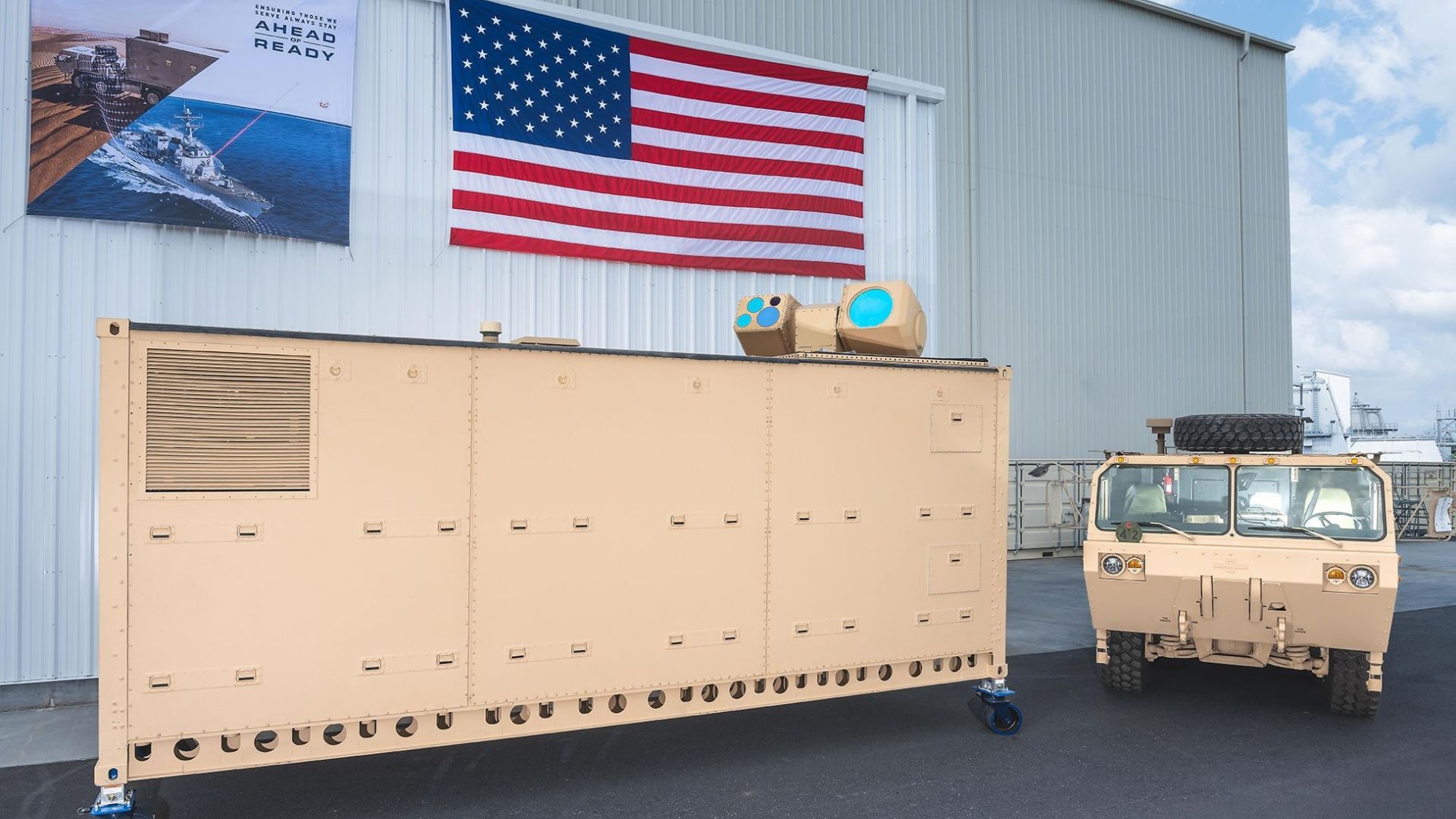
Lockheed Martin’s 300-kilowatt Valkyrie laser has destroyed a target standing in for a cruise missile for the first time, a company executive said. Lockheed developed the high-energy laser for the US Army, which had already dropped plans to put the system into service when the company disclosed the result. Jack Cheung, program director for Lockheed Martin’s Laser and Sensor Systems, announced the test on social media. He said the team destroyed the target without additional tracking aids, but gave no date, location, or distance for the test. Valkyrie takes on a cruise missile target Cheung called the test the team’s “FIRST EVER engagement against a surrogate cruise missile target – with full kill chain integration.” The announcement gave no details about the surrogate itself or the conditions under which it flew. “It was the first kill WITHOUT track augmentation, WITH short engagement time at meaningful distance,” Cheung wrote. In this context, track augmentation means adding equipment to a test target, such as a beacon or reflector, to help the system follow it. He did not specify how long the engagement lasted. A Lockheed Martin spokesperson confirmed to Laser Wars that the weapon used in the test was the Indirect Fire Protection Capability–High Energy Laser, or IFPC-HEL, also known as Valkyrie. A photograph accompanying the announcement showed the system beside a military truck outside a hangar. The laser’s beam director sat atop a tan enclosure about the size of a shipping container. The Army drops plans to field Valkyrie Valkyrie is among the highest-powered lasers the US military has tested. The Army commissioned the system to help defend troops and bases against several kinds of airborne threats, including cruise missiles, drones, rockets, and mortar rounds. A March 9 Congressional Research Service report said Army officials no longer planned to move IFPC-HEL into active service, according to Laser Wars. The system still appeared at a directed-energy demonstration in June at White Sands Missile Range in New Mexico. Valkyrie was one of several laser weapons shown to Defense Secretary Pete Hegseth at the event. The New Mexico event was a military demonstration of the system. Cheung’s announcement did not identify White Sands as the location of the cruise missile test. The Army and Navy pursue a joint laser The Pentagon’s fiscal 2027 budget request said the military would apply lessons from IFPC-HEL to the Joint Laser Weapon System, a development effort involving both the Army and Navy, Laser Wars reported. Defeating cruise missiles is among the goals of the joint program. In July, the Pentagon awarded Lockheed Martin and nLight contracts worth a combined $86 million under the program. Laser Wars reported that the awards carried a ceiling of $847 million. The contracts cover development work on laser weapons capable of defeating cruise missiles, the same class of threat represented by the target in Valkyrie’s test. “Huge congratulations to the entire team that is working to get directed energy into the hands of operators who need it!” Cheung wrote. The joint program gives the Army and Navy a way to carry forward work from the Valkyrie program as they develop a laser for that role. Get the latest in engineering, tech, space & science - delivered daily to your inbox.Atharva is a full-time content writer with a post-graduate degree in media & amp; entertainment and a graduate degree in electronics & telecommunications. He has written in the sports and technology domains respectively. In his leisure time, Atharva loves learning about digital marketing and watching soccer matches. His main goal behind joining Interesting Engineering is to learn more about how the recent technological advancements are helping human beings on both societal and individual levels in their daily lives.
US: 300kW laser takes down mock cruise missile without tracking aids for the first time
Full Article
Original Source
Read the full article at Interestingengineering →KhanList aggregates and links to publicly available news content. We do not host full articles from third-party sources. Always verify important information with original sources.