
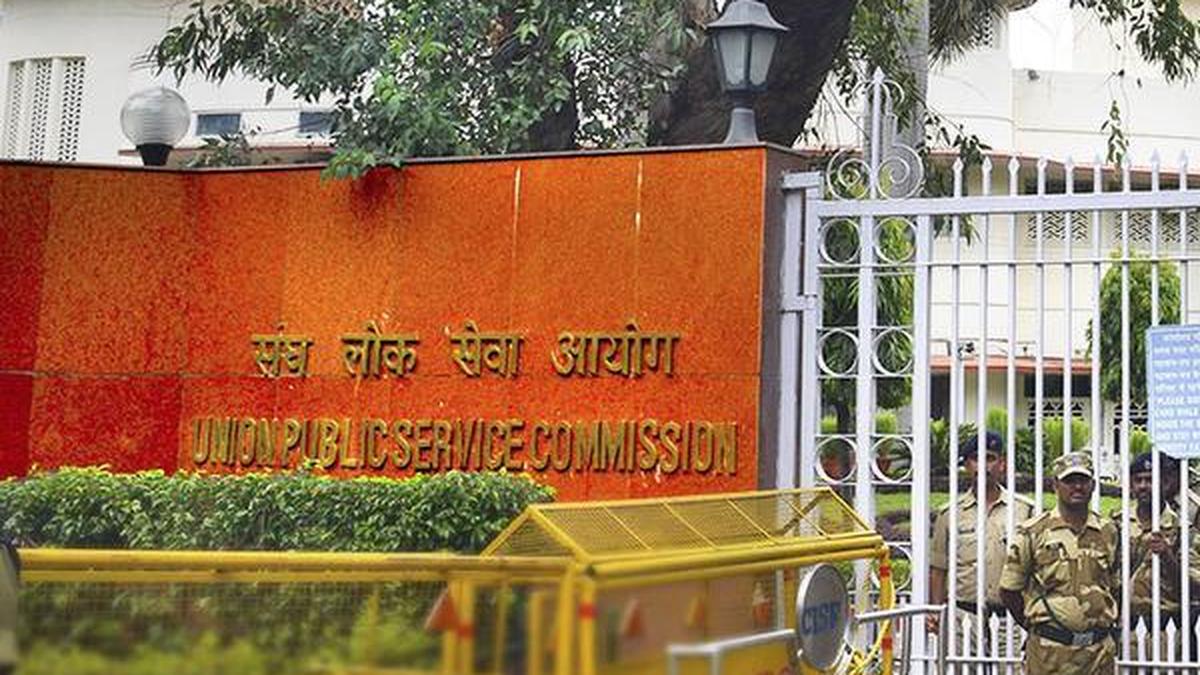
The Union Public Service Commission turned 100 on October 1, 2026. | Photo Credit: R.V. MOORTHY Turning 100 a few days ago on October 1, 2026, the Union Public Service Commission (UPSC) remains the first port of call for millions of aspirants across 14-15 main examinations and over 250 recruitment processes, both direct and departmental. Its raison d’etre still remains the Civil Services Examination, which recruits about 1,000 individuals from a pool of about a million applicants, an examination that lasts roughly over a year from start to finish.Despite over nine committees evaluating its performance and recommending substantial changes, very little has changed in the fundamental orientation of the commission. It still remains warped by the ethos of an erstwhile era, which privileges memory, data accumulation, and the ability to withstand inhuman levels of stress (the exam has a 0.2% success rate).In the era of AI, where intelligence increasingly gets offloaded to machines many times more powerful than the human brain, jobs will change fundamentally. Specialisation and continuous learning, along with the ability to adapt to fast and unforeseeable change, remain the order of the day. UPSC tests none of these abilities.Suggestions for change are plenty. Even the Prime Minister acknowledged the need for shorter exam duration, retaining exam integrity and attracting the younger generation into public service. But ironically, just four months before, the Kerala PSC announced an increase in the age limit to 40 from the existing 36 for PSC exams. Laudable, since it provides a sliver of hope for even the middle-aged to aspire to a government job, but it remains just that: an exercise in hope, rather than opportunity. India still remains an underserved country with just 16 public servants to a 1000 population.The next 100 years will demand a very different composition of public service. With knowledge getting concentrated in data centers owned by corporations, with climate change decimating agricultural patterns and recurring ecological disasters, coupled with almost universal connectivity, cheap access to information, and increasing aspirations across a very young nation (our median age is about 27 – 28 now, which will go up to 47 by 2100), we need a different society, served by a different kind of public authority. UPSC is the first locale to affect this change. To do this, it needs to address three issues, namely age, competency, and wellbeing, and must look at all three simultaneously.The current system of annual examinations and multiple attempts spread over a decade (the maximum age limit for UPSC is 32 for a candidate from the General category) results in millions of youth wasting one of the most productive decades of their lives chasing the chimera of a government job. Multiple committees have recommended a progressive reduction in the eligibility age for appearing in the examination.In a diverse country like ours, where access to education is still restricted to a large section of the population, this might prevent a sizeable section of the underprivileged from even appearing for the exams. The right way to do this is not to limit the age, but the number of years and attempts to appear for the exam. First, make the preliminary exam a qualifier and valid for two years. Make it an ‘on-demand examination’ and cap the number of attempts at four or two years, whichever is later.The Mains demand a much larger overhaul. The recent suggestion by Uttar Pradesh Social Welfare Minister Asim Arun argues for role-specific competence, domain knowledge, and aptitude for different services to be assessed separately. Split the Mains examination into multiple tiers, with appropriate graduate eligibility reflecting the unique competencies that the service might entail. It is complex but very doable. And the cycle could be compressed to about four months.Third is handling the well-being of the aspirants. Fairness, integrity, and a level playing field are crucial components that ensure trust, and UPSC must focus on all three. The current opaqueness of the interview process is what makes the entire CSE exam questionable, and this must be addressed. One way is to create a jury system involving qualified personnel who could be rostered for interview duties. This will substantially enlarge the social and professional pool of the interview panel, and individual boards must be randomly generated. Inter-panel differences in marking must be examined, lapses identified and addressed effectively. In the era of AI this is eminently doable.Lastly, entry into public services must be allowed at multiple levels so that a mid-career switch from private to public must be possible while ensuring sufficient level playing field in terms of access and equity.(Mahesh Sarma was the founder-editor of Careers 360. Views are personal) Published - October 07, 2026 12:56 pm IST
UPSC at 100: stuck in the past at a time of huge changes?
Full Article
Original Source
Read the full article at Thehindu →KhanList aggregates and links to publicly available news content. We do not host full articles from third-party sources. Always verify important information with original sources.