
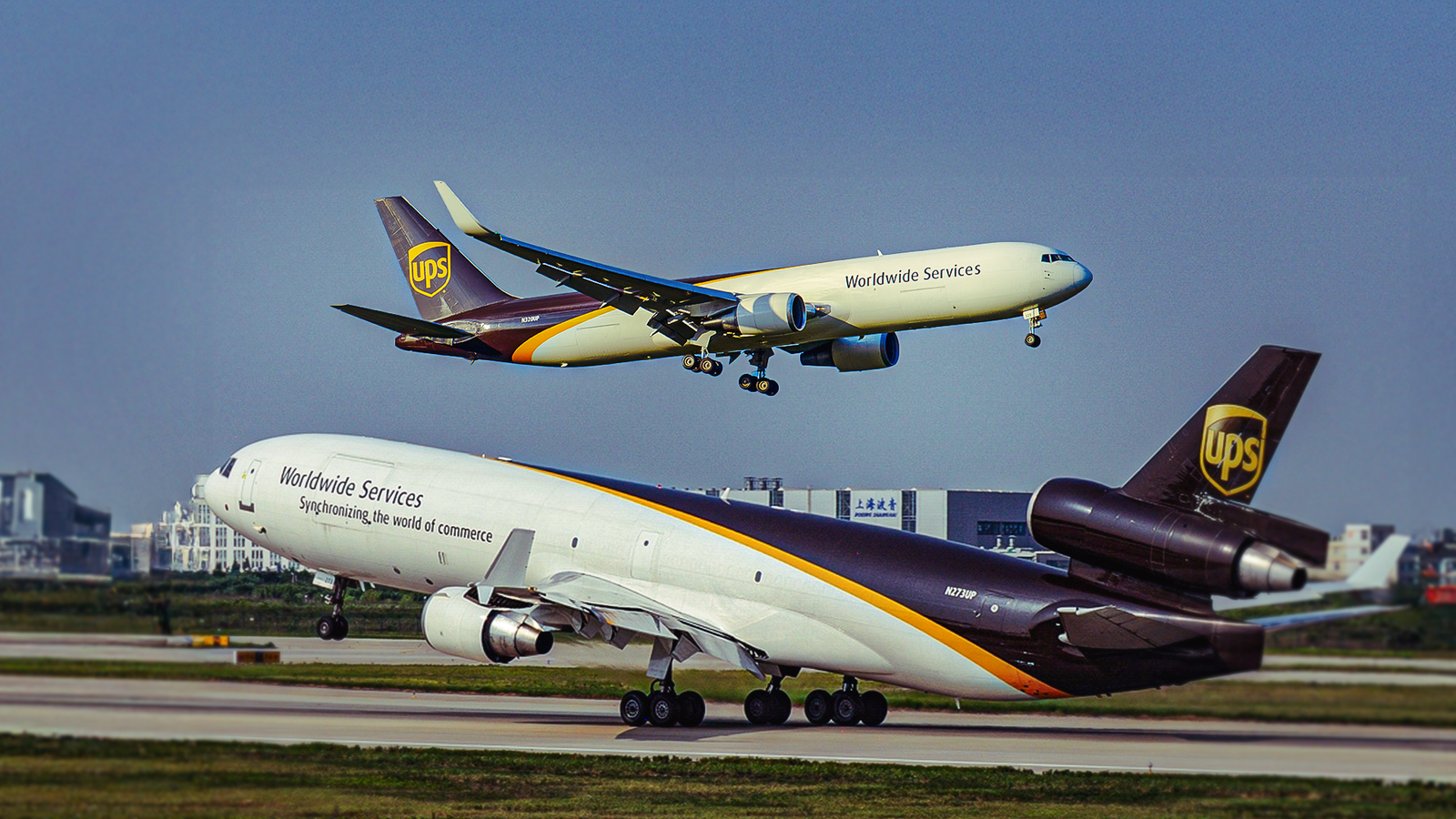
Published Nov 5, 2026, 3:00 PM EST Chris earned a Master’s degree in Defense and Strategic Studies (Highest Honors) from the University of Texas at El Paso. His graduate work concentrated on Global and National Security, Low-Intensity Conflict, Modern Warfare, and US grand strategy. He also undertook extensive regional studies, analyzing how key regions integrate into the broader US security architecture. This rigorous program provided him with a comprehensive understanding of U.S. military operations, global strategy, and weapons systems. Additionally, he gained a strong appreciation for great power competition.—an increasingly central force shaping international relations and conflict for the foreseeable future. UPS Airlines' decision to retire its remaining McDonnell Douglas MD-11 freighters following the fatal 2025 flight 2976 accident marked a significant turning point for its cargo operations. The move carried substantial financial consequences and left the company facing a considerable gap in long-haul freight capacity. Replacing the aging aircraft with Boeing 767-300Fs presents operational challenges, particularly given the difference in payload capacity between the two aircraft types. Meanwhile, the National Transportation Safety Board continues investigating the mechanical failures behind the crash, an inquiry that could have lasting implications for aircraft maintenance and cargo aviation safety. UPS Is In The Process Of Replacing Its MD-11 Fleet Following Last Year's Tragic Crash On November 4, 2025, a UPS MD-11F aircraft was involved in a fatal crash shortly after taking off from Muhammad Ali International Airport (SDF) in Louisville, Kentucky. Following the incident, the Federal Aviation Administration ordered major cargo carriers, including UPS, FedEx, and Western Global Airlines, to ground their MD-11 fleets until thorough inspections and any necessary maintenance could be completed to ensure their structural integrity. UPS, however, went one step further. Following the crash, the company decided to retire its entire fleet of 26 MD-11Fs, according to AeroTime. This decision was highly consequential, as the fleet served as a primary mover on long-haul international routes. According to its website, UPS' delivery network reaches more than 220 countries. Given the reach of its 500 company-owned and chartered aircraft, the resulting reduction in carrying capacity is significant. Highlighting its capabilities, Boeing states that the MD-11BCF can carry up to 184,700 lb of revenue payload, with an optional engine configuration increasing that figure to 194,700 lb. In terms of cargo arrangement, the MD-11F can accommodate 26 main-deck pallets and up to 18 lower-deck LD-3 containers. While UPS has relegated its MD-11Fs to the boneyard, it is replacing them with more fuel-efficient, twin-engine Boeing 767-300Fs. This is not an entirely new development for the company. According to its 2025 year-end aircraft fleet data (from the Selected Financial Data / Fourth Quarter financial statements), UPS already operated 99 aircraft of the type across three variants (89 Boeing 767-300Fs, six 767-300BCFs, and four 767-300BDSFs) and had 18 additional aircraft on order to help replace the retired MD-11s. Regarding the induction of the replacement aircraft, UPS plans to acquire 18 new Boeing 767s. Of these, 15 were scheduled to join its fleet this year, according to AeroTime. What Does The Fleet Replacement Mean For UPS Financially? Following the permanent retirement of its MD-11F fleet, Supply Chain Dive reports that "UPS incurred a non-cash, after-tax charge of $137 million..." Brian Dykes, the company's EVP and CFO, stated that "We believe these actions are consistent with building a more efficient global network positioned for growth, flexibility and profitability..." In terms of compensating for the loss of capacity following the retirement of the MD-11Fs, Yahoo Finance reports that Dykes stated UPS would reposition some of its aircraft from other parts of the world to the United States, increase the volume of freight moved by truck, and lease aircraft from partner airlines. These measures were intended to ensure sufficient capacity during the fourth quarter of 2025, which is also a peak season for customer activity. However, outsourcing some operations to other freight carriers would ultimately cost the company about $50 million in additional expenses. Nevertheless, the ability to meet demand through alternative capabilities convinced Dykes that the aging aircraft could be retired, a move the company was already in the process of making. The decision to accelerate the retirement of the MD-11Fs reflected a desire to avoid further costly repairs or prolonged regulatory scrutiny. Further, just about anyone (the author included) whose vehicle has frequently been in the shop eventually begins considering a newer model before selecting the best option for their circumstances. UPS made a similar move by expanding its already sizable fleet of Boeing 767-300Fs. Expanding The Fleet of 767-300s Credit: UPS As noted above, when UPS made the decision to retire its remaining MD-11Fs, it had a combined fleet of 99 767-300s across three variants. The addition of 18 aircraft, most of which will enter service this year, will bring this force up to 117 airframes. The oldest three aircraft in the fleet are between 30 and 35 years old. While these aircraft provide substantial replacement capacity, their age highlights the importance of UPS' ongoing fleet modernization efforts. Aside from the financial hit UPS has had to endure while it parceled out its workload to partner airlines, the company will not fully regain the carrying capacity of its retired MD-11Fs unless it invests in the Boeing 777F, which could be a worthwhile move. The Boeing 767-300F, which already represents a sizable portion of UPS' fleet, is equipped with 24 container positions on its main deck and 15 on its lower deck. Fully loaded, the aircraft has a total payload capacity of 115,700 lb (52,480 kg), according to Boeing. This represents a reduction of approximately 70,000 lb in carrying capacity per flight compared with the retired MD-11Fs. While the company can offset some of this difference through increased flight frequency or greater reliance on ground transportation, the reduction could theoretically amount to around one million pounds of daily freight capacity, depending on the number of flights previously operated by the MD-11 fleet. The Boeing 777F could therefore offer UPS an opportunity to recover some of the capacity lost through the MD-11's retirement while improving the efficiency of its long-haul operations. Although introducing another widebody freighter type would require a significant investment, the aircraft's greater payload capacity and range could help consolidate freight movements and reduce the need for additional flights. Nevertheless, UPS appears committed to expanding its existing 767 fleet, suggesting that the company currently favors fleet commonality and operational flexibility over introducing a new large freighter type. The Crash That Doomed UPS' MD-11F Fleet At approximately 5:11 PM EST, UPS Flight 2976 received clearance for takeoff from runway 17R, according to the National Transportation Safety Board's (NTSB) preliminary report. Shortly after the aircraft left the ground, surveillance footage "...showed the left (No. 1) engine and pylon separating from the wing shortly after airplane rotation, with a fire igniting on the left engine while it traversed above the fuselage and subsequently impacted the ground...", the report stated. According to the NTSB report, the aircraft climbed no higher than approximately 30 feet (9.1 meters) above ground level before clearing the blast fence at the end of runway 17R. Upon impact, the plane struck a storage yard and two additional buildings, including a petroleum recycling facility, which the ensuing blaze almost entirely consumed. The debris field extended from a UPS warehouse to approximately 3,000 feet (914.4 meters) south-southeast of the facility, centered near 38° 8’ 49.85” north, 85° 44’ 3.86” west. Tragically, all three crewmembers aboard the aircraft and 11 people on the ground were killed. Two additional people were seriously injured, while 21 others in the immediate area of the impact sustained minor injuries. The NTSB's examination of the wreckage identified significant damage to the left engine pylon's aft mounting assembly, which connects the engine to the wing. Investigators found evidence of fatigue cracking in both the forward and aft attachment lugs, alongside areas of overstress failure. On the aft lug, cracks were observed where the bore met its forward face, while additional fatigue cracks were identified along the bore of the forward lug's inboard fracture surface. Its outboard fracture surface, however, showed evidence of overstress failure alone, with no signs of fatigue cracking. The investigation also examined the right pylon aft mount and wing clevis assembly, as well as two engine fan blade fragments recovered from runway 17R. Investigators found no evidence of deformation or pre-existing fractures on the forward top flange of the left aft mount assembly. Investigators also removed the spherical bearing from the wing clevis for further examination. Analysis of these components was expected to help establish how the engine separated from the aircraft, while the NTSB's investigation into the accident's precise cause remained ongoing. A Costly Transition For UPS The retirement of UPS' MD-11 fleet represents a significant operational and financial shift, reducing the company's available cargo capacity while accelerating its reliance on the Boeing 767-300F. Although additional aircraft and alternative transportation arrangements can help offset the loss, replacing the MD-11's capabilities will remain a challenge. Meanwhile, the NTSB's investigation continues to examine the mechanical failures behind the fatal accident. Its findings could have lasting implications for aircraft maintenance and cargo aviation safety. They may also help determine whether additional inspections or maintenance measures are necessary across the remaining MD-11 fleet.
UPS Took A $137 Million Hit By Replacing Its McDonnell Douglas MD-11s With Smaller Widebody Freighters
Full Article
Original Source
Read the full article at Simpleflying →KhanList aggregates and links to publicly available news content. We do not host full articles from third-party sources. Always verify important information with original sources.