
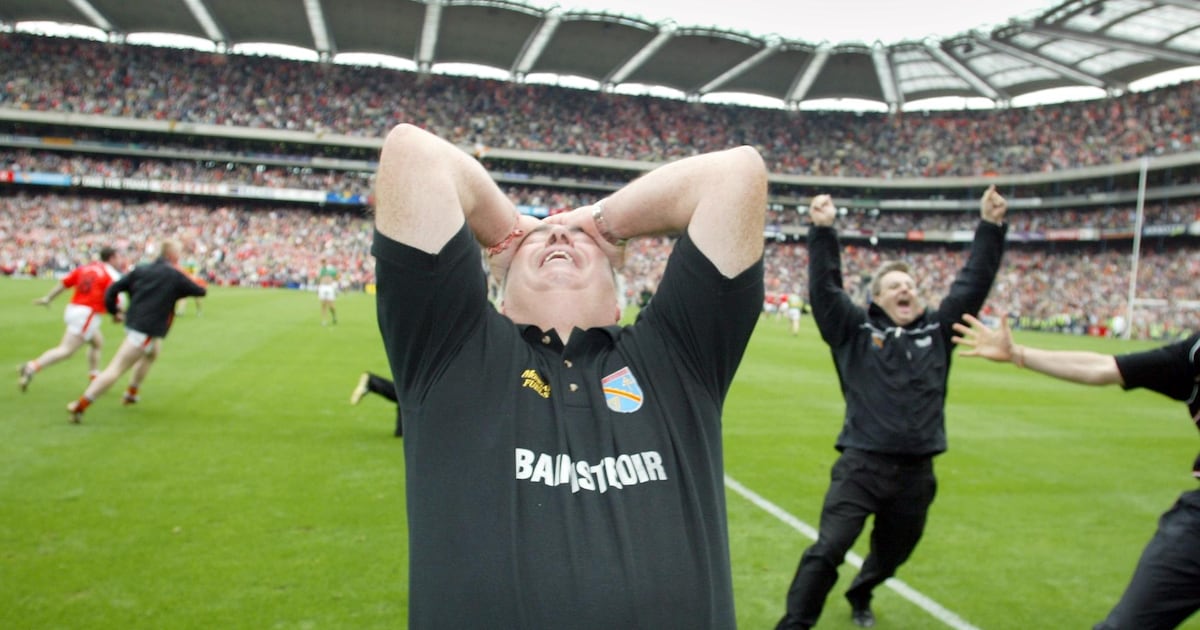
In sport, inspiration is one of the last mysteries. Almost everything else has been reduced to explanations. Winning and losing are no longer left in peace: there must be an investigation. The data points must join the dots.Inspiration is different because nobody can be sure of its source, or how it will fly. Words have an infinite number of arrangements, but which ones will work? In what order? At what temperature? Are you trying to reach their heads or their hearts? Can it arrive at both places?A couple of weeks ago, the jockey Saffie Osborne gave a brilliant interview to Nick Luck on his Sunday morning show on Racing TV. Last month, Osborne crowned her best ever season by winning the St Leger for Joseph O’Brien, becoming the first female jockey to ride the winner of a British classic.But halfway through the season she hit a bump. She was criticised for a losing ride in one of the biggest races at Royal Ascot and subsequently lost the ride on the horse. “I spent a few weeks feeling like people were looking at me and thinking I wasn’t good enough,” she said.READ MOREOsborne had been in this slump for a while when, one day, her father sent her two long text messages. The first was full of tenderness and love.“My humble advice,” he wrote, “would be just enjoy it for what it is, a fun, short part of your long life. You have freedom to do whatever makes you happy at any time – but now is the only time you can do this part of your life. It is frivolous and unimportant but fun. You’re a great rider, I mean that, a really great rider. You’ve already left your mark on the sport. Don’t get hung up on what other people are doing. Just enjoy what you do. You do it so well and I’m so proud.”As Osborne read out the texts in the Racing TV studio it was clear how powerful they had been, even now, months later. In her mind, it had been the turning point in her season.Saffie Osborne in the weighing room at Ascot Racecourse in July. Photograph: Alan Crowhurst/Getty Images When her dad chose those words and picked that moment, though, he had no idea how the messages would land. Her eyes might have glazed over. The messages might not have pierced her skin. Every attempt at giving inspiration carries that risk. There is no halfway house.You wonder if it is harder now than it used to be. More complex. In dressingrooms, the pre-match talks and half-time talks used to exist on a short spectrum. The emphasis was on machismo and emotion and confrontation and fear and threat and fiery eyes and flaming tongues. If you were not aroused by any of those stimuli, you were left to your own devices.But the pursuit of high performance is a much more nuanced and sophisticated business now. Finding the right frame of mind is never left to the last minute. Sports psychologists are involved or performance coaches or mental skills coaches. Elements of it are personal. On every team bus going to a game, some players will hunker down behind their ear buds and listen to whatever they need to hear.But before the players run down the tunnel, somebody will stand up in the middle of the dressingroom and reach for something they hope will cut through the fog of nerves and adrenalin and land as something inspirational. In that moment, all that guides them is instinct.When it goes wrong, there is a sickening thud. In his autobiography, Every Single Ball, Brian Corcoran tells a story from the Cork dressingroom before the 1992 All-Ireland hurling final. The Cork coach, Canon Michael O’Brien, was known for his dressingroom oratory, but this time he misread the room and lost his audience.“Just before we went out, he went down on one knee and called us in [around him],” writes Corcoran. “Outside, the stewards were banging on the door, while inside fellas were after banging every wall with their shoulders. So, we gathered around and looked down on the floor. Then, after what seemed like an eternity, he looked up with tears flowing from his face, and in the softest voice we’d ever heard from him said, ‘Lads, do it for me’.”But it is not unusual for inspirational team talks to have a performative element and sometimes it works. At half-time in the 2002 All-Ireland football final, Joe Kernan, the Armagh manager, showed the players his runners-up medal from the 1977 final, which he had nailed to a wooden plaque. Armagh were losing at the break and as he finished his half-time speech, Kernan smashed the plaque against a wall in the showers and walked out of the dressingroom.Armagh manager Joe Kernan's dramatic half-time team-talk in the 2002 All-Ireland Senior Football Championship final had the desired effect as his team overturned a half-time deficit to beat Kerry at Croke Park. Photograph: Morgan Treacy/Inpho With that “inspirational rant”, wrote Oisín McConville in his autobiography, “he wrote himself into the history books”.It had clearly been premeditated and Kernan had made a calculation on the risk. With a stunt like that, there are no each-way bets: boom or bust.Before Munster beat the All Blacks in 1978, Tom Kiernan, the Munster coach, took one of the most audacious risks in the history of team talks. Kiernan booked a restaurant in a Limerick city-centre hotel for a team meeting, a couple of hours before the match.He rose from his chair at the top of the room and in various poses, he looked at the players in silence for 15 minutes, forcing them into a meditative state. “No one was moving. Some were breathing so deeply it was as if they were gasping for air,” wrote Alan English in his seminal book on that match, Stand Up and Fight.“He just stood there, still crouching, motionless. He had planned the silence, but it was a risk. He couldn’t be sure how they would react. What if one of them laughed, as one of the lads at Cork Constitution had done when he tried the same thing years before?”Christy Cantillon (number six) scores Munster’s try against the All Blacks in the 12-0 victory at Thomond Park, Limerick, in 1978. Photograph: INM/Getty Images Nobody laughed.Part of the mystique of the most inspirational team talks is that word breaks from behind the curtain, just enough fragments to fire the imagination. But in recent years there have been so many fly-on-the wall documentaries about football teams, especially, that we no longer need to wonder so much. How many of those dressingroom speeches have made your heart race? Fewer than you expected.There are exceptions. Three years ago, the BBC Scotland cameras were allowed into the dressing room of Darvel, a team from the sixth tier of Scottish football, before their Scottish Cup match against Aberdeen.Their manager, Mick Kennedy, spoke for seven minutes and 23 seconds without once raising his voice or uttering a profanity or touching on a tactical point. Instead, he spoke about them as people and about the bonds that tied them and their values as a group and the place they represented and people who cared for them. Without knowing him or anybody in the room, everything he said felt authentic and overwhelmingly empowering. Like every piece of great dressingroom oratory, it was designed for their heads and their hearts.They beat Aberdeen 1-0. Whatever else has changed in sport, inspiration never loses.
Unlocking inspiration remains sport’s final frontier that can’t be bought
Full Article
Original Source
Read the full article at Irishtimes →KhanList aggregates and links to publicly available news content. We do not host full articles from third-party sources. Always verify important information with original sources.